


Vintage Butterscotch Necklace
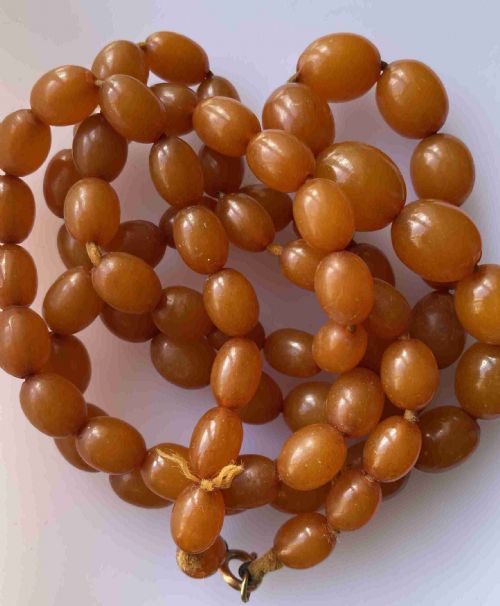
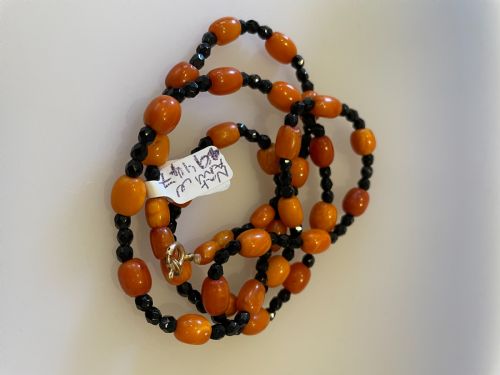
These vintage butterscotch necklace pieces are warm, honeyed resin and amber strands that bring a rich golden glow to the neckline.
Vintage Butterscotch Necklace
When you search for a vintage butterscotch necklace, you are looking at tactile strands of honey-toned resin or fossilised tree resin that carry decades of history. The versions you are most likely to meet on this page hail primarily from the nineteen-thirties, alongside Edwardian examples and mid-century pieces.
The forms vary from long graduated bead strands to raw polish pieces and matching jewellery sets. They draw their character from styles such as Art Deco, Bohemian, and Baltic Folk, reflecting the varied origins and aesthetic tastes of their respective eras.
How they were made
These pieces bring together natural materials like Baltic amber and structured synthetics such as Bakelite and phenolic resin, threaded securely and often fastened with metal or sterling silver clasps.
The construction relies on the careful grading and shaping of beads, ranging from large barrel forms to equal ten-millimetre rounds, drilled and strung on durable thread to sit comfortably against the skin.
Vintage Butterscotch Necklace Retail Price Guide 2026
Typical asking prices for vintage butterscotch necklace among the pieces listed under this phrase on Sellingantiques today, from the lower quarter to the upper quarter. They describe what is for sale here now, not the wider market.
Listings span periods from the nineteenth century through the Edwardian era and nineteen-thirties up to the nineteen-fifties.
What varies in quality
The distinction between tiers rests upon the depth of the butterscotch tone, the uniformity or intentional variation of the bead shaping, and the integrity of the material itself.
Subtleties in marbling, the preservation of original metal or sterling silver clasps, and the overall weight of the amber or resin elevate certain strands above simpler, lighter iterations.
The Vintage Butterscotch Necklace Glossary
- Baltic amber
- Fossilised tree resin originating from the Baltic region, prized for its natural warmth and inclusions. It forms the primary organic material for many pieces on this page.
- Bakelite
- An early form of phenolic resin developed in the early twentieth century, valued for its durability and rich opaque colour range. It appears alongside amber in period jewellery.
- Graduated beads
- Beads meticulously sized in a sequence from smaller terminals to a larger central piece, creating a balanced drape. This configuration is common in longer thirty-plus-inch strands.
- Barrel clasp
- A cylindrical fastening mechanism that screws together securely, frequently found on older amber and resin necklaces. It provides a neat, integrated closure.
Vintage Butterscotch Necklace: Frequently Asked Questions
How do I care for my amber necklace?
Amber is a soft organic material that benefits from gentle handling and storage away from harsh chemicals, perfumes, and direct sunlight.
Clean the beads simply with a soft, damp cloth and polish them dry to maintain their natural lustre without scratching the surface.
What is butterscotch amber?
Butterscotch amber is a dense, opaque variety of fossilised resin displaying creamy, yellowish-brown tones reminiscent of confectionery.
This distinct colouring comes from microscopic air bubbles trapped within the resin during the fossilisation process millions of years ago.
How can I tell Bakelite from amber?
Bakelite is a synthetic phenolic resin with a consistent density, whereas natural amber often contains organic inclusions, natural irregularities, and electrostatic properties.
Examining the piece under magnification helps reveal the distinct flow lines and internal structure unique to each material.
Are these necklaces heavy to wear?
Weight depends heavily on the size and density of the beads, with substantial graduated strands reaching up to eighty grams or more.
Lighter pieces sit comfortably for daily wear, while heavier long strands provide a more pronounced drape against the collarbone.