



Vintage Butterfly Jewellery
Vintage butterfly jewellery brings together delicate winged motifs in silver, enamel and butterfly wing across periods from the Victorian era to the mid-century.
Vintage Butterfly Jewellery
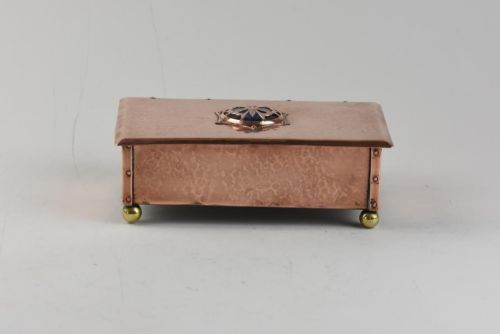
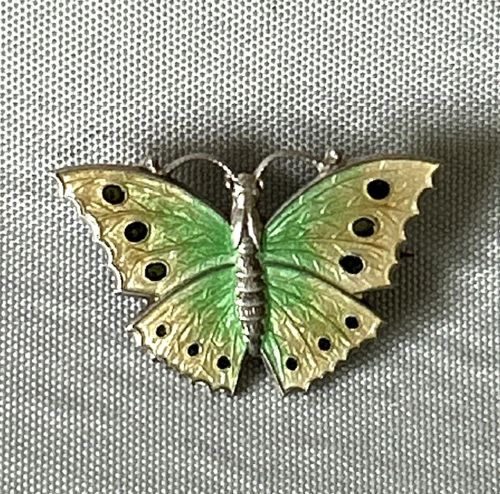
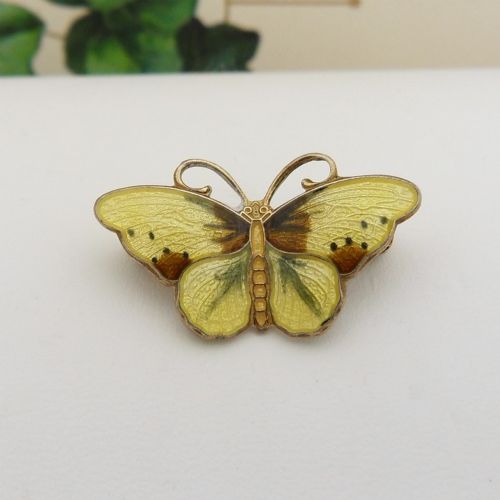
Vintage butterfly jewellery encompasses brooches, pendants, earrings, hatpins and trinket boxes decorated with lepidopteran motifs. When searching for vintage butterfly jewellery, buyers encounter a strong representation of silver and enamel pieces from the 1920s and 1930s.
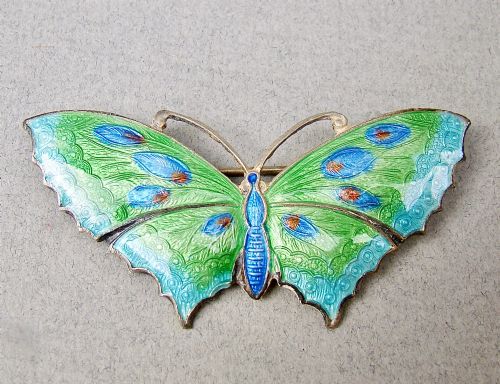
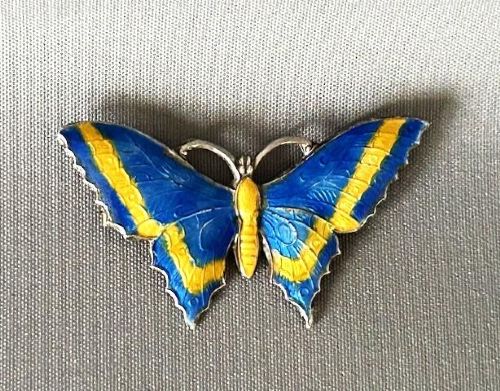
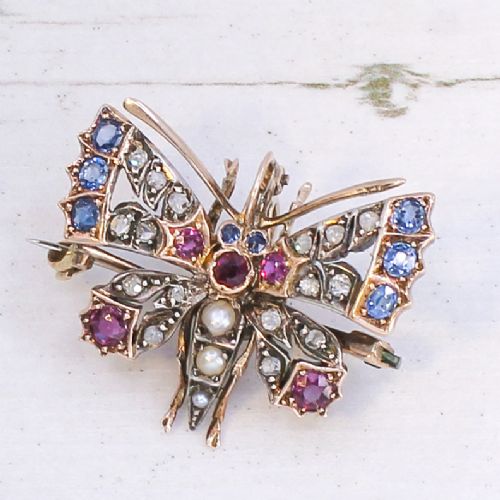
The selection ranges from Victorian gold and gem-set examples to Art Nouveau plique-à-jour designs and mid-century Scandinavian guilloche enamel pieces. Brooches dominate the selection, often taking the form of detailed insect wings rendered in fine metalwork.
Originating from various workshops across Britain, continental Europe, Scandinavia and China, these pieces reflect changing stylistic preferences throughout the twentieth century. The motif serves as a recurring theme in Arts and Crafts, Art Deco and mid-century design.
Materials and construction techniques
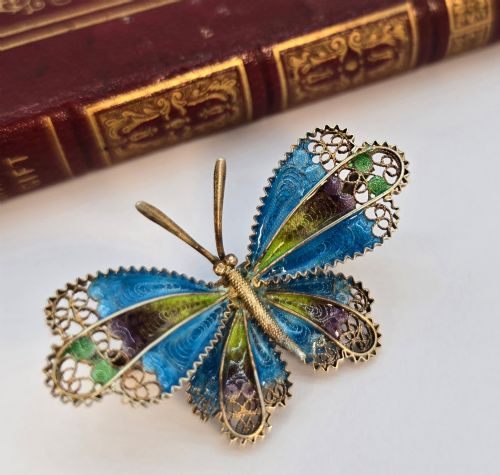
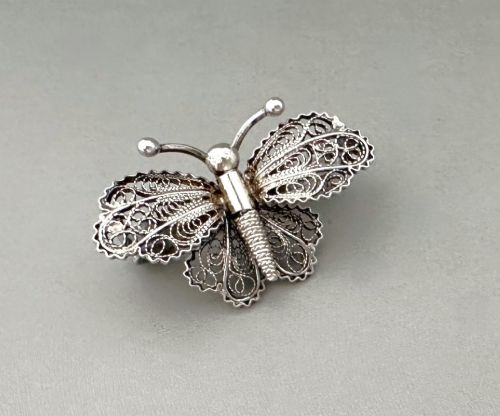
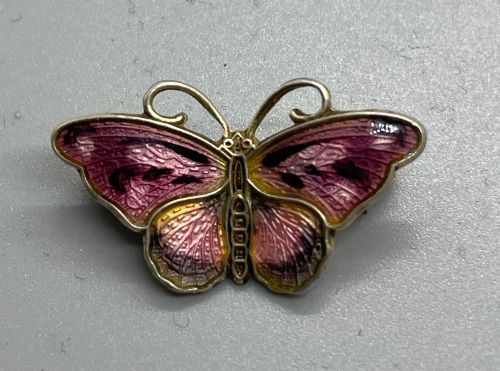
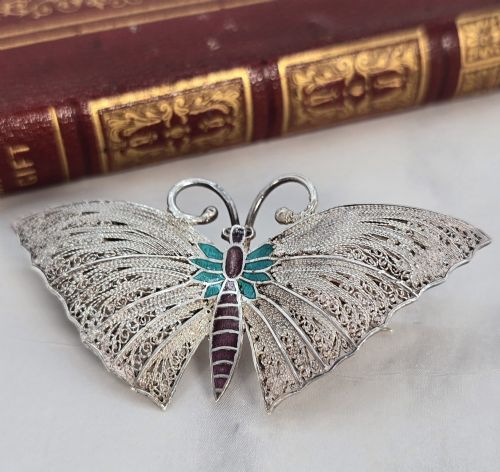
Silversmiths employed sterling silver, silver gilt and filigree wire to construct lightweight, intricate frames that mimic the delicate structure of insect wings. Guilloche and plique-à-jour enamel are applied to these metal bases to create translucent colour fields resembling real wings.
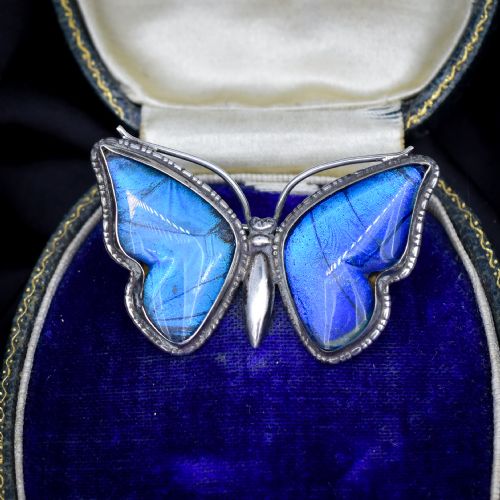
Makers also utilised genuine tropical butterfly wing behind glass panels, a technique popularised during the early twentieth century by designers such as Thomas L Mott. Gemstones including diamonds, moonstones, sapphires, emeralds and amethysts are set in gold or silver for high-status Victorian and Art Deco pieces.
Vintage Butterfly Jewellery Retail Price Guide 2026
Typical asking prices for vintage butterfly jewellery among the pieces listed under this phrase on Sellingantiques today, from the lower quarter to the upper quarter. They describe what is for sale here now, not the wider market.
Materials recorded across the inventory include sterling silver, 9ct gold, plique-a-jour enamel, glass, diamonds, moonstones and natural butterfly wing.
Factors that distinguish quality
Quality in these pieces depends on the precision of the metalwork, such as the fineness of the silver filigree and the integrity of the enamel work. Superior examples display smooth, evenly fired enamel without chipping or crazing across the wing cells.
The skill of the artisan shows in the naturalism of the wing shape and the tightness of the surrounding wire or gemstone settings. Pieces bearing distinct maker marks or attributable to established workshops generally demonstrate superior craftsmanship.
Hroar Prydz·Argy Rousseau·Thomas L Mott·Martin Mayer·Rene Lalique
The Vintage Butterfly Jewellery Glossary
- Guilloche enamel
- A decorative technique where a metal surface is engraved with repetitive geometric patterns beneath a translucent layer of enamel. This method allows light to reflect through the coloured glass, creating depth.
- Plique-a-jour
- An enamelling technique similar to cloisonne, but with no backing metal, allowing light to shine through the transparent or translucent enamel like stained glass. It is frequently seen in Art Nouveau pieces.
- Silver gilt
- Sterling silver that has been coated with a thin layer of gold, giving it a warm yellow appearance. This finish was commonly applied to enhance decorative contrast in brooches and pendants.
- Butterfly wing
- A technique utilising iridescent scales from tropical butterflies sealed beneath bevelled glass panels. It was frequently used in reverse painting and collage work during the Art Deco period.
- Filigree
- An ornate form of delicate metalwork made with tiny threads of gold or silver soldered together. Artisans twist and shape these wires into openwork patterns resembling lace.
Vintage Butterfly Jewellery: Frequently Asked Questions
What periods do these pieces date from?
The pieces span from the Victorian era through the Arts and Crafts, Art Nouveau and Art Deco movements into the mid-twentieth century. Most examples date from the interwar period of the 1920s and 1930s.
Earlier nineteenth-century pieces tend to feature heavy gold settings and precious gemstones, whilst twentieth-century items frequently utilise silver and enamel.
How do I care for enamel and butterfly wing jewellery?
Enamel and butterfly wing pieces require gentle handling to protect fragile glass surfaces and organic materials from moisture and impact. Store them away from direct sunlight to prevent fading.
Clean only with a dry microfibre cloth and avoid submerging butterfly wing items in water or chemical cleaning solutions.
How can I tell if an enamel brooch is Art Deco?
Art Deco pieces typically display geometric symmetry, stylised wing contours and vibrant guilloche enamel work set in sterling silver. They often incorporate filigree wire borders typical of the 1920s and 1930s.
Makers from this era frequently marked their pieces with simple silver stamps or designer signatures on the reverse.
What is the difference between plique-a-jour and standard enamel?
Standard enamel is fired onto a solid metal backing plate, meaning light reflects off the metal underneath. Plique-a-jour has no backing metal, creating a stained-glass effect where light passes directly through the translucent colours.
This open-backed technique is considerably harder to execute and is characteristic of fine Art Nouveau jewellery.