


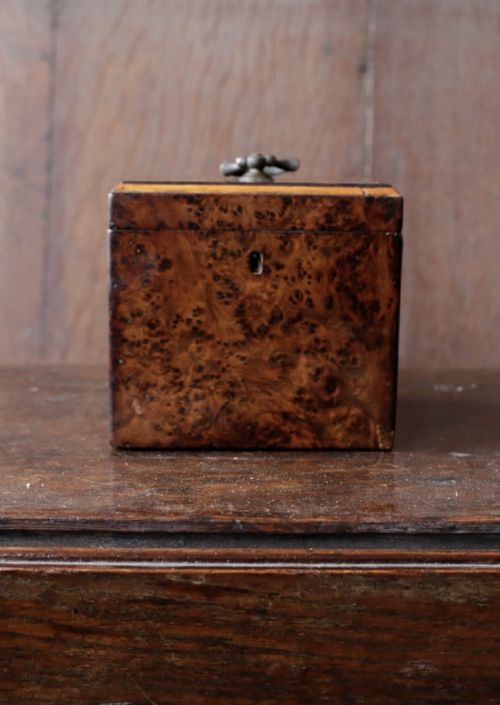


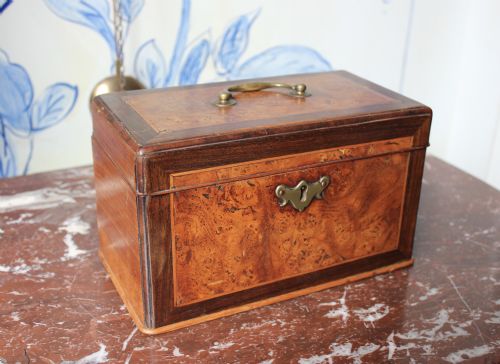

Vintage Burr Wood Box
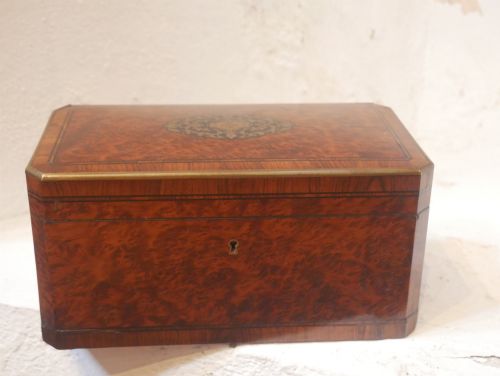
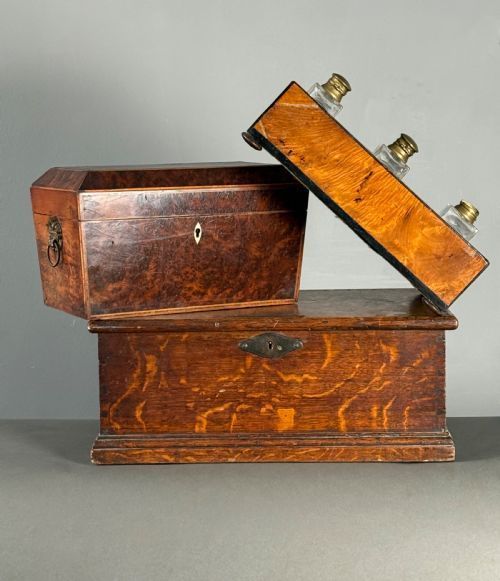
These vintage burr wood box examples bring organic grain patterns and rich warmth to a room, built to hold correspondence, tea or keepsakes.
Vintage Burr Wood Box
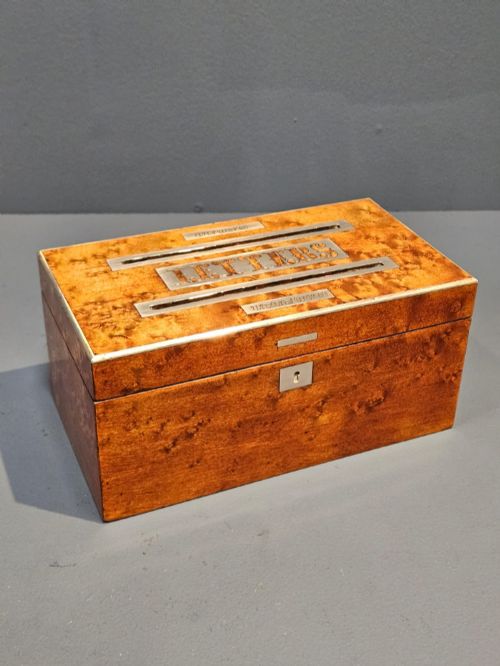
A vintage burr wood box serves as a functional receptacle for tea, cigars, letters or small valuables, shaped across periods from the eighteenth century to the mid-twentieth century. The selection ranges from Georgian cube tea caddies and Victorian letter posts to twentieth-century humidor cabinets and desktop clocks.
Makers utilised specific forms depending on the intended function, including semi-circular shapes, lap writing desks and table boxes. Woods such as burr yew, elm, maple and walnut appear alongside amboyna and satinwood, frequently paired with brass hardware or mother-of-pearl and bone inlay details.
What Varies in Quality
The selection of the burr veneer dictates much of the visual character, with tighter, more complex knot clusters commanding greater appreciation. Craftsmanship is evident in the alignment of the grain across the lid and sides, where skilled makers ensured the pattern flowed continuously.
Interior fittings and the preservation of original escutcheons, locks and interior compartments separate standard examples from finer works. The crispness of inlaid details, such as bone or mother-of-pearl, indicates the precision applied during manufacture.
Vintage Burr Wood Box Retail Price Guide 2026
Typical asking prices for vintage burr wood box among the pieces listed under this phrase on Sellingantiques today, from the lower quarter to the upper quarter. They describe what is for sale here now, not the wider market.
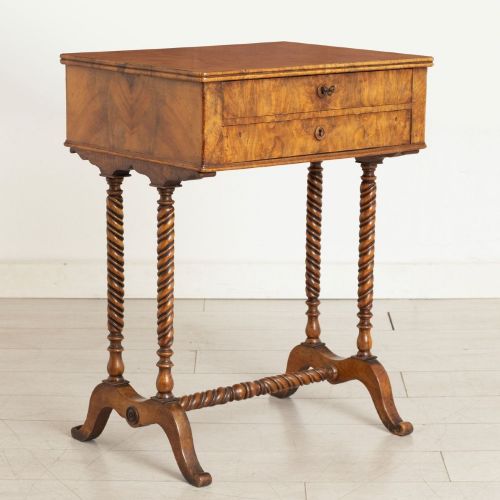
Object forms span tea caddies, cigar humidors, stereoscopes, lap desks, table boxes and work tables.
Tahan Paris·Waring & Gillow
The Vintage Burr Wood Box Glossary
- Burr wood
- Timber harvested from tree growths where the grain has grown in a deformed, swirling manner. This produces highly decorative patterns filled with small knots and eyes.
- Tea caddy
- A container designed originally to store loose tea leaves, often featuring internal compartments and a locking lid. Examples frequently take cube, oval or sarcophagus forms.
- Campaign desk
- Portable furniture built with recessed brass handles and reinforced corners for military officers on the move. These pieces fold or pack down for transport.
- Stereoscope
- A device used for viewing two stereographic images simultaneously to produce a three-dimensional visual effect. Victorian versions often reside in polished timber enclosures.
- Escutcheon
- A flat plate of brass or bone surrounding a keyhole to protect the surrounding wood from wear. It serves both a functional and a decorative purpose on box lids and drawers.
Vintage Burr Wood Box: Frequently Asked Questions
What were burr wood boxes used for?
These containers held valuable household items such as dry tea leaves, personal correspondence, cigars or writing instruments. Their construction kept contents secure and protected from humidity.
Many featured internal partitions or removable trays to organise specific goods like tea blends or writing paper.
How do I date a burr wood box?
Dating relies on examining the construction methods, hardware styles, secondary woods and overall form. Georgian pieces often display distinct proportions and dovetailing compared to Victorian or twentieth-century examples.
Maker marks, paper labels or patent stamps found inside provide further chronological clues.
How should I care for burr wood?
Keep wooden boxes away from direct sunlight and sudden temperature shifts to prevent the veneer from drying or cracking. Maintaining stable indoor humidity preserves the finish.
Apply a light application of appropriate wax polish occasionally to nourish the timber and maintain its natural lustre.
Why do some boxes have locks?
Locks were essential when these boxes were made, as they secured precious commodities like imported tea leaves, currency and private letters. Servants and household guests would be denied access to the contents.
Many surviving pieces still retain their original working keys and decorative brass escutcheons.