
Vintage Buffet Server
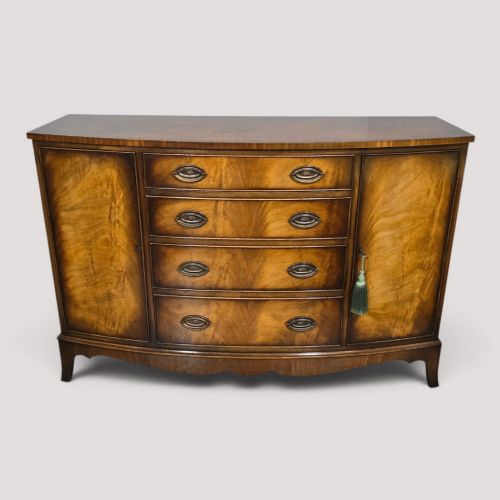
A vintage buffet server provides practical dining room storage while bringing period character to an interior.
Vintage Buffet Server
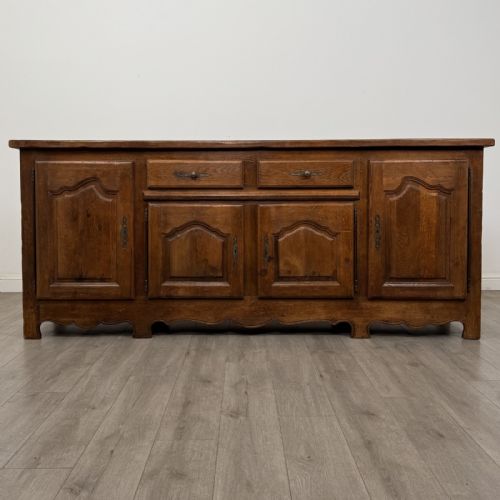
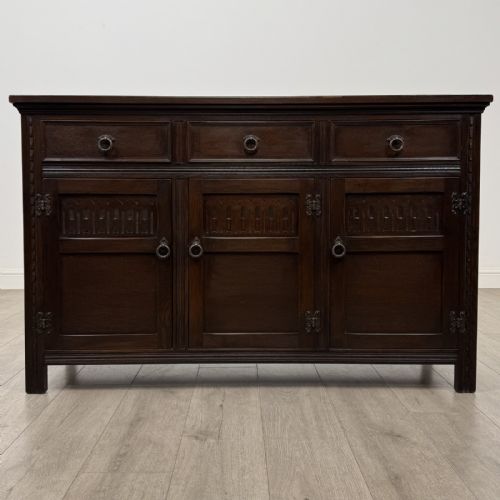
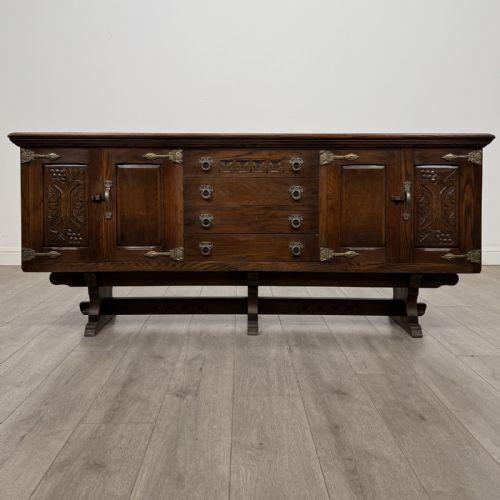
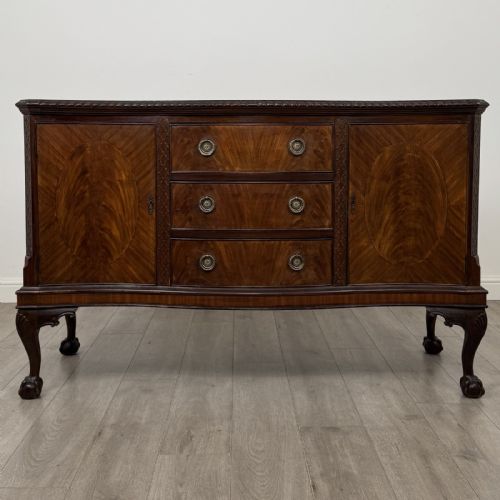
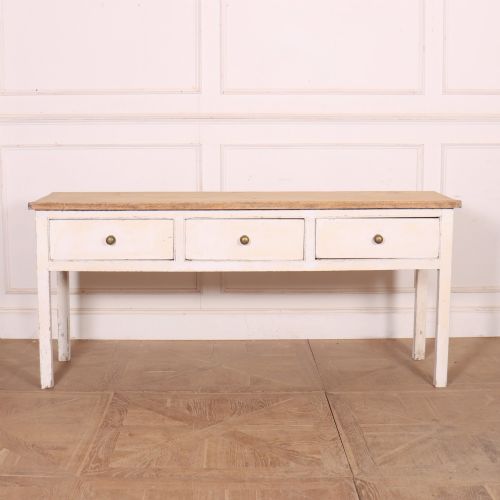
When searching for a vintage buffet server, a buyer is typically looking at a range of dining room storage furniture including sideboards, enfilades, dresser bases, and serving tables. These pieces originate from various eras, stretching from the eighteenth century through the Victorian and Edwardian periods into the nineteen-twenties and nineteen-thirties.
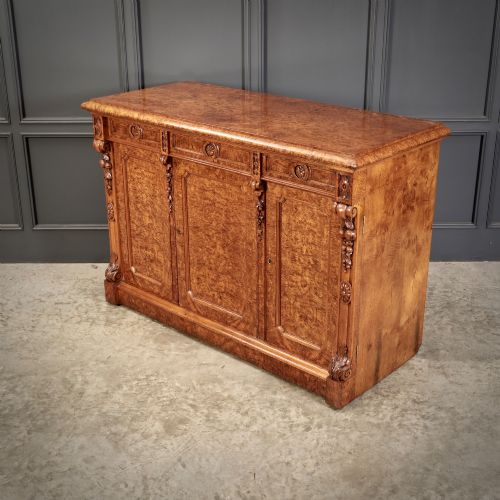
Stylistic influences span from Georgian and Regency lines to Jacobean Revival carvings, Edwardian elegance, and geometric Art Deco designs. Pieces range from straightforward pine storage items to large carved burr walnut and satinwood forms designed for formal dining spaces.
Materials and Technique
Cabinetmakers utilised hardwoods such as oak, mahogany, walnut, and burr walnut, alongside softer timbers like pine for internal construction and simpler regional pieces. Selected veneers added decorative grain patterns to drawer fronts and door panels, particularly during the nineteenth and twentieth centuries.
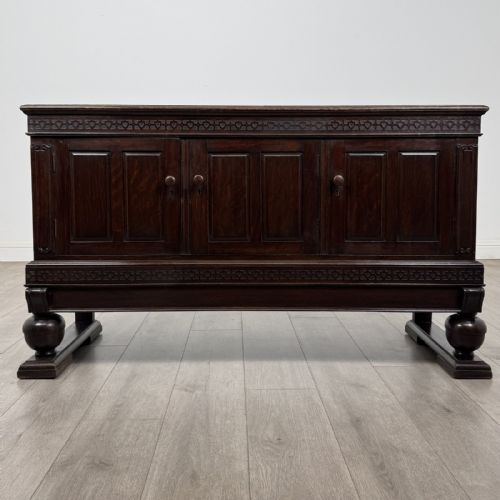
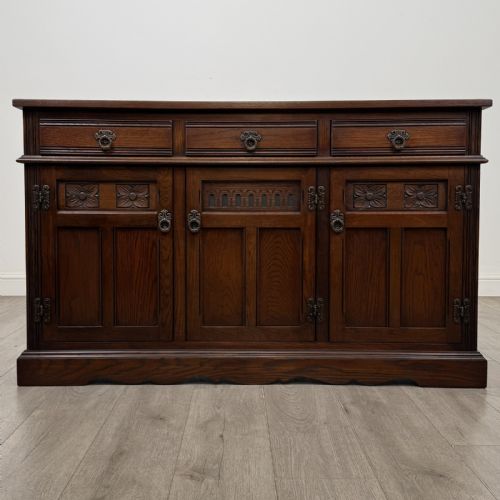
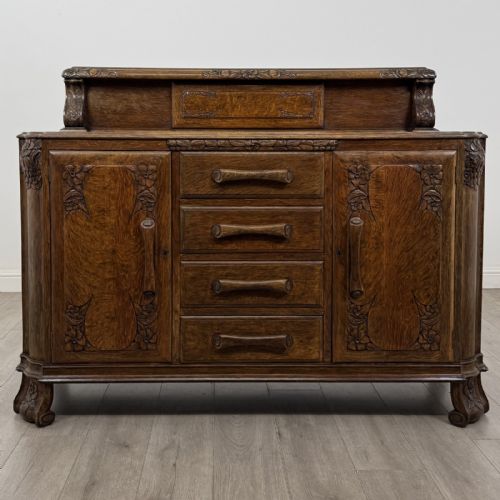
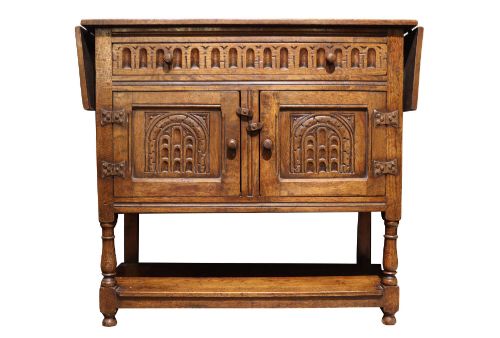
Construction methods relied on traditional joinery techniques, evident in dovetailed drawer boxes and panelled doors. Carved detailing, linenfold panels, turned legs, stretcher bases, and applied brass or iron handles completed the construction of these server and sideboard forms.
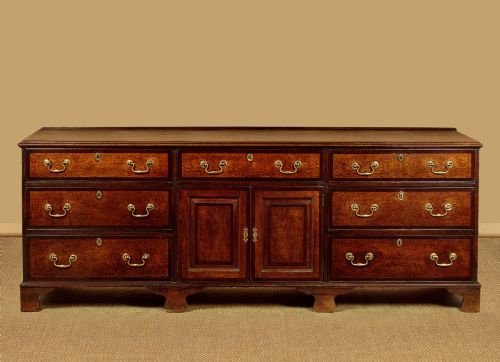
Listings span multiple centuries, uniting eighteenth-century dresser bases, Victorian mahogany chiffoniers, and nineteen-thirties Art Deco styles in oak and walnut.
Judging Quality
The standard of a vintage buffet server rests upon the selection of timber and the precision of its construction. Pieces featuring highly figured burr walnut, satinwood, or solid mahogany demonstrate superior material choice compared to standard utility items.
The crispness of carved ornamentation and the integration of functional elements, such as fitted cutlery drawers or marble tops, distinguish finer examples. Original hardware, balanced proportions, and stable joinery further separate standard production from exceptional workshop output.
Maurice Adams
The Vintage Buffet Server Glossary
- Enfilade
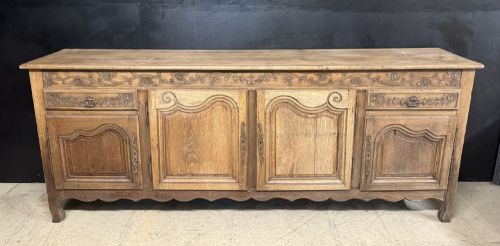
- A long sideboard or serving cabinet with a row of multiple doors, commonly associated with French dining rooms. This form provides substantial interior storage capacity.
- Dresser base
- A low wooden storage unit featuring drawers and sometimes cupboards beneath a flat top surface, originating from earlier vernacular domestic architecture. It serves as an ancestor to the modern sideboard.
- Linenfold
- A style of wood carving that mimics folded parchment or linen, frequently seen on panelled cupboard doors from the Tudor revival and later periods.
- Chiffonier
- A compact sideboard or low cabinet equipped with drawers and shelves, popular during the nineteenth century for holding dining silver and glassware.
Vintage Buffet Server: Frequently Asked Questions
How were vintage buffet servers originally used?
These pieces served dining rooms as surfaces for laying out food and beverages before or during meals. Cupboards and drawers stored tableware, linens, and cutlery close to the dining table.
Over time, their role evolved from utilitarian serving stations to decorative focal points that displayed silver and ceramic collections in formal reception rooms.
Where can I place a buffet server in a modern home?
A buffet server fits naturally in a dining room or kitchen space to hold table linen, serving dishes, and glassware. Its surface accommodates lamps, plants, or serving trays during gatherings.
These pieces also function effectively in hallways or living areas as low storage consoles while introducing period wood tones to an interior.
How do I identify the period of a sideboard?
Period identification relies on observing the combination of timber, hardware, and stylistic details present in the construction. Georgian and Victorian pieces often show formal mahogany or oak proportions, while nineteen-thirties examples lean towards geometric Art Deco lines.
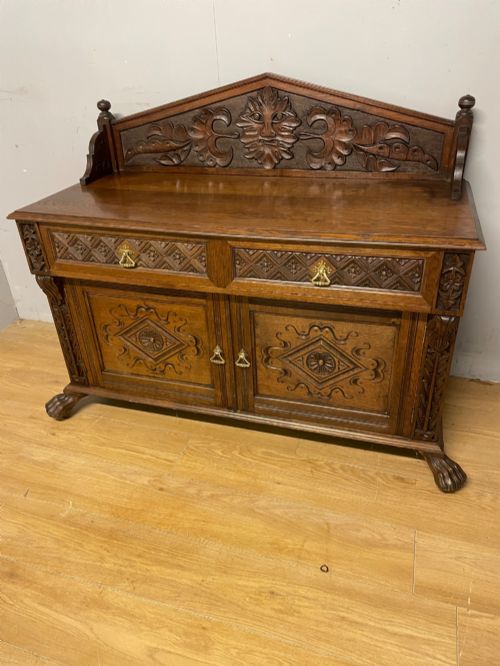
Carved motifs such as linenfold, green man decorations, or claw and ball feet offer further clues to the era of manufacture.
What is the difference between a sideboard and an enfilade?
A sideboard is a general British and American term for a dining room storage and serving unit with drawers and cupboards. An enfilade is a specific continental European form, usually longer, featuring a continuous row of doors across the front.
Enfilades frequently incorporate marble tops and distinct regional carving styles originating from French workshops.