

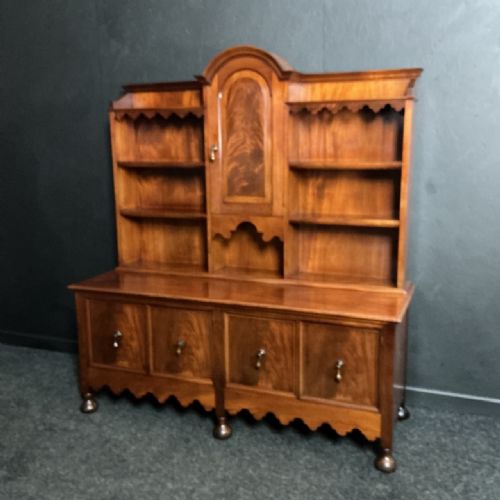
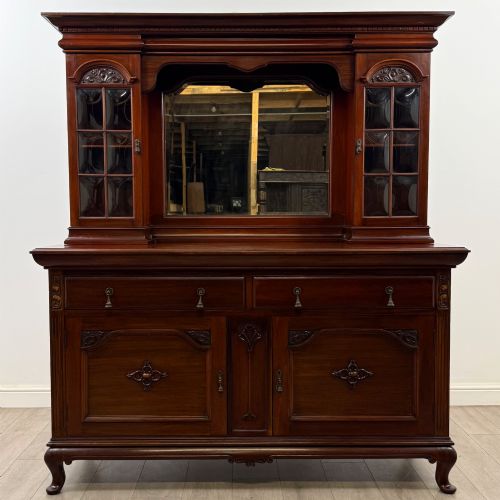
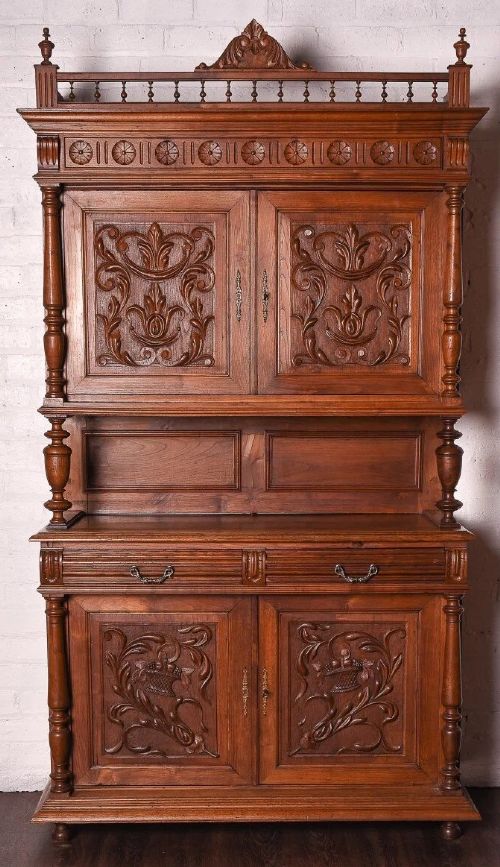

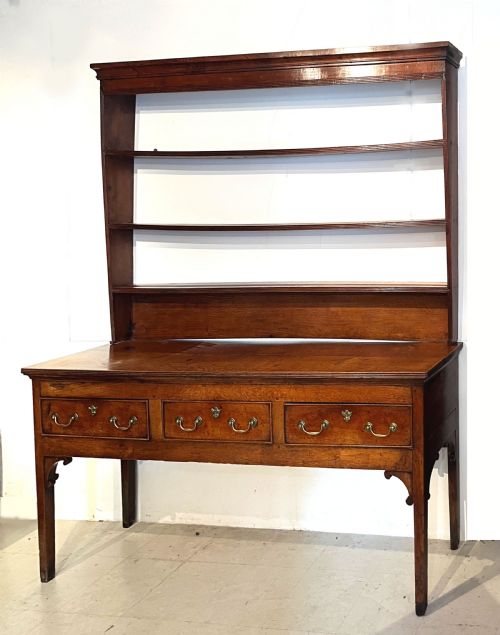
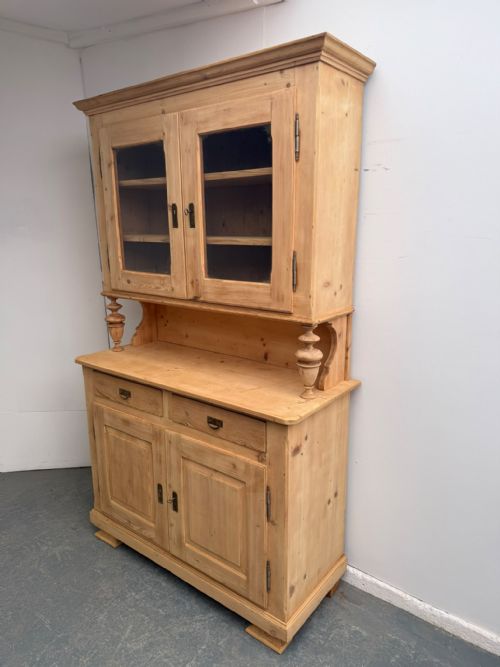


Vintage Buffet and Hutch
These vintage buffet and hutch pieces combine generous lower storage with upper display shelving, bringing traditional character to dining rooms and kitchens.
Vintage Buffet and Hutch
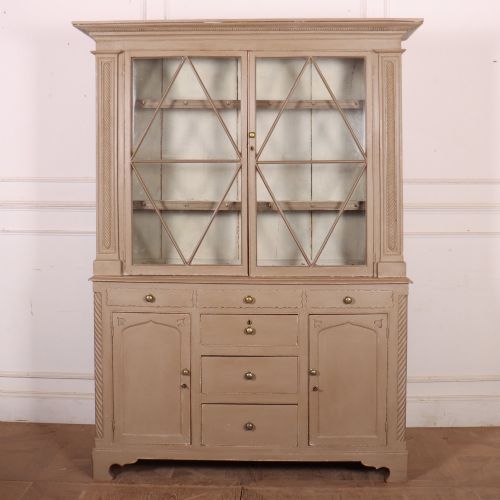
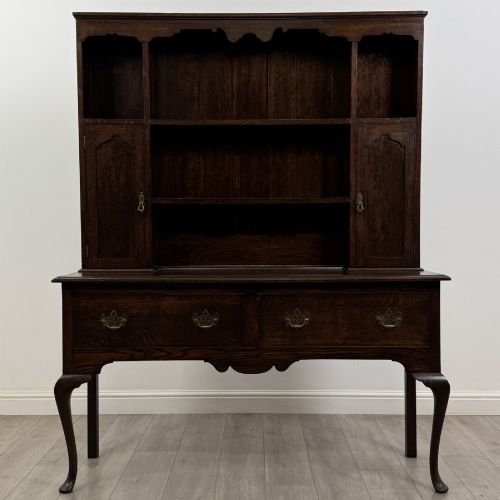
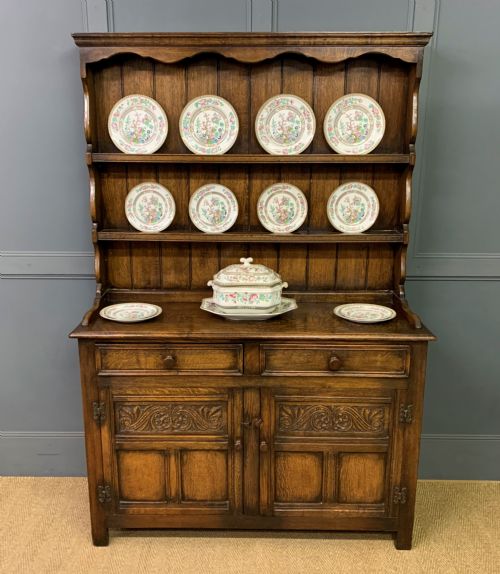
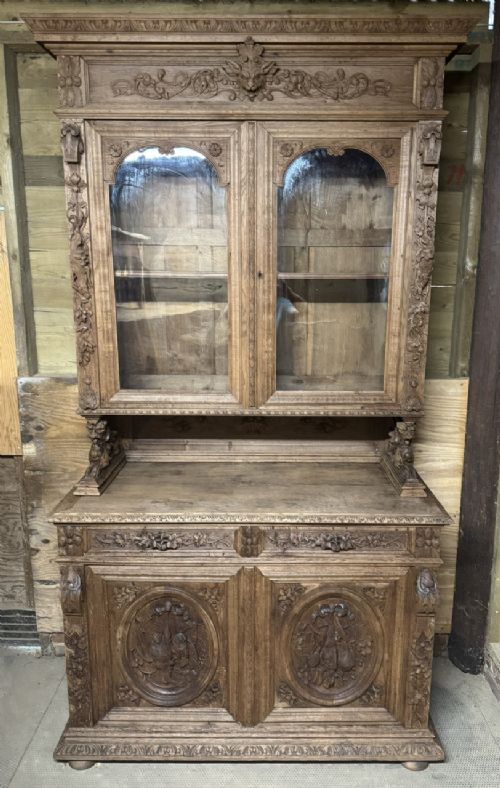
A vintage buffet and hutch combines a heavy sideboard or cabinet base with an open or glazed rack on top, serving as the central storage and display unit for dining rooms and kitchens. These pieces encompass regional forms such as Welsh dressers, French hunting cabinets, and English country dressers.
The versions most commonly met span from the eighteenth century through the Edwardian era and into the 1930s. Construction ranges from robust regional pine and oak to refined mahogany and walnut.
Makers utilised local woods and traditional joinery to build pieces suited to daily domestic service. Lower sections typically feature cupboards and drawers, while upper tiers support plate racks or glazed cabinets.
Materials and construction
Solid timber forms the core of these constructions, with oak and pine dominating regional vernacular pieces while mahogany and walnut appear in more formal revival styles. Boards are joined using traditional methods such as dovetailing for drawers and mortise and tenon joints for frames.
Glazing takes the form of leaded glass or plain panes fitted into wooden cabinet doors on the upper rack. Iron and brass hardware, including drop handles and butterfly hinges, secure doors and drawers across various periods.
Surface treatments vary from polished flame mahogany and waxed oak to painted finishes on West Country pine. Carved details, seen on French hunting styles and Jacobean revivals, rely on hand-chiselled relief work.
Vintage Buffet and Hutch Retail Price Guide 2026
Typical asking prices for vintage buffet and hutch among the pieces listed under this phrase on Sellingantiques today, from the lower quarter to the upper quarter. They describe what is for sale here now, not the wider market.
French hunting cabinets sometimes hide game carvings deep within the oak grain, ready to surprise anyone clearing away dinner.
Assessing quality
The selection of timber dictates the initial grade of the piece, with dense, figured oak and flame mahogany sitting apart from utilitarian pine. Grain alignment and the absence of heavy timber replacement signal superior workshop standards.
Hand-carved ornamentation displays depth and precision that machine routing cannot replicate. The integration of the upper rack to the lower buffet requires stable joinery to support heavy plate displays without structural sag.
The Vintage Buffet and Hutch Glossary
- Hutch
- The upper shelving or cabinet section designed to sit atop a lower buffet or sideboard. It typically holds plates, ceramics, or glassware on open shelves.
- Buffet
- The lower storage unit featuring cupboards, drawers, or a combination of both. It forms the solid foundation of the combined dresser.
- Welsh Dresser
- A traditional regional furniture form featuring an open plate rack mounted above a base of drawers and cupboards. It evolved as a practical kitchen storage unit.
- Breton Buffet
- A heavily carved regional French cabinet style originating from Brittany. It often incorporates folkloric motifs and robust oak construction.
- Arts and Crafts
- A design movement prioritising visible handcraftsmanship, simple structural forms, and natural materials. Pieces from this style avoid excessive machine ornamentation.
Vintage Buffet and Hutch: Frequently Asked Questions
What is a buffet and hutch used for?
These pieces function primarily as dual-purpose furniture for dining rooms and kitchens, combining surface workspace and lower storage with upper display shelving.
Historically, the lower cupboards and drawers stored heavy tableware and linens, while the upper rack showcased decorative ceramics and everyday plates.
How do I tell an 18th century dresser apart from a Victorian one?
Eighteenth-century examples typically display hand-planed timber surfaces, pegged mortise and tenon joinery, and simpler board construction shaped by local tool marks.
Victorian and later revival pieces often incorporate machine-cut elements, standardised hardware, and revival styling such as Jacobean turning or heavy French hunting motifs.
Are these pieces usually made of solid wood?
Most traditional examples utilise solid timber throughout their construction, including oak, pine, mahogany, and walnut.
Secondary woods like deal or pine frequently appear on internal drawer linings and backboards, reflecting period workshop practices.
Can I separate the hutch from the buffet?
Many two-part designs allow the upper rack to lift directly off the lower base for easier transport and placement.
Some smaller or older vernacular forms are constructed as a single integrated unit where the top and bottom cannot be detached.