





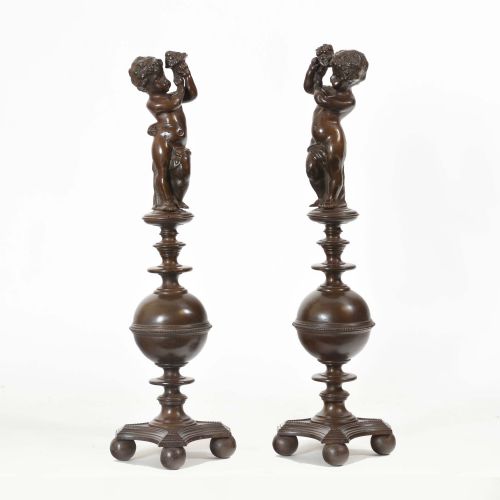


Vintage Bronze Putto
These vintage bronze putto figures and decorative objects bring classical charm and sculptural detail to interiors through lamps, clocks, and wall sconces.
Vintage Bronze Putto
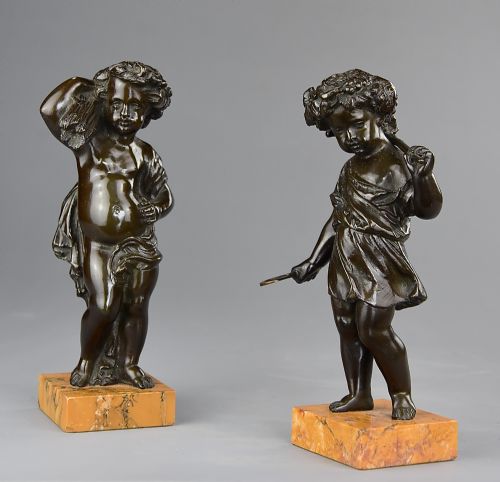
A vintage bronze putto represents a chubby, winged infant figure derived from classical mythology, frequently appearing in domestic decorative arts from the nineteenth and early twentieth centuries. These figures populate the cast bronze, ormolu, and brass mounts of mantel clocks, picture frames, and chenets.
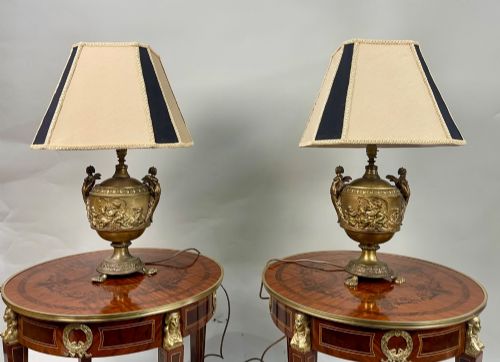
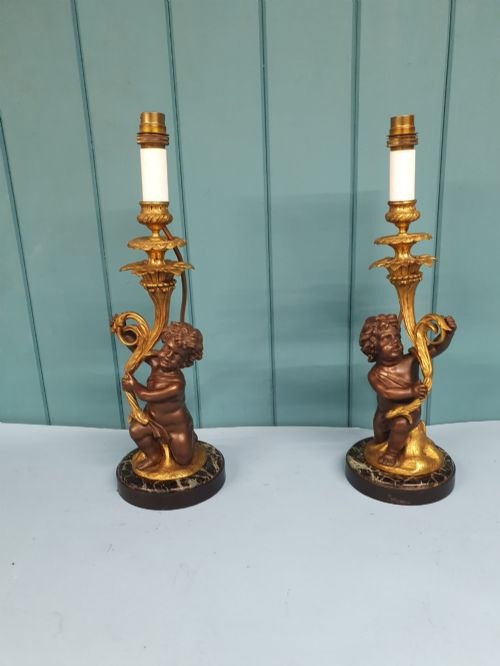
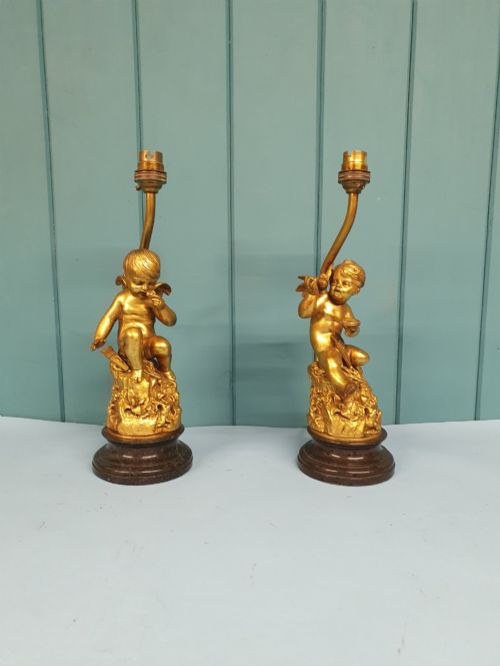
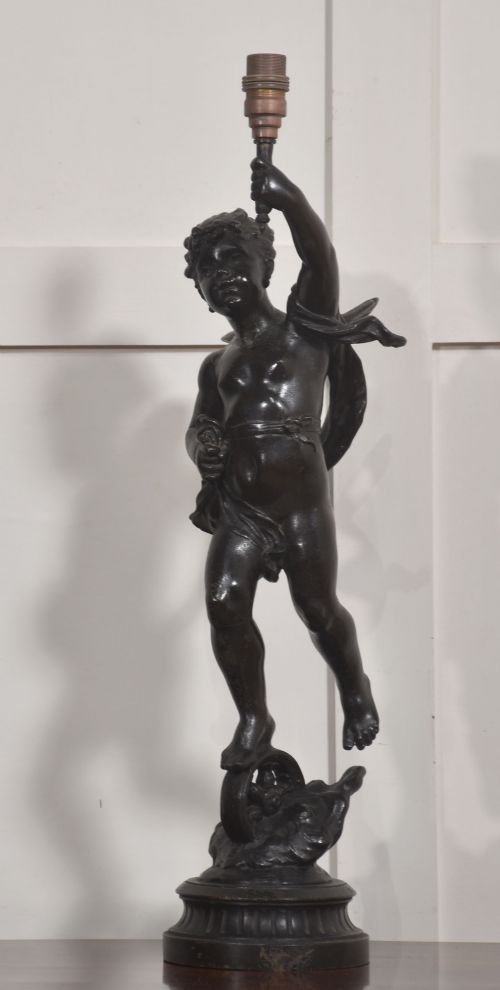
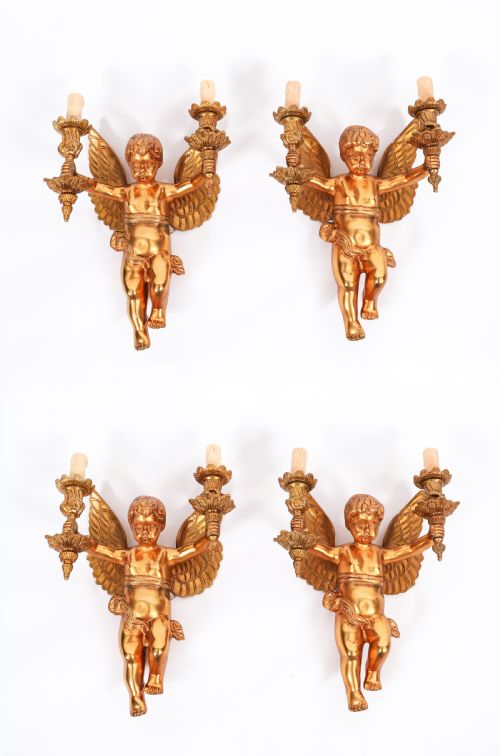
Most examples encountered on this page take the form of functional lighting, specifically table lamps and wall sconces produced across France, Italy, and England. The designs draw heavily upon French Rococo Revival, Neoclassical, and Empire styles, reflecting historical periods from the 1800s through to the 1920s.
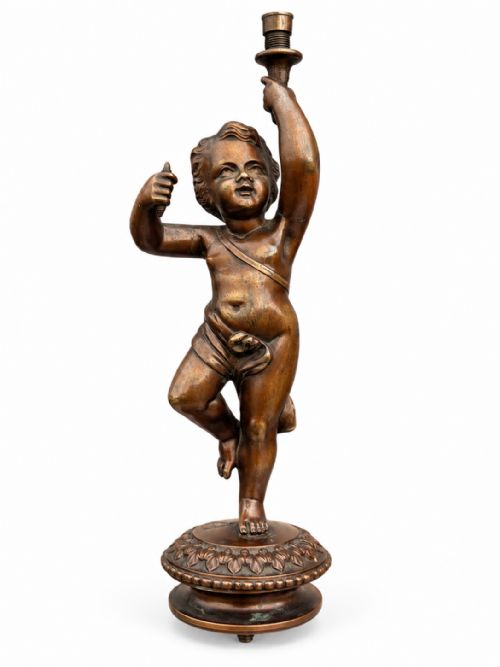
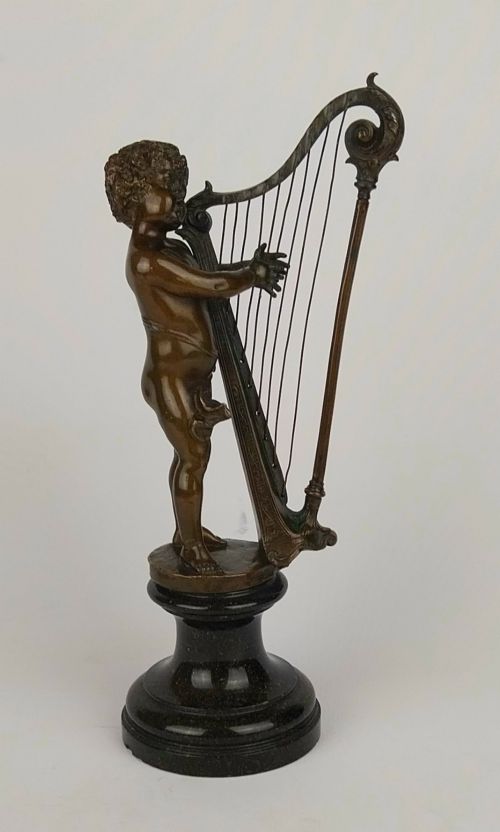
Buyers also meet standalone statuettes and figural candelabra where the putto serves as the primary sculptural subject rather than an architectural ornament. These pieces display diverse patinations, ranging from bright gilt bronze and polished ormolu to dark patinated bronze and bronzed spelter.
How they were made
Foundries produced these figures predominantly through sand casting or lost-wax casting methods, using copper alloys that yielded durable bronze, brass, or ormolu components. Artisans chased the cooled metal surfaces by hand, utilising chisels and gravers to sharpen feather details on wings, hair strands, and facial expressions.
Gilt bronze and ormolu pieces received a layer of mercury gilding or electroplating, imparting a bright golden finish that contrasted against patinated bronze elements. Many figural components were mounted onto secondary materials like white marble bases, porphyry, or glass panels using threaded metal rods and screws.
Vintage Bronze Putto Retail Price Guide 2026
Typical asking prices for vintage bronze putto among the pieces listed under this phrase on Sellingantiques today, from the lower quarter to the upper quarter. They describe what is for sale here now, not the wider market.
Several putti double as lighting crew, holding up torches and candle branches without dropping a single wing.
What varies in quality
Integration between the sculptural figure and its functional purpose defines the standard of the object. High-grade items unite the putto naturally with the lamp base, clock case, or candelabra arm rather than welding or bolting figures onto unrelated mounts.
Bellenot Paris·Henry Berkeley Square London·Claude Michael Clodion
The Vintage Bronze Putto Glossary
- Putto
- A plump, naked male child figure found in classical art, often depicted with wings. They appear singly or in pairs across various decorative metalwork objects.
- Ormolu
- Finely ground high-carat gold applied to a bronze base object through mercury amalgamation or electroplating. This technique creates a durable, luminous golden finish characteristic of French decorative arts.
- Chenet
- A metal firedog placed at the hearth to support logs, frequently decorated with figural bronze mounts including cherubs. Pairs sit at the front of an open fireplace.
- Torchère
- A tall ornamental stand or lamp designed to hold lights, often incorporating figural bronze shafts. These items function as freestanding illumination sources.
- Spelter
- A zinc alloy used as a less expensive substitute for bronze, often painted or electroplated to imitate true bronze. It offers a lighter weight alternative found in nineteenth-century decorative wares.
Vintage Bronze Putto: Frequently Asked Questions
What is a putto?
A putto is a small, winged infant figure originating in Renaissance art, resembling a cherub or classical cupid. These figures symbolise love or domestic happiness in decorative metalwork.
In nineteenth-century pieces, they support lamp columns, lean against clock faces, or hold candle branches. Their presence denotes classical revival taste across European workshops.
How do I clean bronze?
Bronze requires minimal intervention to preserve its original surface patina and protective oxide layer. Dusting with a soft, dry cloth prevents particulate accumulation.
Avoid abrasive cleaners, chemical solvents, or metal polishes that strip away historical patination or gilding. Gilt surfaces tolerate gentle wiping with a damp cloth if dried immediately.
Are these lamps original?
Many nineteenth-century figures began life as candelabra, torchères, or architectural ornaments before undergoing conversion into electric table lamps. This adaptation occurred across decades to suit modern domestic lighting needs.
Original wiring is rarely intact on older pieces, and most items feature modern electrical cords and lamp holders fitted to historical metal bases.
How do I date these pieces?
Dating relies upon stylistic markers, casting techniques, and secondary materials such as marble bases or clock movements. Nineteenth-century examples often display heavy sand-cast construction and hand-chased surface details.
Twentieth-century pieces from the 1910s and 1920s frequently incorporate lighter brass components, simpler mountings, and early electric fittings alongside traditional casting methods.