

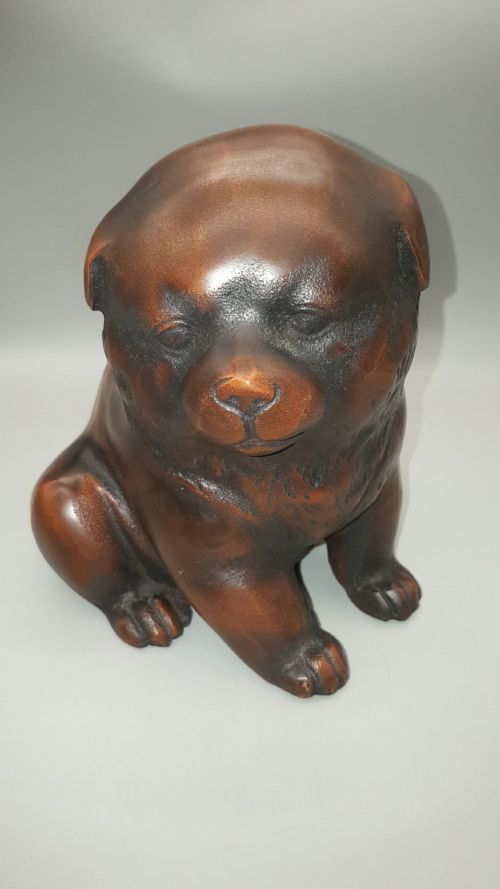
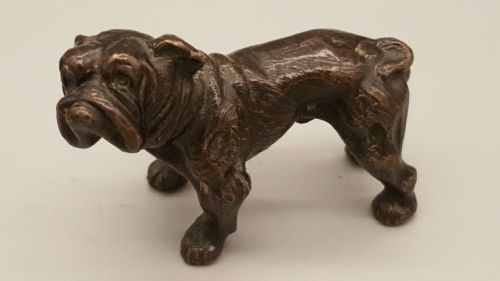


Vintage Bronze Dog Statues
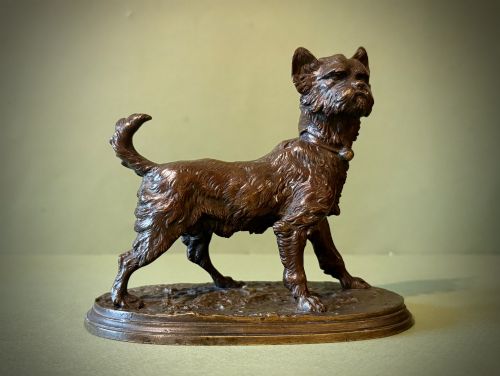
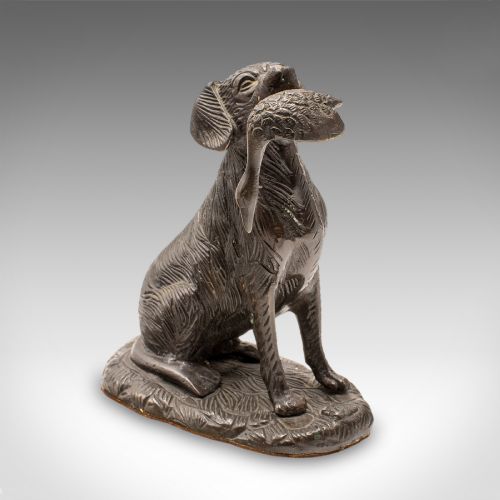
These vintage bronze dog statues capture the character and anatomy of various breeds through the skilled hands of 19th-century and 20th-century animalier sculptors.
Vintage Bronze Dog Statues
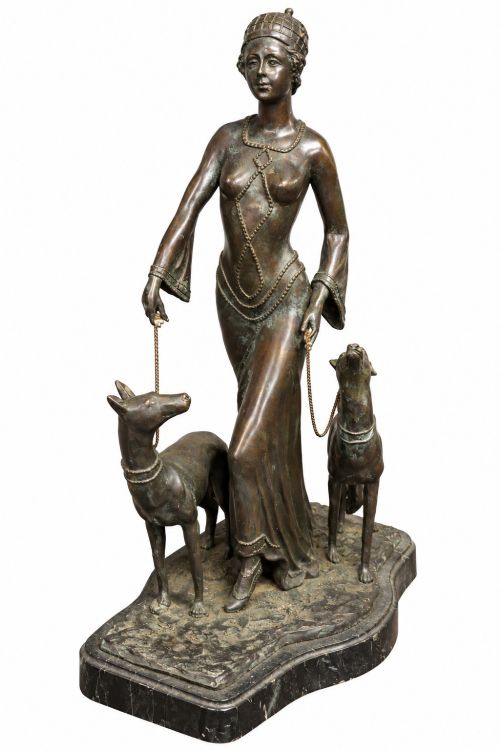
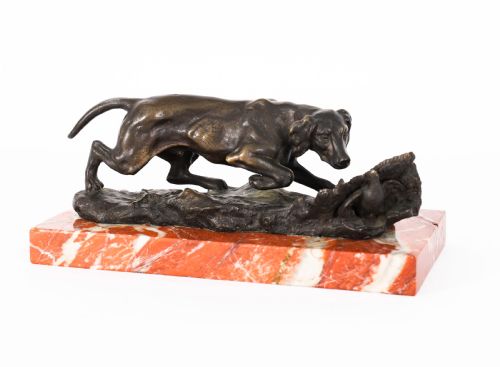
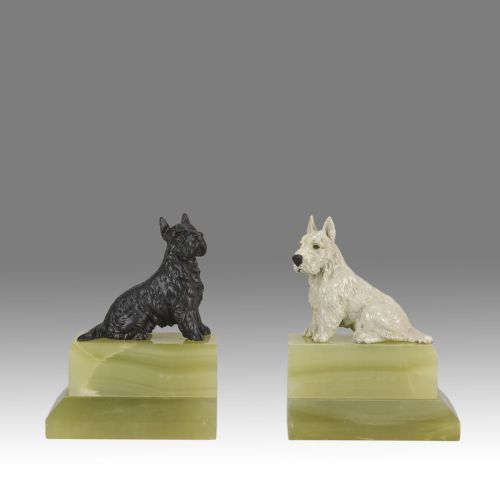
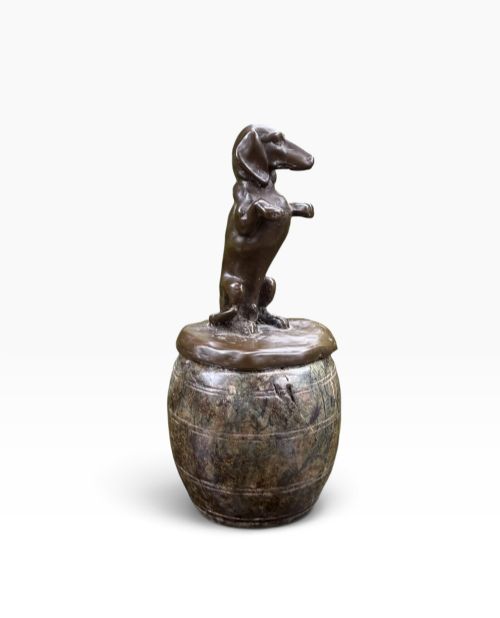
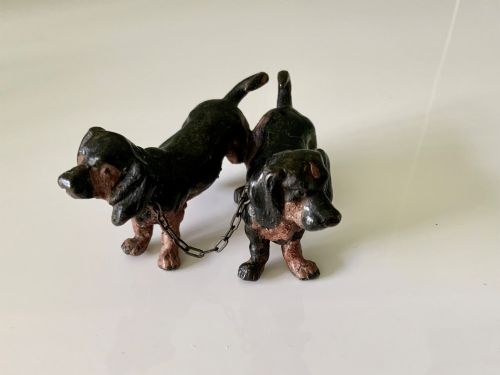
When searching for vintage bronze dog statues, collectors encounter a diverse array of sculptural forms ranging from realistic nineteenth-century hunting hounds to stylised twentieth-century bookends and paperweights. The most common examples met on this page are French animalier bronzes and Austrian cold-painted pieces depicting terriers, dachshunds, and greyhounds.
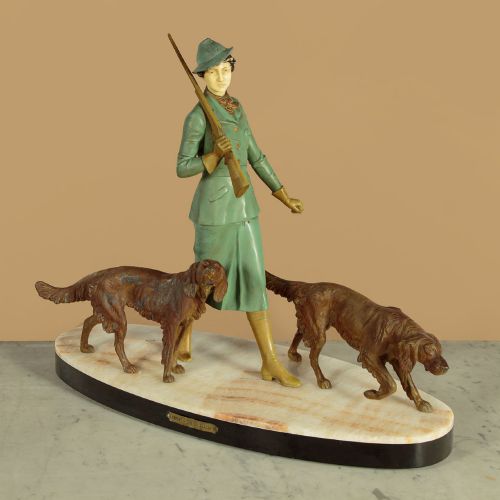
Many of these figures are mounted on heavy marble or onyx bases, whilst others stand independently as decorative ornaments or functional items such as fireside statues. The selection spans the Victorian era through the Art Deco period, incorporating both naturalistic studies and stylised representations of working dogs and companion breeds.
Makers utilised various casting techniques to produce sculptures that reflect the prevailing aesthetic of their decade of origin, from detailed 19th-century French casts to whimsical early-20th-century Vienna bronzes. Buyers will find individual breeds accurately rendered in distinct postures, whether resting, running, or posed in rigid attention.
Materials and Technique
Foundry workers typically employed the lost-wax casting method to capture fine details in bronze, patinated metal, and occasional silvered bronze variants. Artisans then applied chemical patinas or hand-painted polychrome pigments directly onto the metal surface, as seen in cold-painted Vienna bronzes.
Many sculptures are secured to polished marble or onyx plinths using threaded bolts, combining heavy stone bases with metallic animal figures. Spelter also appears as a substitute metal in certain Art Deco pieces, offering a lighter alternative to traditional bronze.
Vintage Bronze Dog Statues Retail Price Guide 2026
Typical asking prices for vintage bronze dog statues among the pieces listed under this phrase on Sellingantiques today, from the lower quarter to the upper quarter. They describe what is for sale here now, not the wider market.
Several dogs here sit on marble without ever chasing a single cat.
Judging Quality
The degree of anatomical precision and muscular definition distinguishes superior animalier castings from standard commercial figures. Master sculptors rendered fur texture, bone structure, and facial expressions with life-like accuracy that lesser pieces lack.
The crispness of the chasing work after casting determines how sharply defined the paws, ears, and collars appear. Furthermore, the preservation of the original cold-painted pigment or the depth of the chemical patina significantly impacts the integrity of the piece.
Carl Kauba·Prosper Lecourtier·Edith Parsons·Jules Moigniez·Antoine Louis Barye
The Vintage Bronze Dog Statues Glossary
- Animalier
- A 19th-century artistic movement focused on the realistic portrayal of animals. Sculptors in this style studied live creatures closely to reproduce accurate anatomy.
- Cold-Painted Bronze
- A technique where bronze figures receive layers of polychrome paint applied without heat. This method is particularly characteristic of Austrian workshops.
- Patina
- The surface coloration and sheen developed on bronze over time or applied chemically by the foundry. It protects the metal and adds visual depth to the sculpture.
- Spelter
- A zinc alloy frequently utilised as a cheaper substitute for bronze during the Art Deco era. It possesses a lighter weight and softer texture than true bronze.
- Vienna Bronze
- Small, highly detailed bronze figures produced in Austrian foundries during the late 19th and early 20th centuries. They are renowned for meticulous hand-painting.
Vintage Bronze Dog Statues: Frequently Asked Questions
How do I clean vintage bronze dog statues?
Dust the surface gently with a soft, dry microfibre cloth to remove accumulated particles without disturbing the underlying patina. Avoid using water, soap, or abrasive metal polishes that strip away historical finishes.
Apply a microcrystalline wax sparingly if the metal requires protection against moisture. Buff the wax gently after application to maintain a stable, matte protective coating.
Are these sculptures made of solid bronze?
Most traditional animalier figures are cast using the lost-wax method, resulting in solid bronze forms or thick-walled hollow castings. Heavier models often feel substantial in hand due to the density of the metal.
Some Art Deco pieces utilise spelter rather than bronze, which can be identified by its lighter weight and different fracture characteristics if exposed. Marble or onyx bases are separate stone components attached underneath the metal sculpture.
What is cold-painted bronze?
Cold-painting involves applying multi-layered oil or enamel paints to a bronze casting without subjecting the finished piece to high-temperature kiln firing. This technique allowed artisans to achieve vibrant, lifelike colours on miniature animal figures.
Over decades, handling and light exposure can cause these painted layers to chip or fade. Surviving pieces with intact cold-painting are particularly prized by collectors.
How can I tell the period of a bronze dog?
Stylistic indicators such as the naturalistic anatomy of 19th-century animalier works versus the geometric streamlining of Art Deco design provide clear chronological clues. Foundries also stamped signatures, monograms, or foundry marks directly into the bronze during casting.
Materials associated with the base, such as polished black marble popular in the early 20th century, help narrow down the date of manufacture. Comparing the casting technique to known dated works by documented sculptors confirms the era.