

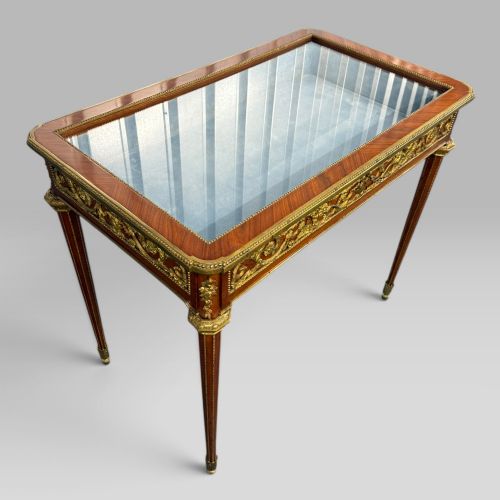
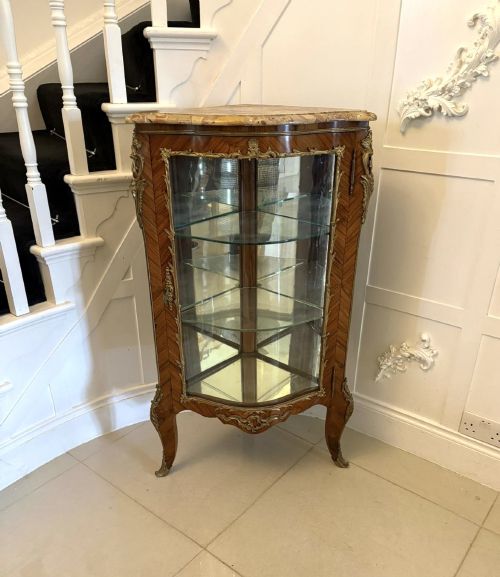
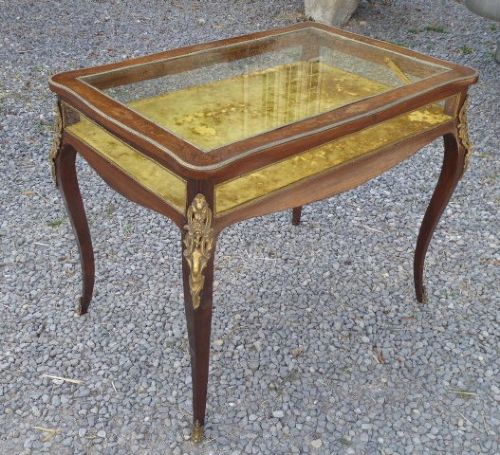


Vintage Brass Vitrine
These vintage brass vitrine pieces combine glazed panels with metallic framing to showcase precious objects, bringing French revival elegance and Edwardian utility into domestic spaces.
Vintage Brass Vitrine
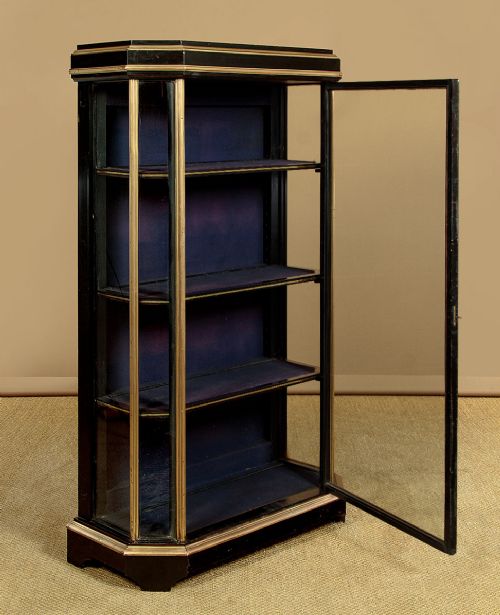
A vintage brass vitrine serves as a dedicated enclosure for displaying small treasures, collectibles, and curious items within a room. When you examine this selection, you encounter forms ranging from slim corner cabinets to table-height bijouterie cases.
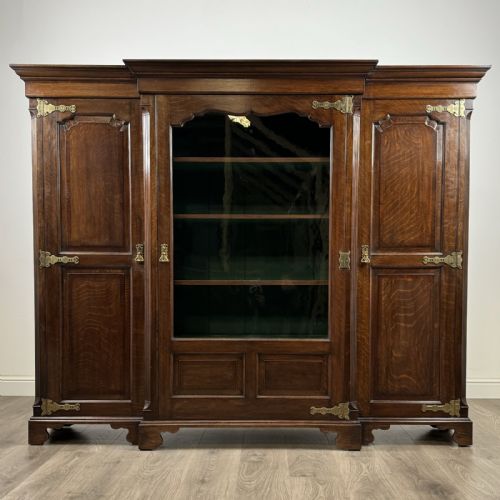
The objects span from nineteenth-century serpentine French cabinets to early twentieth-century shop counters and Edwardian display tables. Most pieces integrate glazed viewing areas with timber carcases supported by brass mounts.
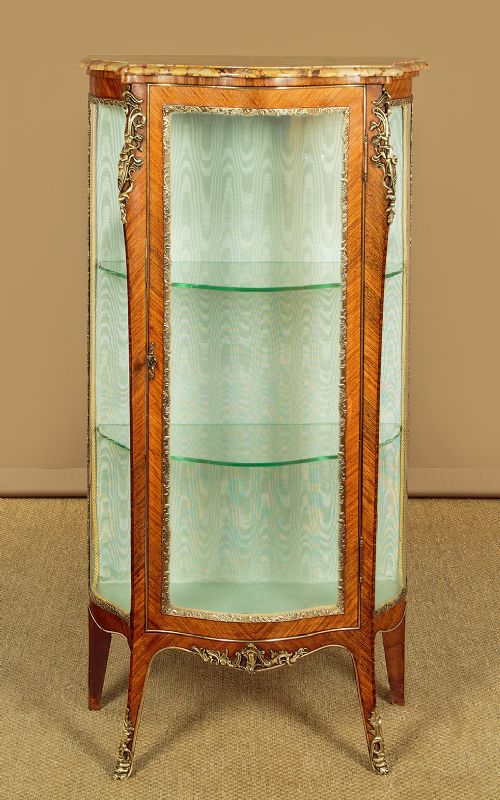
Continental revivals dominate the aesthetic, particularly French Louis styles featuring curved woodwork and gilt bronze or brass framing. Alongside these formal cabinets, commercial shop display fixtures provide utilitarian alternatives.
Materials and construction methods
Cabinet makers constructed the primary carcases using mahogany, kingwood, and oak, frequently applying intricate marquetry veneers. Glass panels then formed the transparent walls required for object visibility.
Brass and ormolu mounts were cast and applied to frame corners, borders, and feet, adding structural definition and ornamental contrast. Interior surfaces were often lined with velvet, fabric, or marble tops to complement the displayed items.
Vintage Brass Vitrine Retail Price Guide 2026
Typical asking prices for vintage brass vitrine among the pieces listed under this phrase on Sellingantiques today, from the lower quarter to the upper quarter. They describe what is for sale here now, not the wider market.
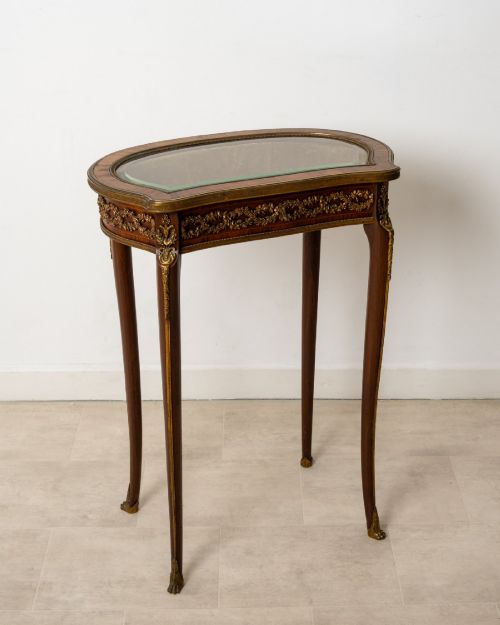
Commercial shop display counters appear alongside domestic drawing-room cabinets and kidney-shaped lamp end tables.
Distinctions in craftsmanship
Quality rests heavily on the precision of the brass casting and the execution of the timber veneers. Finer examples display crisp ormolu mounts and seamless joinery on serpentine or kidney-shaped forms.
The integrity of the original glass and the sophistication of internal linings, such as silk velvet or veined marble, separate standard production pieces from workshop highlights.
François Linke·Edwards and Roberts·F. Sage and Co.·Siegel
The Vintage Brass Vitrine Glossary
- Vitrine
- A glass-sided cabinet designed specifically for displaying porcelain, curiosities, or fine objects. These pieces often feature extensive glazing to maximise light penetration.
- Bijouterie table
- A glass-topped display table with a shallow compartment beneath for holding jewellery and small artefacts. They typically stand on slender legs and function as surface furniture.
- Ormolu
- Gilt bronze ornamentation applied to furniture mounts and decorative hardware. The technique involves a mercury-gilding process on cast brass or bronze.
- Serpentine
- A curved furniture shape that undulates with a convex centre flanked by concave sides. This line requires advanced woodworking skill to match with glass and brass framing.
- Vernis Martin
- A decorative furniture lacquer imitating Asian screens, developed in eighteenth-century France. Later revival cabinets adopted this technique for painted door panels.
Vintage Brass Vitrine: Frequently Asked Questions
What is a bijouterie table?
A bijouterie table is a low display table with a glazed top and a shallow internal compartment intended for viewing small collectables.
These pieces sit comfortably in sitting rooms as functional surface furniture that doubles as a miniature museum case.
How do I clean the interior lining?
Many cabinets feature delicate velvet, fabric, or painted panels that require gentle surface dusting with a soft brush rather than liquid cleaners.
Checking the material type first ensures you avoid damaging historic textiles or delicate Vernis Martin surfaces.
Can I use a vitrine for books?
While some taller pieces function as narrow bookcases, most vitrines are engineered primarily for delicate display items and ceramics behind glass.
Heavier volumes require sturdy shelving, whereas vitrine shelves often prioritize slim sightlines over heavy load-bearing capacity.
Where should I place a display table?
Display tables suit central room placement or sitting beside seating where top-down natural light can illuminate the contents.
Keep them away from direct sunlight to protect interior fabrics and sensitive objects from fading.