







Vintage Brass Twist Candlesticks
These vintage brass twist candlesticks bring tactile warmth and architectural form to a room, offering functional candlelight shaped by Victorian and Edwardian hands.
Vintage Brass Twist Candlesticks
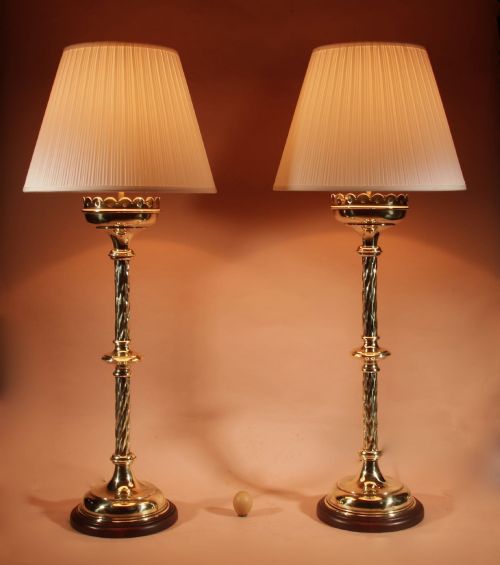
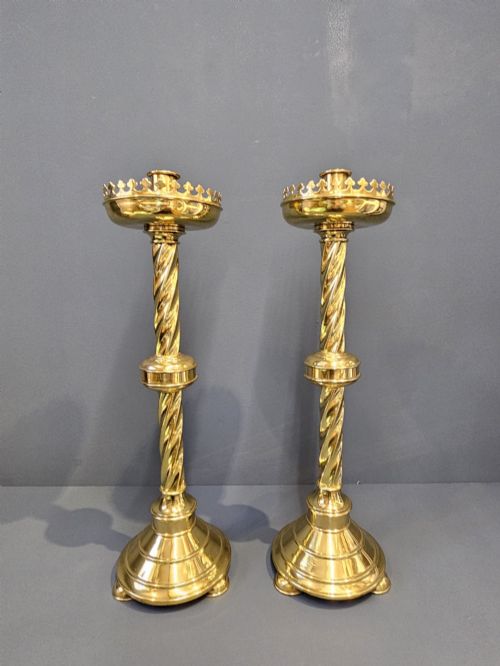
When searching for vintage brass twist candlesticks, collectors encounter sturdy cast and turned examples originating primarily from the Victorian and Edwardian eras, alongside pieces stretching back to the eighteenth century. The selection ranges from domestic hearthside pairs to grander church and altar pieces, occasionally adapted into table lamps.
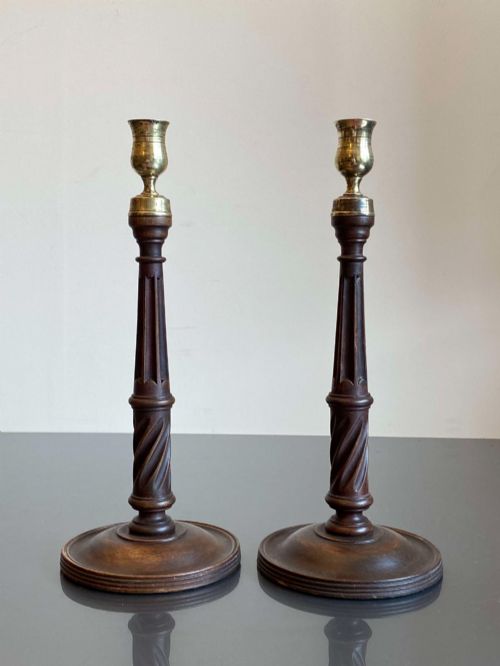
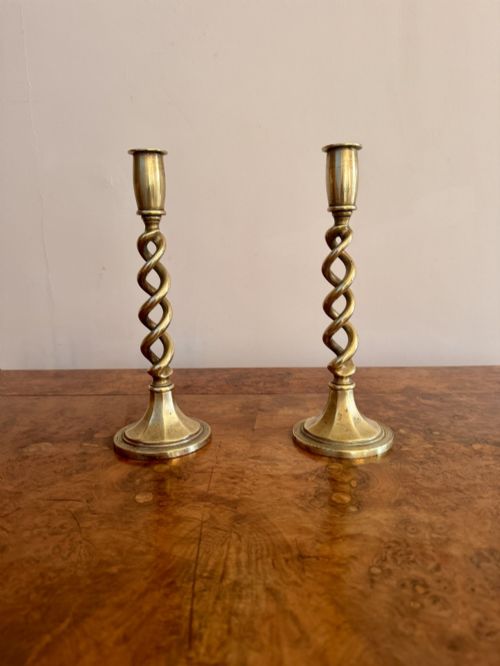
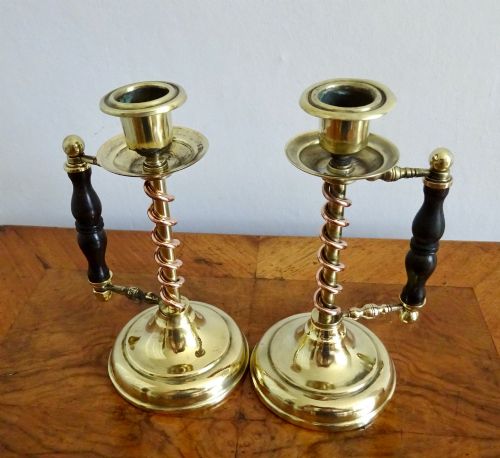
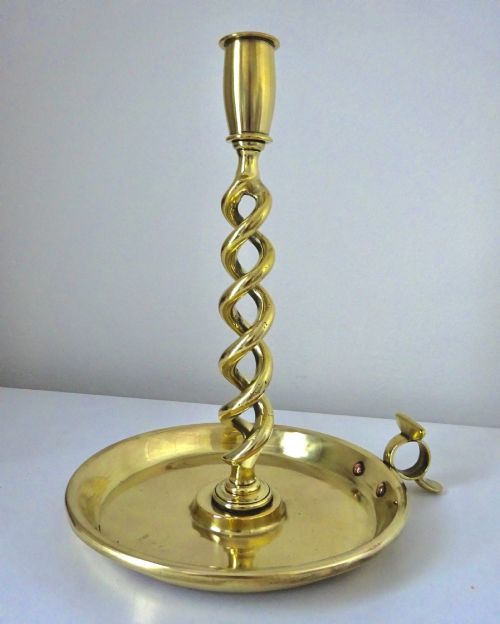
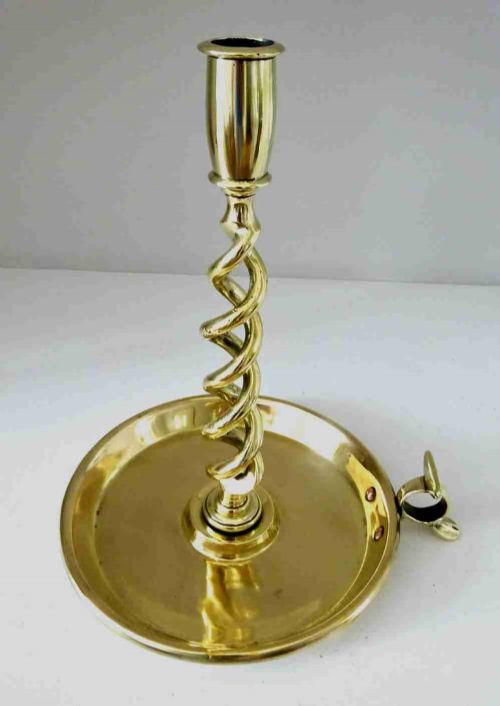
The form often utilises a helical or barley twist stem, sometimes paired with fitted bases, trays with handles, or contrasting materials like oak and mahogany. These variations reflect domestic utility and changing interior styles, from Gothic Revival to Arts and Crafts sensibilities.
How they were made
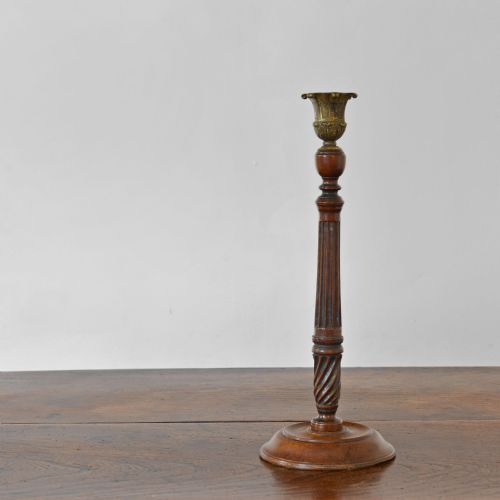
Makers shaped the metal through casting and turning, creating crisp helical stems in brass alongside variants combining copper and cast brass elements. Wooden components such as oak and mahogany appear integrated into the shafts or fitted bases, demonstrating mixed-material construction.
Surface finishing relies on polished brass and patinated metalwork, occasionally complemented by enamel details or glass elements. Construction techniques balance structural rigidity with decorative appeal, particularly in taller church and altar formats.
Vintage Brass Twist Candlesticks Retail Price Guide 2026
Typical asking prices for vintage brass twist candlesticks among the pieces listed under this phrase on Sellingantiques today, from the lower quarter to the upper quarter. They describe what is for sale here now, not the wider market.
Some nineteenth-century domestic candlesticks included fitted trays with handles so servants could safely carry a flickering light up creaking staircases.
What varies in quality
The distinction between standard domestic items and finer examples lies in the crispness of the twist and the weight of the cast metal. Heavier gauge brass and well-proportioned double helix stems show superior craftsmanship compared to simpler production pieces.
Proportion and material integration also dictate worth, particularly where brass meets turned hardwoods like oak and mahogany on fitted bases or trays. Finer pieces maintain balanced symmetry in their twist profiles and secure joinery across multi-component assemblies.
T Thomason and Co
The Vintage Brass Twist Candlesticks Glossary
- Barley twist
- A spiral column resembling barley sugar, turned or cast into the stem of the candlestick. This form provides dynamic visual movement and catches the ambient light effectively.
- Ecclesiastical
- Pertaining to the church, describing taller or heavier candlesticks and altar pieces made for religious settings. These items frequently display Gothic Revival or Victorian influences.
- Double helix
- A stem featuring two intertwined spiral twists running parallel up the shaft. This intricate variation demands greater skill in metal shaping.
- Fitted base
- A weighted or shaped platform designed to anchor tall or heavy candlesticks securely. It prevents tipping and often incorporates a drip tray.
Vintage Brass Twist Candlesticks: Frequently Asked Questions
How do I date them?
Dating relies on stylistic markers such as Gothic Revival motifs, Arts and Crafts simplicity, or Victorian proportions. Examining the manufacturing methods of the brass and any accompanying wood assists in placing the piece within the nineteenth or early twentieth century.
Changes in base construction and metal finishing also offer clues to the period. Comparing pieces against documented church and domestic examples helps narrow down the decade of production.
Were they used in churches?
Many larger examples originated as church or altar candlesticks, manufactured for ecclesiastical settings. These pieces tend to be taller and heavier than domestic items.
Domestic variants were designed for parlours and dining tables, offering warmth and illumination before the widespread adoption of electric lighting. Their robust construction suited daily handling.
Can I use them as lamps?
Several pieces are found adapted into table lamps, incorporating electrical fittings onto the original twist stems. This conversion allows period brasswork to function safely with modern wiring.
When evaluating an adapted piece, check whether the conversion preserves the integrity of the original metal or wood structure. Reversible adaptations are often preferred by traditionalists.
How do I clean brass safely?
Maintenance requires gentle dusting and occasional cleaning with a mild, non-abrasive brass cleaner to preserve the underlying metal. Aggressive polishing removes historical patina which collectors value.
Avoid harsh chemical dips that strip the aged surface completely. Allowing a natural dark tone to remain in the recesses of the twist enhances the visual depth of the stem.