


Vintage Brass Tea Kettle
A vintage brass tea kettle brings warmth and traditional utility to a room, offering enduring metalwork from the Georgian and Victorian eras.
Vintage Brass Tea Kettle
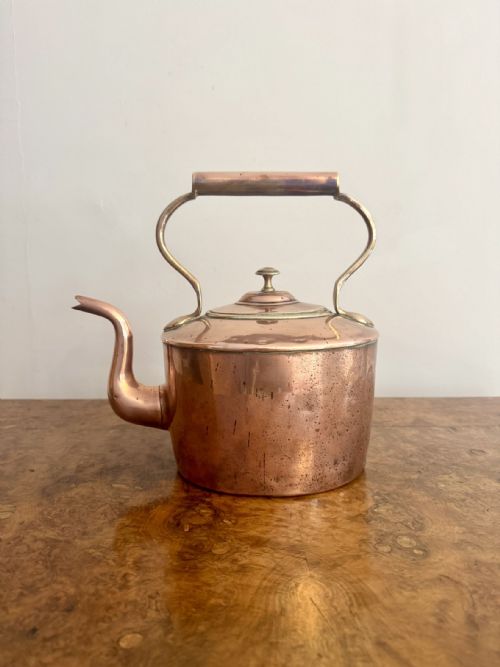
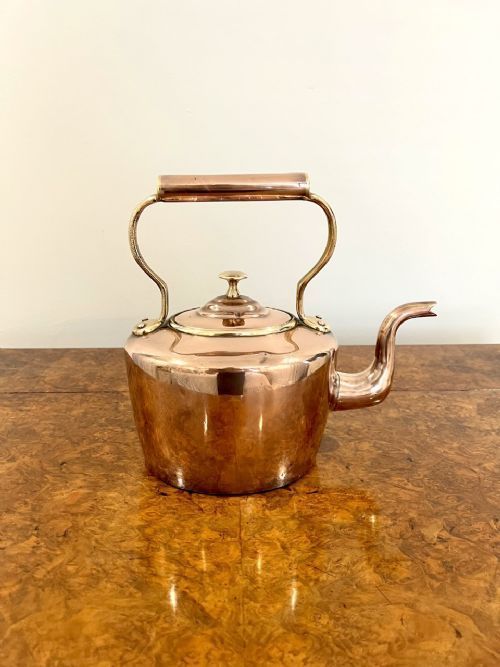
When searching for a vintage brass tea kettle, collectors encounter a range of forms spanning from the Georgian period through the Victorian era and into the twentieth century. These domestic vessels served practical boiling functions in historical households, varying from simple hearth containers to elaborate warming vessels.
Origins stretch across English workshops and traditional Chinese decorative arts, reflecting diverse period aesthetics such as Arts and Crafts and Edwardian designs. Buyers examine these diverse configurations to find items that suit both decorative display and historical collection.
Materials and construction
Makers utilised heavy sheet brass and copper, hammering and joining the metal sheets to form watertight vessels capable of enduring direct heat. Handles frequently incorporate wood, ebonised wood, or bone insulators to protect hands from hot metal during use.
More decorative specimens integrate cloisonne enamel, gilded metal, and glass elements alongside traditional brass bodies. Stands and burners often combine brass components with other metals to create stable bases for spirit kettles and samovars.
Some nineteenth-century tea kettles arrived with tiny internal chimneys to help the morning water boil before anyone had fully woken up.
Assessing quality and craftsmanship
Superior examples display precise metal shaping, robust structural joints, and harmonious proportions between the kettle body and its stand. Finer pieces retain original fittings such as intact wooden handles, matching burners, and uncompromised spouts.
Variations arise in the weight of the metal and the complexity of the manufacturing technique, separating simple utilitarian items from masterworks bearing intricate surface decoration or coordinated stands.
William Soutter & Sons
The Vintage Brass Tea Kettle Glossary
- Spirit kettle
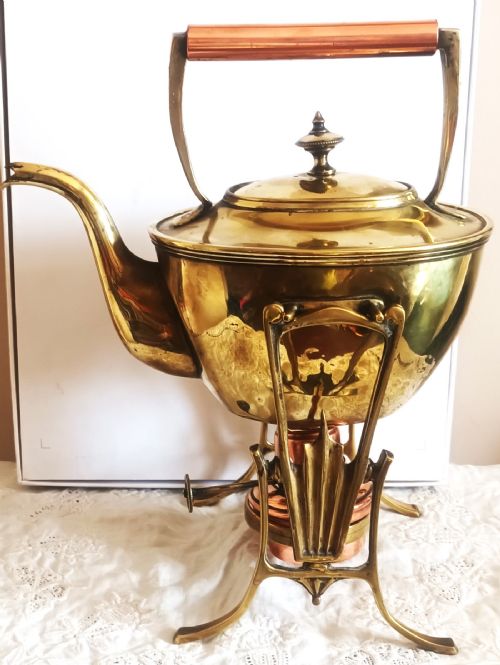
- A tea kettle mounted on a metal stand with an integrated spirit burner beneath for heating water at the table. These setups are typical of Victorian and Edwardian dining customs.
- Samovar
- A large heated metal container traditionally used to boil and heat water for tea. These ornate vessels often feature spigots and substantial capacity.
- Cloisonne enamel
- A decorative metalwork technique where enamel is applied within compartments created by soldered wire. This surface treatment appears on select twentieth-century teapots.
- Ebonised wood
- Timber treated to imitate ebony wood, frequently utilised for cool-touch kettle handles and knobs. This dark finish provides a sharp contrast against polished brass and copper.
- Georgian period
- The era spanning the reigns of the British monarchs George I through George IV, noted for classic proportions in metalware. Kettles from this time often exhibit clean copper forms.
Vintage Brass Tea Kettle: Frequently Asked Questions
What is a spirit kettle?
A spirit kettle is a tea vessel suspended above a small burner fueled by methylated spirits or alcohol. This apparatus allowed hosts to keep water hot throughout a social gathering without returning to the kitchen hearth.
Such kettles often arrived as complete sets featuring matching metal stands and burners designed for the dining table or drawing room.
How do I date a brass kettle?
Dating relies on observing manufacturing techniques, material combinations, and stylistic clues typical of periods like the Georgian era or Victorian times. Heavy cast components, specific handle attachments, and overall form offer reliable indicators of age.
Comparing construction methods against documented period examples helps establish whether a piece originates from the nineteenth century or later.
Were these kettles used on open fires?
Many early copper and brass kettles were designed to sit directly on coal fires or hearth embers to boil water for tea. Later Victorian and Edwardian spirit kettles were instead warmed by dedicated under-burners mounted within stands.
Understanding the presence or absence of a stand clarifies whether the kettle was meant for hearth heating or table service.
What is the difference between a samovar and a kettle?
A samovar is a much larger vessel equipped with a central internal heating tube and a spigot near the base for dispensing hot water. Regular tea kettles are smaller containers with top spouts meant to be lifted and tilted for pouring.
Samovars generally served larger gatherings, whereas standard kettles accommodated smaller daily household tea preparation.