
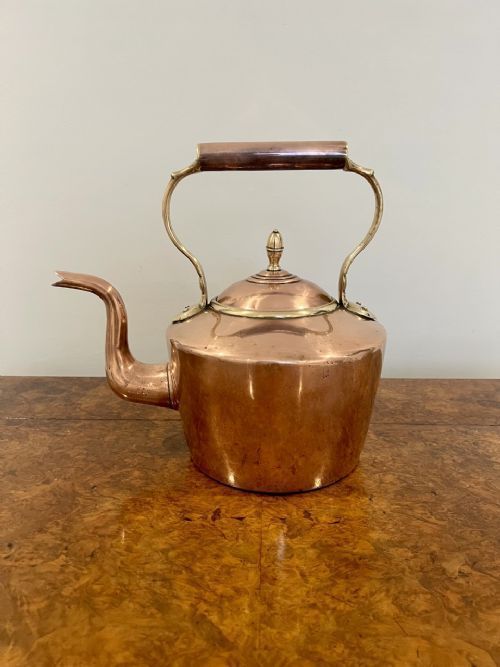
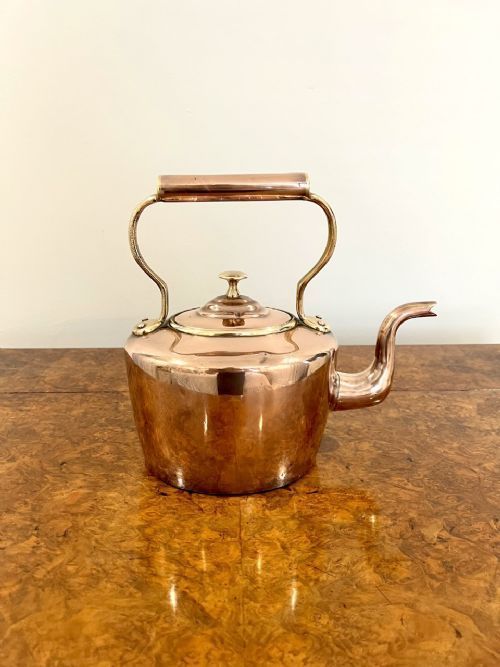


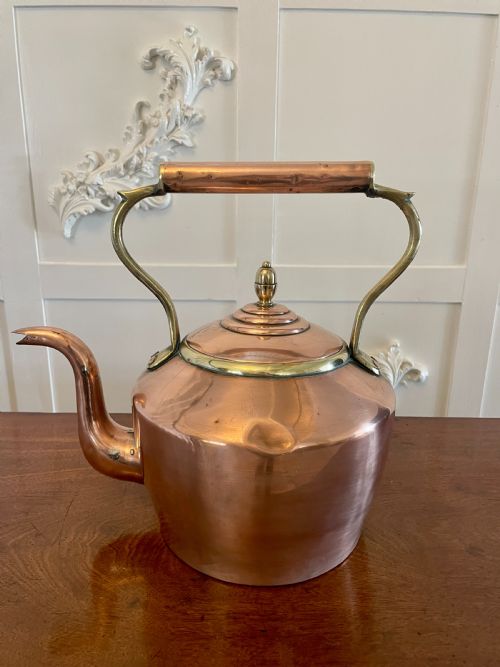

Traditional Brass Tea Vessel
These traditional brass tea vessel examples span Georgian and Victorian periods, offering warm metal tones and solid forms that anchor a room.
Traditional Brass Tea Vessel
A traditional brass tea vessel typically appears as a kettle, teapot, or tea urn, often fashioned from copper with brass details or constructed with cloisonne enamel. These pieces emerge predominantly from the Georgian and Victorian eras, reflecting the domestic habits of the nineteenth century.
The forms range from pear-shaped Dutch examples and oval shapes to large samovars and kettles accompanied by trivets. Buyers encounter traditional Chinese styles alongside English kitchen copper and brass.
Most items serve as functional brewing or heating apparatuses from past centuries, carrying the marks of open hearths and polished sideboards. They bring tactile historical depth to contemporary interiors.
Materials and construction methods
Construction relies heavily on hammered copper and brass, sometimes paired with wood, bone, or ebonised wood handles to protect hands from heat. Wrought iron and gilded metal also appear in support frames and decorative accents.
Cloisonne enamel brings colourful pattern work to mid twentieth-century pieces, contrasting with the plain polished metals of earlier decades. Makers shaped these metals by hand, joining seams with precision to hold boiling water safely.
Pear-shaped Dutch kettles bring a distinctly plump silhouette to the tea table.
Distinctions in quality and finish
Quality rests in the weight of the metal, the crispness of the hand-beaten form, and the integrity of handles made from wood or bone. Better examples retain their original proportions and balanced spouts without clumsy repairs.
The survival of original surface polish and decorative elements like cloisonne enamel separates standard utilitarian kitchenware from finer decorative vessels.
The Traditional Brass Tea Vessel Glossary
- Samovar
- A heated metal container traditionally used to boil and heat water in Russia and other regions. These large urns often feature spigots and sit on fitted bases.
- Cloisonne
- An ancient technique for decorating metalwork objects with colourful materials held in place by thin metal strips. It creates intricate patterns on vessels.
- Ebonised wood
- Timber treated to resemble ebony, frequently used for kettle handles and knobs to provide a dark, durable grip.
Traditional Brass Tea Vessel: Frequently Asked Questions
How were these tea vessels used?
These vessels heated and dispensed water for tea preparation in domestic settings. Many sat directly on hearths or accompanied trivets on tabletops.
Larger samovars and urns served groups in formal rooms, holding hot water throughout social gatherings.
How do I clean a brass kettle?
Maintenance involves gentle cleaning with specialised metal polishes designed for brass and copper. Avoid harsh abrasives that remove historical patina.
Regular dusting and occasional soft wiping preserve the polished sheen without stripping the aged character.
Are these vessels safe for boiling water?
Most antique pieces function primarily as decorative objects or historical display items rather than daily kitchen tools. Past repairs or interior wear mean modern testing is advisable before use.
Many collectors prefer to display them unheated to protect the original metal surfaces and internal linings.
How can I tell Georgian from Victorian pieces?
Georgian vessels, often dated around eighteen hundred, tend toward simple oval shapes and hand-hammered copper textures. Victorian examples from later decades frequently incorporate heavier cast elements and different handle styles.
Examining construction marks and material combinations helps identify the manufacturing period.