








Vintage Brass Tea Caddy
These vintage brass tea caddy selections offer refined storage for dry leaf, pairing domestic utility with period metalwork.
Vintage Brass Tea Caddy
A vintage brass tea caddy represents a specialised container originally made to store and preserve loose leaf tea leaves in domestic settings. The items appearing under this designation encompass various forms, from metal-bound wooden boxes to entirely metallic vessels dating across the Georgian, Regency, Victorian, and Edwardian eras.
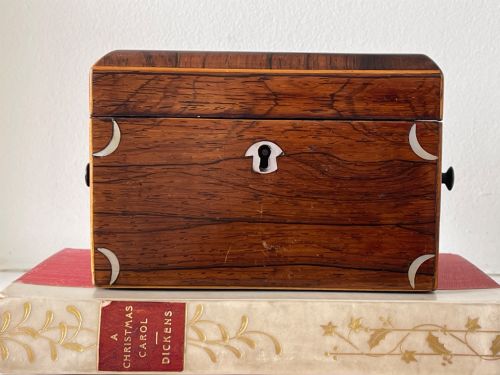
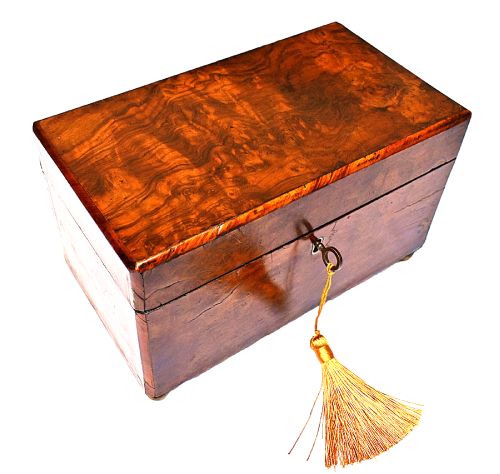
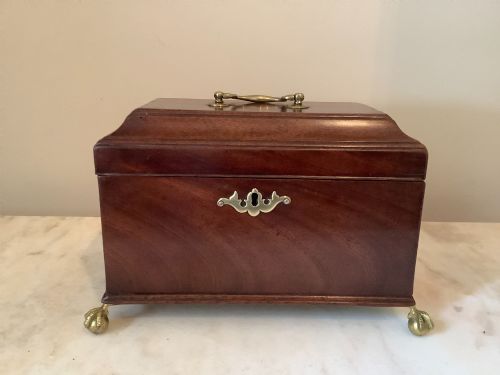
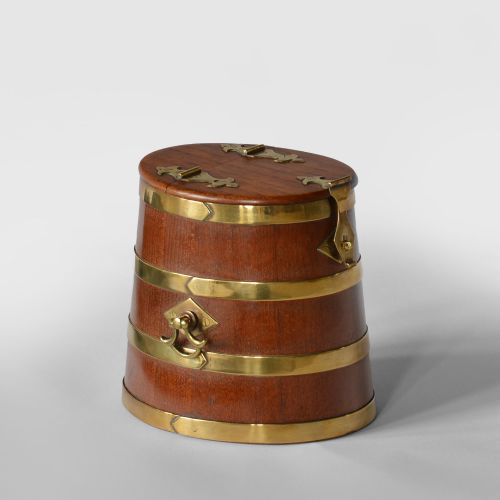
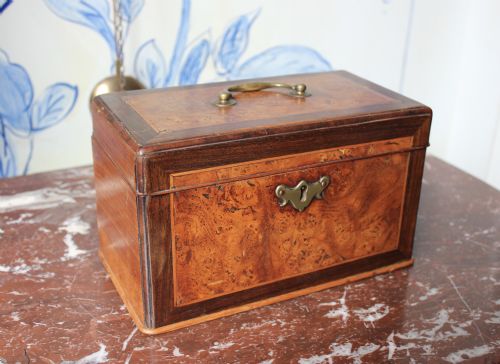
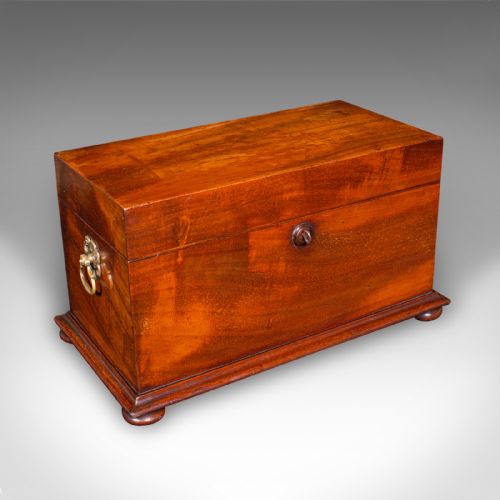
Buyers encountering this search phrase most frequently meet examples constructed from hardwoods such as mahogany, rosewood, and burr walnut, accented with brass mounts, escutcheons, and stringing. Alongside these wood-and-metal hybrids, fully metallic pieces incorporating chiselled brass or novelty shapes emerge within the selection.
The objects function as decorative storage containers, frequently retaining internal compartments or metal canisters once utilised for holding distinct tea varieties. Their origins span the mid-eighteenth century through the early twentieth century, reflecting shifting domestic habits surrounding beverage preparation.
Materials and Construction Methods
Construction relies upon combining dense timbers such as mahogany, burr walnut, elm, and rosewood with brass hardware, including hinges, corner brackets, and locks. Cabinetmakers employed techniques like coopered staves for barrel forms and fine veneer work over pine or mahogany carcases for rectangular boxes.
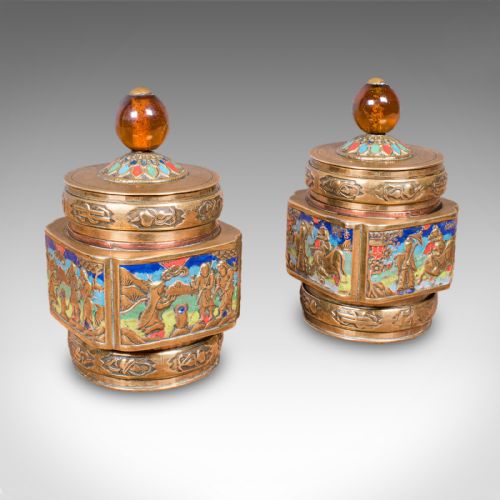
Metal components involve cast or sheet brass, frequently enhanced with champleve enamel work or precision engraving. Inlaid brass stringing and escutcheons are set flush into the wooden surfaces, securing the structural edges while adding visual contrast.
Vintage Brass Tea Caddy Retail Price Guide 2026
Typical asking prices for vintage brass tea caddy among the pieces listed under this phrase on Sellingantiques today, from the lower quarter to the upper quarter. They describe what is for sale here now, not the wider market.
Current listings span the Georgian, Regency, Victorian, and Edwardian periods, utilising brass alongside mahogany, rosewood, burr walnut, and glass.
Evaluating Quality and Execution
Quality separates objects through the precision of the cabinetwork and the integration of the brass elements into the primary material. Superior examples maintain intact internal canisters, working locks with original keys, and tightly fitted secret drawers or dual compartments without warping.
The fineness of the timber grain, such as burr walnut or figured mahogany, together with the crispness of any brass inlay or chiselling, dictates the distinction between standard domestic pieces and finer work. Original interior fittings and complete metal canisters elevate the integrity of the surviving object.
The Vintage Brass Tea Caddy Glossary
- Escutcheon
- A protective brass plate surrounding a keyhole. It prevents the surrounding wood from sustaining damage during repeated use of the key.
- Coopering
- A method of construction where narrow staves of wood are bound together with metal hoops. This technique appears in barrel-shaped examples.
- Champleve
- An enamelling technique where troughs are carved into metal and filled with vitreous colour before firing. This adorns decorative brass items.
- Stringing
- Thin lines of contrasting wood or metal inlaid into the surface of a box. It defines the geometric borders of Regency and Georgian pieces.
Vintage Brass Tea Caddy: Frequently Asked Questions
What were tea caddies used for?
These containers served to secure valuable loose leaf tea leaves under lock and key in period households. Tea was an expensive commodity, requiring careful rationing by the head of the house.
Inside, divided compartments allowed families to store different blends separately. Many retained internal metal canisters to preserve the aroma and freshness of the leaves.
How do I date a brass-mounted caddy?
Dating relies on observing the primary timber, the style of the brass hardware, and the construction methods used inside. Georgian and Regency pieces often feature figured mahogany or rosewood with fine brass stringing and bracket feet.
Later Victorian and Edwardian examples incorporate heavier burr walnut veneers or cast brass ornamentation. Internal details like handmade screws or secondary pine linings also help establish the era.
Can I still store tea in them?
Storing dry leaf remains possible if the interior is clean and retains fitted canisters with functioning lids. Many buyers continue to use them for their original purpose.
However, unlined wooden compartments can absorb moisture or lingering scents over centuries. Checking the interior condition ensures the space remains suitable for dry goods.
How should I care for the wood and brass?
Maintenance involves dusting with a dry, soft cloth and occasionally applying suitable wax to nourish older timbers. Avoid using harsh chemical cleaners on the brass work to preserve the natural aged patina.
Keeping the pieces away from direct sunlight and sudden temperature changes protects the veneer from splitting or lifting away from the carcase.