

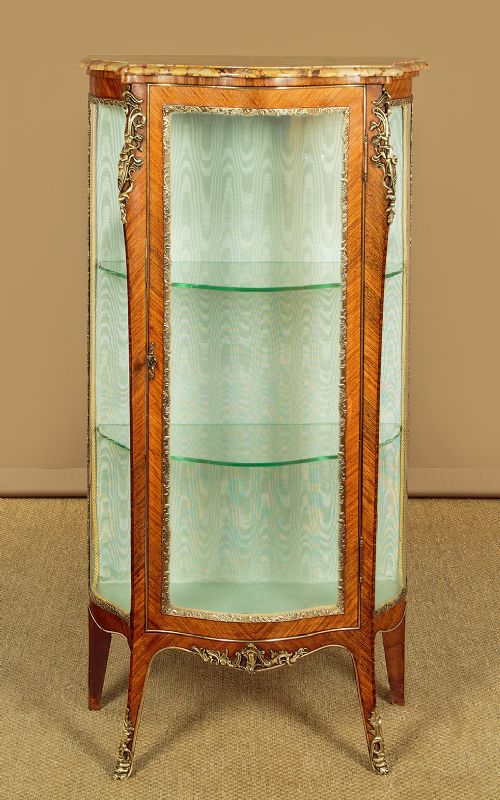


Vintage Brass Showcase
These vintage brass showcase pieces frame your collection behind glass and polished metal, bringing retail polish and domestic order together.
Vintage Brass Showcase
A vintage brass showcase encompasses countertop display cabinets, tall vitrines, and jewellers' bijouterie tables designed to exhibit small treasures. You encounter these most frequently as 1920s commercial counters, Edwardian shop fittings, and occasional Victorian pier cabinets with glazed panels.
Makers such as F. Sage & Co. and Siegel produced these units for retail environments, employing brass framing to hold large sheets of glass. Domestic variants also emerge from the evidence, utilising mahogany, walnut, oak, and yew alongside the characteristic metalwork.
The form ranges from low desktop display boxes lined with velvet to large freestanding counters and maritime industrial cases. Each version provides a secure, visible enclosure suited for jewellery, collectors' pieces, and curiosities.
How they were made
Construction relies on a rigid structural skeleton of brass framing joined to sturdy timber bases or carcasses in mahogany, walnut, oak, and yew. Glaziers fitted large glass panes into the metal channels to maximise interior visibility from multiple angles.
Interiors frequently feature mirrored backs to reflect light through the displayed objects, accompanied by plush velvet or fabric linings to cushion delicate items. Locks, hinges, and handles cast in brass complete the functional hardware of these cabinets.
Vintage Brass Showcase Retail Price Guide 2026
Typical asking prices for vintage brass showcase among the pieces listed under this phrase on Sellingantiques today, from the lower quarter to the upper quarter. They describe what is for sale here now, not the wider market.
Some maritime industrial cases bear strict Admiralty stamps, proving that even the Royal Navy required a polished brass vitrine for their small gear.
What varies in quality
Quality reveals itself in the weight and thickness of the brass extrusion and the precision of the mitred corners. Finer examples maintain rigid structural integrity across large expanses of glass without flexing.
The choice of secondary timbers and interior detailing distinguishes standard commercial utility from superior cabinet work. Well-preserved velvet linings, original mirrored backs, and functioning locks by named makers elevate the piece.
F. Sage & Co.·Siegel
The Vintage Brass Showcase Glossary
- Vitrine
- A glass-fronted display cabinet or showcase used for exhibiting fine objects and porcelain. The term often describes tall freestanding or table-top units.
- Bijouterie table
- A shallow glazed display table with a hinged lid designed specifically for jewellery and small valuables. These pieces typically stand on slender legs.
- Pier cabinet
- A decorative cabinet designed to fit against a specific wall space or pier between windows. Victorian examples frequently incorporate glass doors and mirrored elements.
- Admiralty pattern
- A standardised design specification produced for military or naval service use. These items prioritize robust utility and secure locking mechanisms.
Vintage Brass Showcase: Frequently Asked Questions
What were vintage brass showcases used for originally?
These cabinets served primarily in Edwardian and 1920s retail shops to display jewellery, silver, and small luxury goods to prospective buyers.
Commercial establishments relied on them to keep merchandise secure while offering customers an unobstructed view from above or through glazed sides.
How do I clean the brass frame safely?
Maintenance requires a soft, dry cloth to remove dust from the metal surfaces without disturbing the surrounding glass panels.
Avoid harsh chemical polishes that can strip patination or damage adjacent wood and fabric linings inside the cabinet.
Can I use a countertop showcase at home?
Countertop display boxes and small vitrines fit easily onto sideboards or desks to showcase personal collections of medals, pocket watches, or small sculptures.
Their enclosed glass design protects delicate items from dust while keeping them visible within a room.
How do I distinguish a 1920s showcase from a Victorian one?
Victorian cabinets often feature heavier timber carcases in walnut, mahogany, or yew with elaborate carving and mirrored interiors.
By contrast, 1920s commercial pieces emphasise slender brass framing, clean lines, and utilitarian shop counter configurations.