





Vintage Brass Navigation
Vintage brass navigation brings together solid maritime instruments and scientific tools, offering functional brass and glass artefacts built for early sea travel.
Vintage Brass Navigation
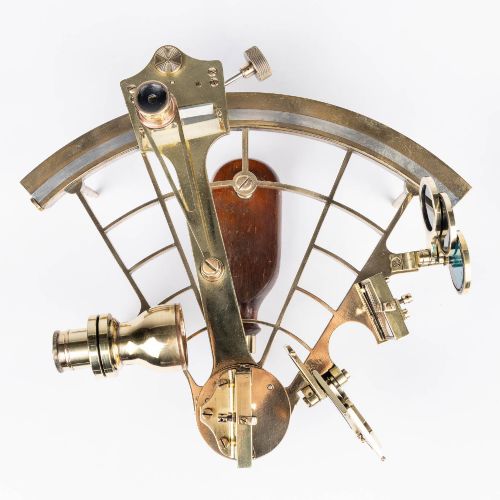
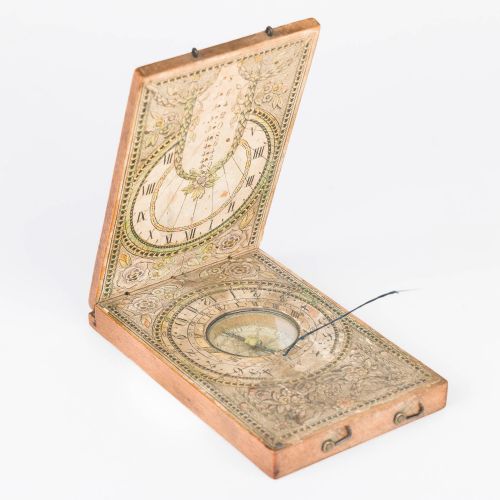
Vintage brass navigation encompasses scientific instruments, navigational tools, lanterns, telescopes, and nautical antiques originating from periods such as the Georgian, Victorian, and Edwardian eras. These objects range from portable diptych-dials and explorer's compasses to larger ships binnacles and cased octants.
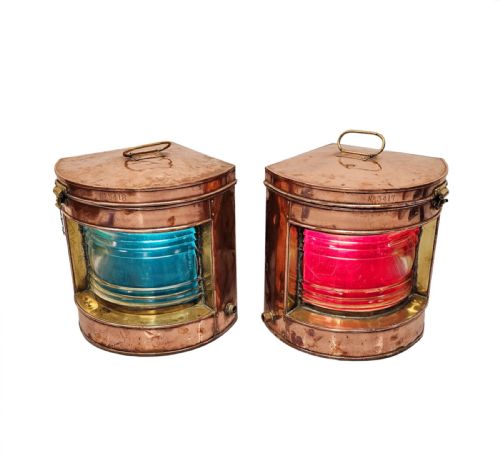
The pieces on this page most frequently include maritime lighting, marine telescopes, and charting instruments fashioned from durable metals and woods. Buyers encounter items associated with practical sea travel, cartography, and astronomical observation.
Originating across the nineteenth and early twentieth centuries, these instruments reflect the precise requirements of historical navigation and maritime operations. They serve as tangible records of historical exploration and mechanical engineering.
Materials and Construction
Brass forms the primary structural material across these navigational pieces, frequently paired with glass lenses and protective housings of wood, mahogany, ebony, or walnut. Makers integrated lacquered metal, copper, paper scales, and leather casing to complete each device.
Construction relies on precision metalworking and optical assembly, combining cast and turned brass components with fitted wooden boxes and engraved paper dials. Skilled artisans utilised durable materials designed to withstand maritime conditions.
Vintage Brass Navigation Retail Price Guide 2026
Typical asking prices for vintage brass navigation among the pieces listed under this phrase on Sellingantiques today, from the lower quarter to the upper quarter. They describe what is for sale here now, not the wider market.
Listings feature items spanning the 1800s, Georgian, Victorian, Edwardian, and 1900 periods, constructed from brass, glass, mahogany, copper, and walnut.
Evaluating Quality and Craftsmanship
Quality separates standard production hardware from precision presentation instruments signed by notable makers such as Ross of London or Thomas Mercer. Superior examples feature refined mechanical tolerances, crisp engraving, and unaltered original components.
Finer pieces incorporate high-grade optical glass, precious cabinet woods like ebony or mahogany, and robust mounting hardware that demonstrates superior material selection. The presence of specialised maker signatures or presentation inscriptions further distinguishes the top of the range.
Hughes and Son·Ross of London·Henri de Magnac·A Hurlimann Paris·John Lilley and Son·Thomas Mercer
The Vintage Brass Navigation Glossary
- Binnacle
- A built-in housing on a ship designed to hold the ship's magnetic compass securely near the helmsman.
- Octant
- A measuring instrument used in navigation to measure the angle between an astronomical object and the horizon.
- Chronometer
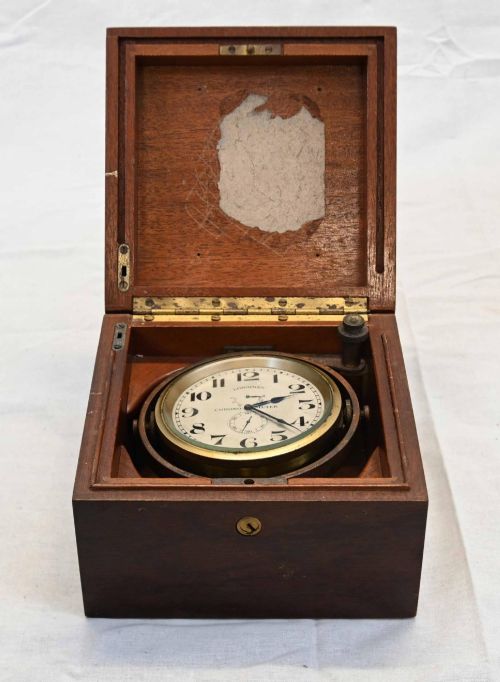
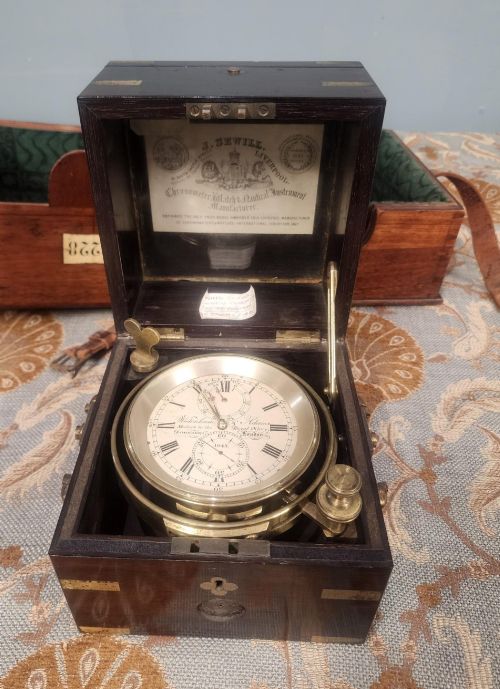
- A precise timekeeping instrument used at sea to determine longitude by means of celestial navigation.
- Station pointer
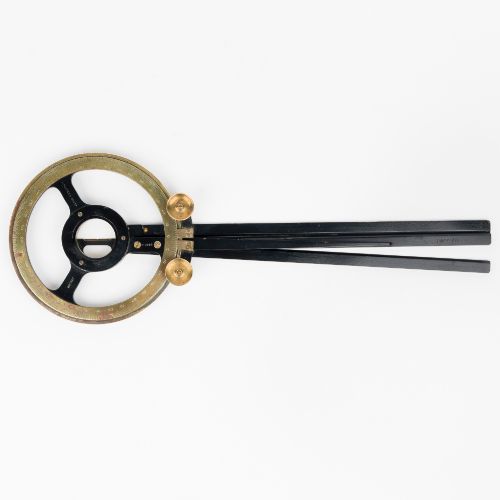
- A three-arm protractor used in hydrographic surveying to fix a position from angles observed between three known points.
- Artificial horizon
- A device used with a sextant on land or when the natural horizon is obscured to establish a horizontal baseline for celestial observation.
Vintage Brass Navigation: Frequently Asked Questions
What are vintage brass navigation items?
These pieces comprise historical scientific and nautical instruments constructed primarily from brass and glass during the nineteenth and early twentieth centuries. They were utilised for charting courses, taking celestial measurements, and maintaining time at sea.
Today, collectors acquire these objects for their mechanical complexity, material quality, and historical connection to maritime exploration and cartography.
How do I date a navigation instrument?
Dating relies on maker signatures, material choices, patent dates, and stylistic indicators associated with periods like the Georgian, Victorian, or Edwardian eras. Examining the graduation marks and case construction also provides clues to the manufacturing decade.
Makers often recorded specific patent names or exhibition medals directly onto the metal plates, which helps narrow down the production timeline.
Were these items used at sea?
Many of these objects served functional roles aboard merchant vessels, naval ships, and exploratory expeditions. Items such as port lanterns, binnacles, and marine telescopes were engineered specifically for demanding maritime environments.
Other items, including portable diptych-dials and presentation instruments, were designed for land-based surveying, scientific study, or formal presentation.
How should I care for brass instruments?
Maintenance involves keeping the brass clean from moisture and handling the delicate glass optics and paper scales with care. Avoid aggressive chemical polishes that can remove historical patination and engraved detail.
Displaying these objects in stable environmental conditions away from direct sunlight protects vulnerable wooden cases and leather components.