


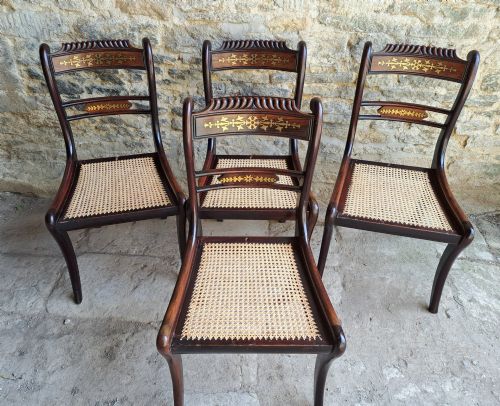


Vintage Brass Inlaid Chairs
These vintage brass inlaid chairs bring sophisticated Regency and nineteenth-century craftsmanship into your home, offering enduring seating with distinctive metallic detailing.
Vintage Brass Inlaid Chairs
Vintage brass inlaid chairs encompass dining chairs, elbow chairs, and library armchairs originating from periods such as the Georgian, Regency, and Victorian eras. These seating forms often feature contrasting metallic stringing or decorative motifs embedded directly into the wooden framework.
You are most likely to encounter sets of dining chairs and individual elbow chairs on this page. The designs frequently utilise dark timbers fitted with precise brass work that highlights the structural lines of the seat back and legs.
Origins span British cabinet-making traditions alongside French influences, maintaining classic silhouettes from the early nineteenth century up to nineteen-ten. Each piece reflects the prevailing aesthetic of its specific decade of production.
Materials and construction
Cabinet-makers relied heavily on dense hardwoods such as mahogany and rosewood, occasionally employing faux rosewood finishes to achieve a uniform dark grain. These sturdy timber foundations provided the ideal contrast for bright brass inlay.
Craftsmen recessed thin strips of brass into channels carved into the wooden surfaces, securing the metal flush with the surrounding timber. Seats were then finished with materials including cane, leather, fabric, or traditional upholstery.
Joinery techniques from the nineteenth century ensured structural integrity without relying on modern adhesives. The integration of brass work required meticulous hand-fitting to follow the curves of the chair frames.
Vintage Brass Inlaid Chairs Retail Price Guide 2026
Typical asking prices for vintage brass inlaid chairs among the pieces listed under this phrase on Sellingantiques today, from the lower quarter to the upper quarter. They describe what is for sale here now, not the wider market.
Listings feature seating spanning the Georgian, Regency, Victorian, and Edwardian periods, utilising mahogany, rosewood, leather, and cane.
Markers of quality
Quality in these chairs rests upon the precision of the brass inlay work and the preservation of the original timber grain. Finer examples display tight, unbroken metal lines that follow the contours of the wood seamlessly without gaps.
The choice of primary wood significantly influences the caliber of the piece, with richly figured rosewood and solid mahogany commanding greater regard than secondary painted surfaces. Original supporting materials like cane or leather also elevate the integrity of the seating.
Proportion and structural balance distinguish superior items, where the carving and inlay complement the overall silhouette rather than appearing heavy-handed or poorly aligned.
Howard & Son's
The Vintage Brass Inlaid Chairs Glossary
- Regency
- A British design period spanning the early nineteenth century characterised by classical revival motifs and refined proportions. Furniture from this era often incorporates bold timber choices and metallic accents.
- Rosewood
- A dense, heavily figured tropical timber prized for its dark grain and reddish-brown coloration. It serves as a premium base material for high-status nineteenth-century seating.
- Elbow chair
- A seating form featuring supportive arms that terminate at the elbows, often designed as a companion piece to dining chair sets. These chairs provide a wider seat frame.
- Cane
- Woven plant material used to create breathable seat panels or backrests. This technique appears on lighter framework designs.
- Inlay
- A decorative technique where contrasting materials are embedded into recesses cut into a solid wood surface. In these pieces, brass is the primary material utilised for this ornamentation.
Vintage Brass Inlaid Chairs: Frequently Asked Questions
How were brass inlaid chairs used historically?
These chairs were primarily commissioned for formal dining rooms, libraries, and drawing rooms within substantial residences. They served both functional seating needs and decorative roles to display household taste.
Elbow chairs and library variants were positioned at desks or reading tables, while larger sets lined dining tables during formal meals and gatherings.
How do I care for nineteenth-century wood and brass?
Maintenance requires gentle cleaning with soft cloths and avoiding excessive moisture or harsh chemical polishes. Natural wax helps preserve the finish of dense timbers like mahogany and rosewood.
Brass elements benefit from careful dusting to prevent tarnish accumulation while protecting the surrounding wood grain from abrasive cleaning agents.
How can I distinguish Regency pieces from later styles?
Regency items typically exhibit specific classical proportions, sabre legs, and precise brass stringing reflective of early nineteenth-century cabinet-making. The joinery and timber selection align with Georgian and Regency traditions.
Later Victorian or Edwardian interpretations often incorporate heavier carving or alternative upholstery methods that depart from the strict neoclassical restraint of the Regency period.
Are these chairs suitable for daily modern use?
Most of these historic pieces remain functional for regular seating provided their structural joints and upholstery are stable. Many examples have undergone historical or recent restoration to support everyday interaction.
Placing them in stable environmental conditions away from direct heat sources ensures the timber and inlay remain secure over time.