



Vintage Brass Hall Hooks
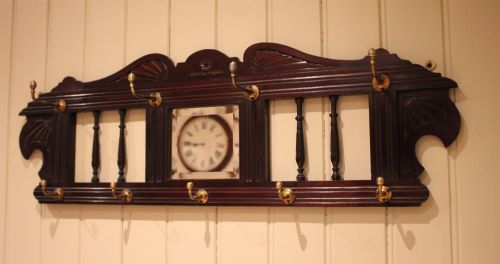
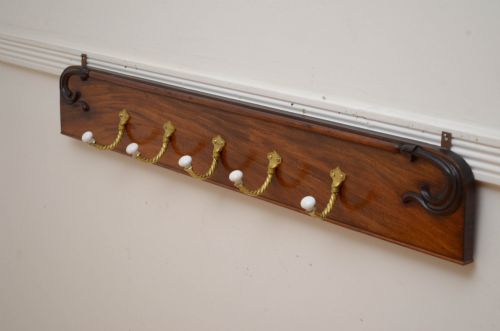
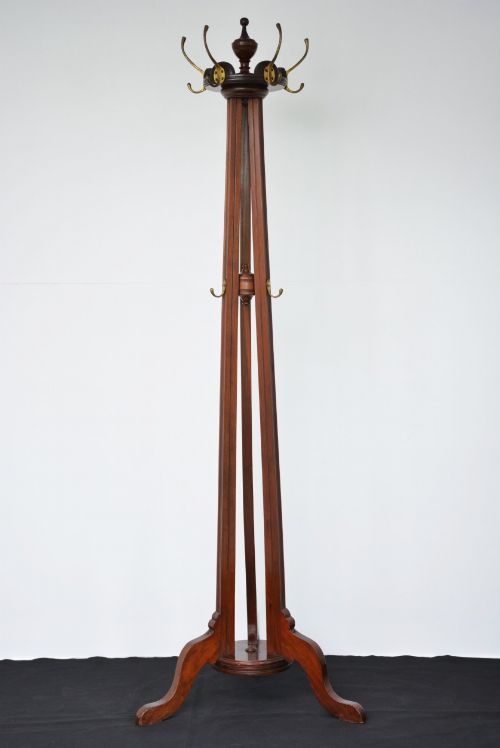
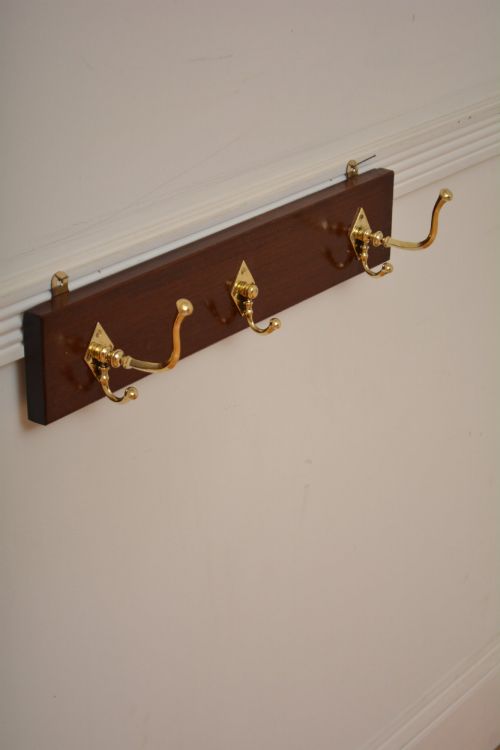
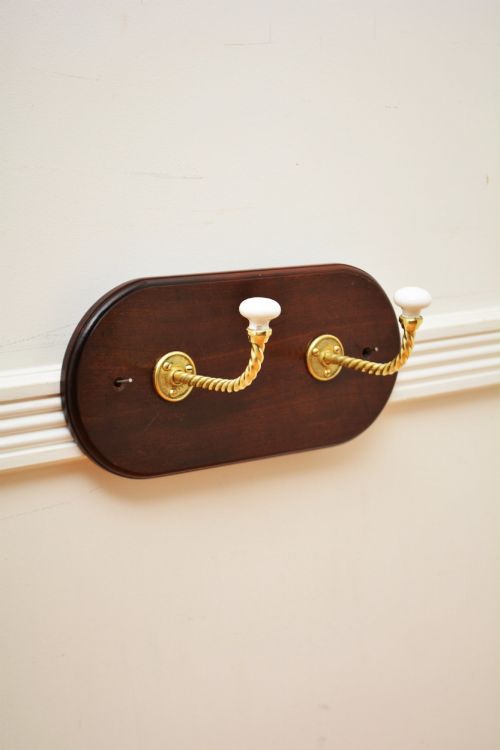
These vintage brass hall hooks combine practical hallway storage with period character, appearing as single fixtures or mounted on mahogany, oak, and walnut boards.
Vintage Brass Hall Hooks
Vintage brass hall hooks are practical entryway fixtures designed for hanging coats, hats, and scarves in domestic hallways. When searching for vintage brass hall hooks, buyers encounter various formats ranging from individual wall-mounted hooks to long racks and large hall stands.
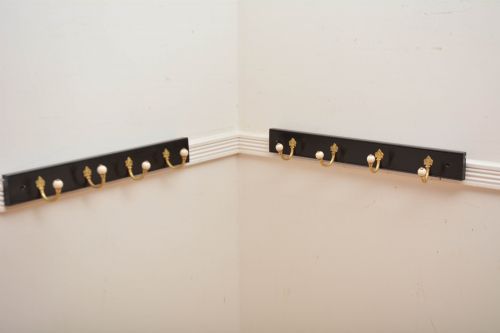
The selections span multiple periods, including the Victorian era, the Edwardian period, and the Art Deco movement. Pieces often combine brass fittings with mounting boards made of mahogany, oak, walnut, or ebonised wood.
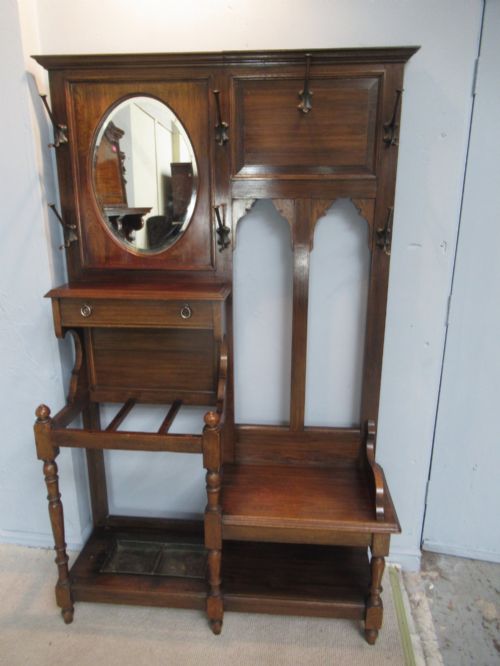
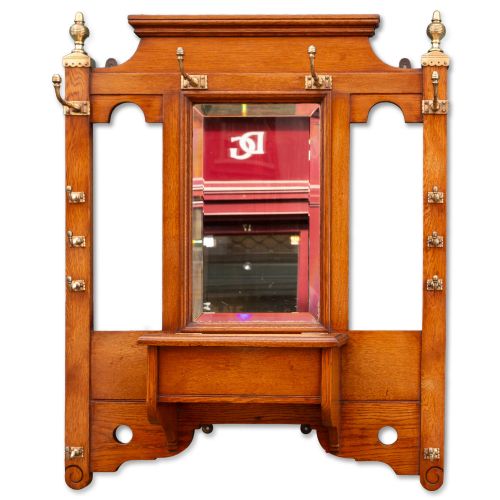
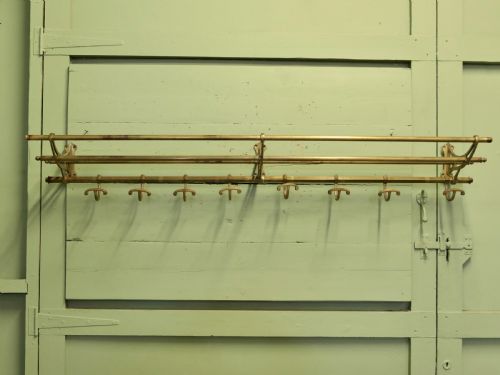
Wall-mounted coat racks and pairs of hooks appear alongside larger portmanteaus and hall stands incorporating mirrors or umbrella storage. French designs feature prominently alongside British examples from the late nineteenth and early twentieth centuries.
Materials and construction
Brass serves as the primary metal component, cast or forged into functional hook shapes, sometimes paired with ceramic elements or glass details. Metalwork ranges from simple polished finishes to heavier French bronze brackets and gilt brass.
Backboards utilise dense hardwoods such as mahogany and oak, often shaped with bevelled edges, carved details, or applied mouldings. These wooden supports provide the structural rigidity needed for wall mounting and daily weight-bearing.
Construction methods rely on traditional joinery and screw fixings to secure the brass hooks firmly to the timber backing. Many rack designs incorporate multiple mounting points or brackets for stability against hallway walls.
Some French portmanteaus arrived with built-in barometer dials, ensuring guests could check the air pressure before stepping out into the drizzle.
Indicators of quality
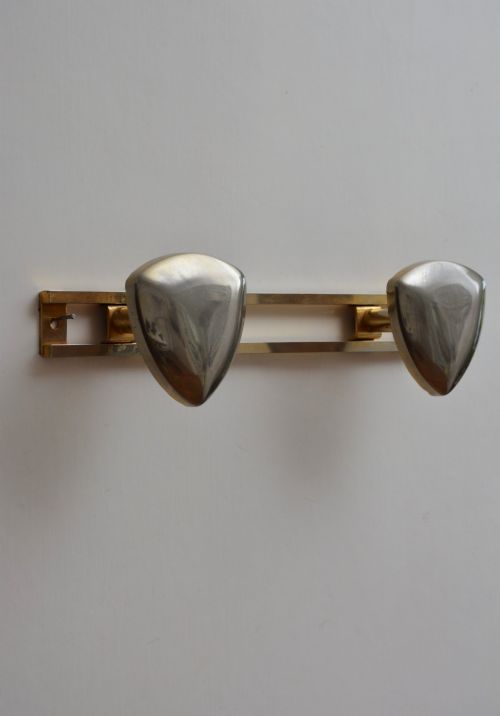
Quality in these pieces is dictated by the weight and casting definition of the brass elements, with heavier, more substantial hardware indicating superior manufacture. Finer hooks display crisp detailing, such as scalloped edges, twisted rope motifs, or shield shapes, rather than plain industrial casting.
The selection of timber significantly affects the overall grade of a piece, with solid walnut, golden oak, and rich mahogany representing the higher tiers of construction. Secondary materials like original mirror plates and integrated ceramic details also distinguish standard items from finer examples.
Jas. Shoolbred
The Vintage Brass Hall Hooks Glossary
- Portmanteau
- A combined wall-mounted rack featuring hooks for coats and hats, frequently incorporating a mirror and umbrella compartments. These large fixtures served as complete hallway storage units in period homes.
- Ebonised wood
- Timber treated with a dark finish to resemble ebony, commonly used in Victorian and aesthetic movement designs. This technique provides a sharp contrast against polished brass fittings.
- Aesthetic movement
- A late nineteenth-century design style focusing on visual beauty over narrative function, reflected in the decorative brass and mahogany pieces of the period. Items from this movement often display refined artistic lines.
- Hall stand
- A larger freestanding or wall-fixed piece of furniture combining coat hooks, a mirror, and sometimes a small seat or drip trays. They formed the central reception furniture in traditional entrance halls.
Vintage Brass Hall Hooks: Frequently Asked Questions
How do I hang a heavy coat rack safely?
Heavy coat racks require secure attachment to wall studs or the use of appropriate wall anchors capable of supporting the combined weight of the timber and garments. Given the solid brass and hardwood construction of many period pieces, proper load distribution is essential for safe installation.
Position the rack at a height suitable for family use while ensuring the fixing screws engage firmly with the wall substrate. Checking the structural integrity of the backboard before mounting prevents splitting under sustained pressure.
How do I clean antique brass hooks?
Cleaning antique brass depends on whether you prefer to retain the aged patina or restore a bright finish. Gentle dusting and mild soapy water remove surface dirt without harming the original metal surface.
Avoid harsh chemical abrasives that strip the historic character from cast brass hooks. A soft cloth and mild polish maintain the lustre of polished brass without damaging adjacent wood or ceramic elements.
Were these hooks made for walls or boards?
Period items appear in both configurations, with individual hooks designed for direct wall mounting and others attached to wooden backboards. Sets of matching brass hooks frequently indicate they were removed from an original hallway panel or rack.
When buying individual hooks, check the rear fixing points to determine if they require a pattress or direct wall plugs. Racks arrive pre-mounted on mahogany or oak boards ready for installation.
How do I date a Victorian brass coat rack?
Dating these pieces involves examining the style of the brass casting, the type of timber used, and any accompanying hardware like mirror bevels or ceramic inserts. Victorian examples from the late nineteenth century often feature ebonised wood or rich mahogany combined with Aesthetic movement or Gothic revival motifs.
Turn-of-the-century pieces may show Arts and Crafts influences with simpler solid oak frames and robust, unpretentious hardware. Comparing the screw types and backboard moulding profiles helps narrow down the production era.