

Vintage Brass Barometer
A vintage brass barometer brings precise meteorological measurement into domestic spaces, uniting functional brass mechanics with period cabinet-making.
Vintage Brass Barometer
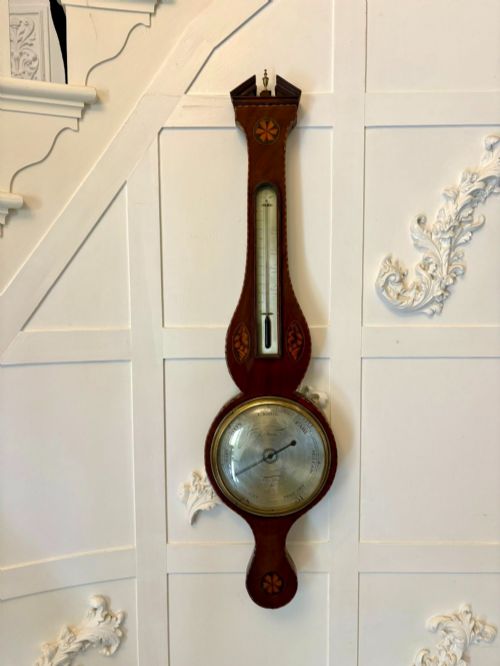
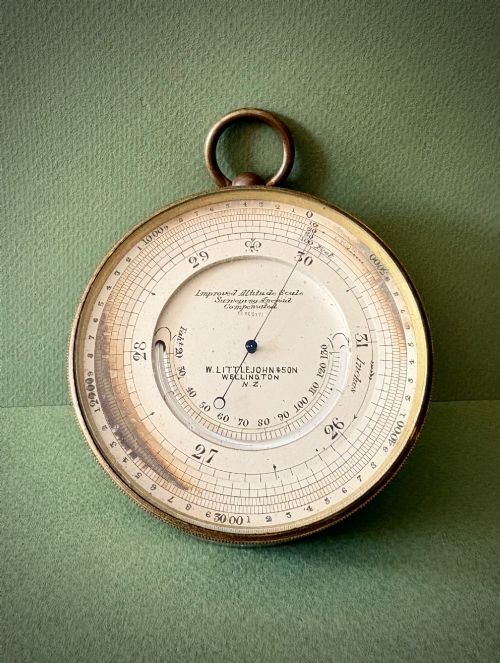
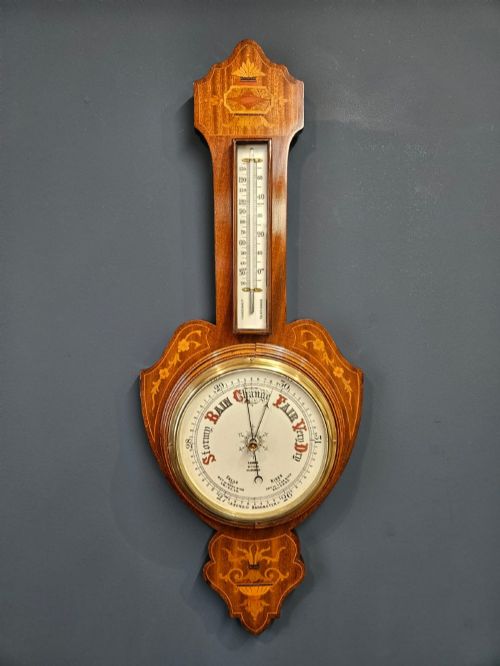
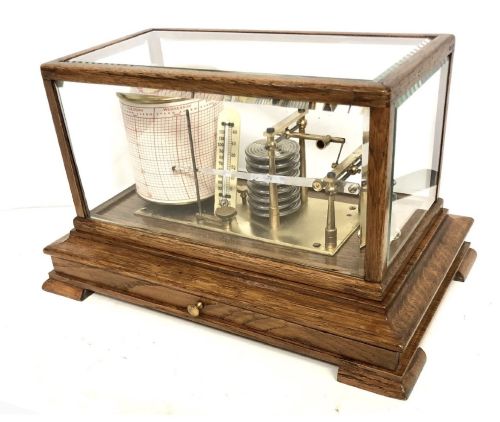
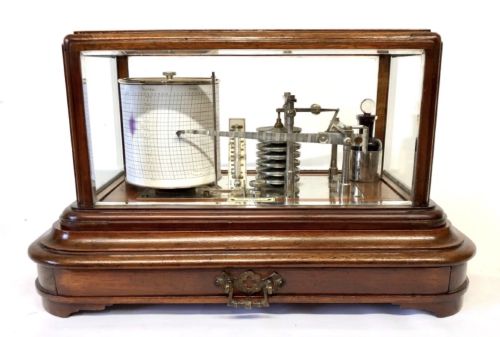
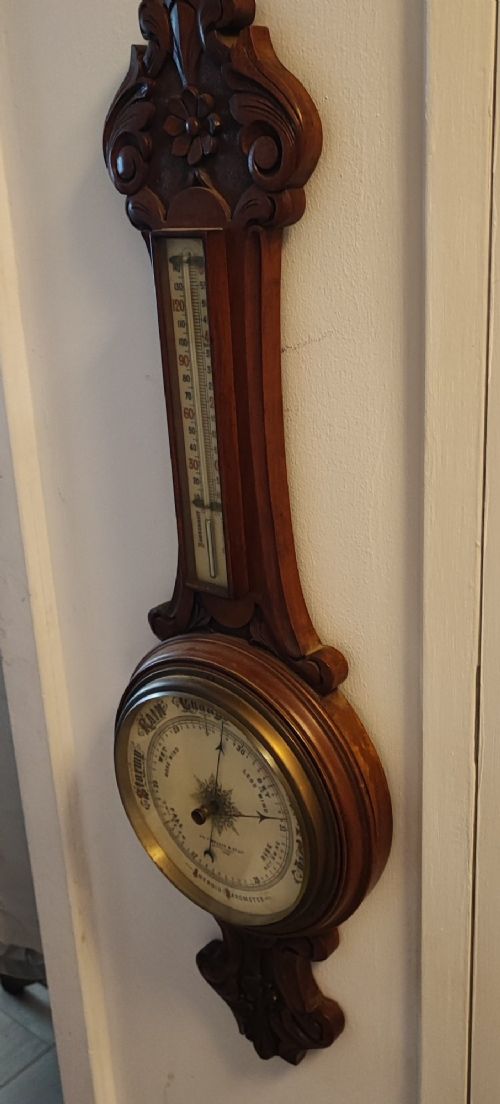
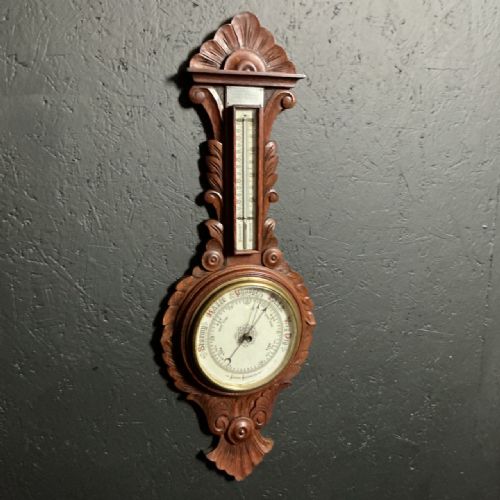
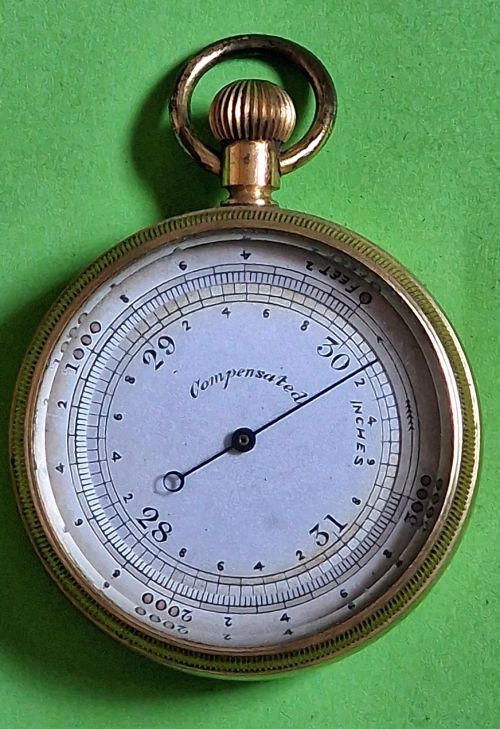
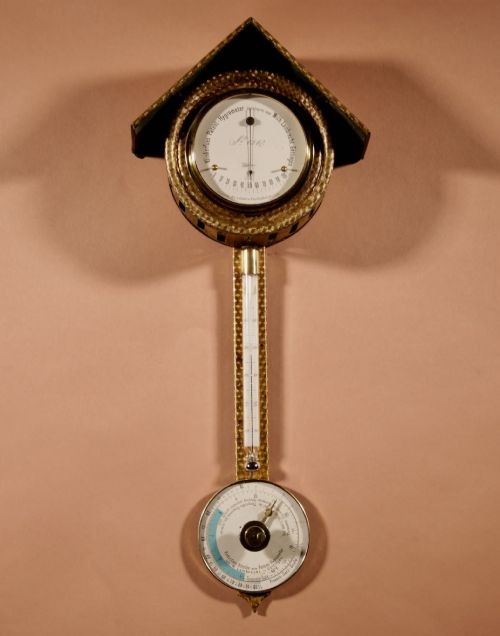
A vintage brass barometer comprises a mechanical weather-measuring core housed within a metal and timber chassis, designed for wall mounting or desktop placement. When exploring a vintage brass barometer, buyers encounter wall barometers, banjo shapes, and desk-friendly barographs dating across the Victorian and Edwardian eras.
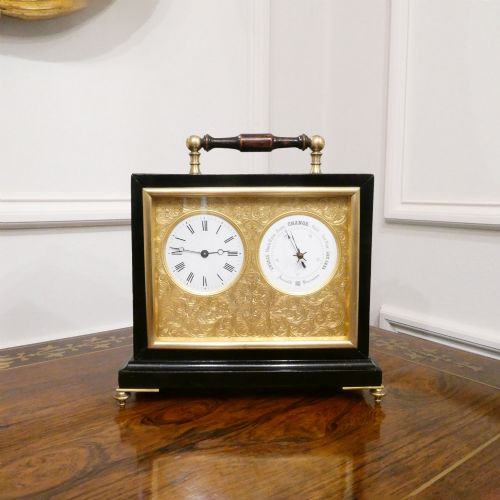
The assortment spans from domestic oak and mahogany wall pieces to pocket versions and complex barographs fitted with thermometers. These scientific instruments reflect both Georgian styling and later industrial production.
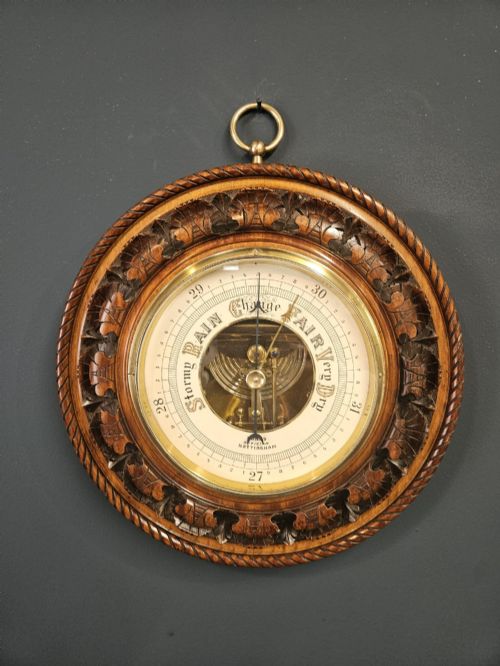
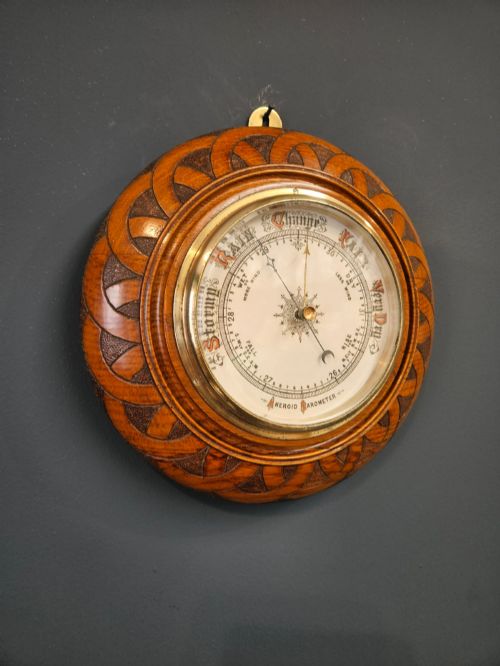
Most examples rely on aneroid movements or mercury columns housed in bevelled glass faces. The forms range from simple turned frames to carved walnut and mahogany cases.
Materials and construction
Protection and clarity came from bevelled glass lenses fitted tightly over the dials. Carved wooden cases, shell inlay, and geometric mouldings completed the external housing for these precise mechanisms.
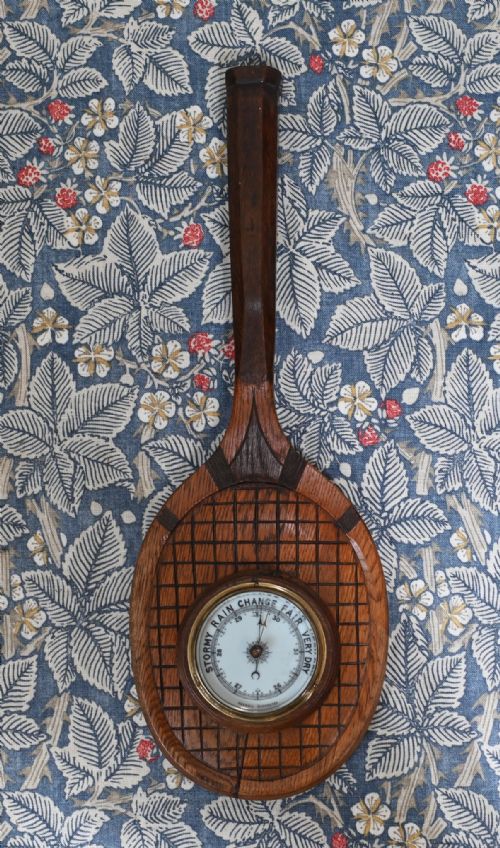
One unexpected offering includes a weather station linked to a tennis racquet club.
Evaluating the craftsmanship
Superior examples distinguish themselves through crisp engraving on silvered metal dials and the precision of the internal brass linkage. The quality of the timber case, whether carved walnut or inlaid mahogany, marks the distinction between standard production and fine workshop execution.
Makers who signed their dials, such as specialist opticians and instrument houses, often delivered higher standards of mechanical finish and longevity. The integration of auxiliary instruments like thermometers or chart drawers also elevates the complexity of the piece.
Negretti & Zambra·Short & Mason·Wilh. Lambrecht·B. Besozzi·Bramwell & Harbron·Ganthony
The Vintage Brass Barometer Glossary
- Aneroid barometer
- An instrument that measures atmospheric pressure by the expansion and contraction of a flexible metal capsule, eliminating the need for liquid mercury. These mechanical units form the core of most wall and pocket weather instruments.
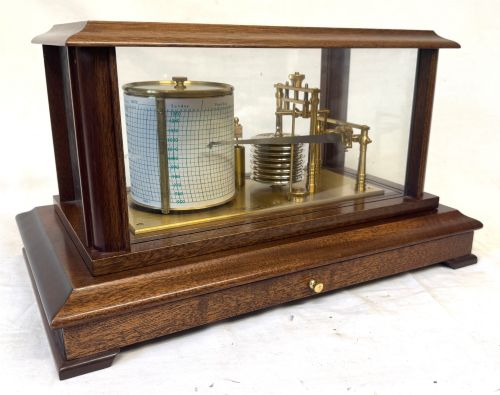
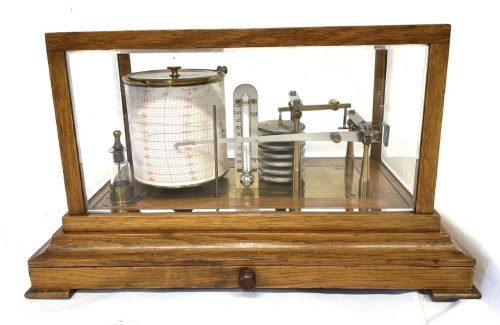
- Barograph
- A self-recording meteorological instrument that plots barometric pressure onto a paper chart over a weekly cycle. These are typically housed in oak or mahogany cases with glass covers.
- Banjo barometer
- A domestic wall barometer featuring a rounded top dial and a long trunk shape resembling a stringed instrument. They frequently incorporate thermometers and hygrometers.
- Silvered metal
- A brass or copper dial treated with a silver compound to produce a bright, legible surface for engraved numbers and lettering. This finish reflects light cleanly behind the glass bezel.
- Hygrometer
- An instrument used for measuring the moisture content or humidity of the air. Some scientific weather stations combine this mechanism alongside the barometer and thermometer.
Vintage Brass Barometer: Frequently Asked Questions
How does an aneroid barometer work?
An aneroid barometer measures changes in atmospheric pressure using a sealed, flexible metal box called an aneroid capsule.
As air pressure rises or falls, the capsule flexes slightly, and internal brass levers transmit this physical movement to the pointer on the dial.
What is the difference between a barometer and a barograph?
A standard barometer uses a dial pointer to show the current atmospheric pressure at a single glance.
A barograph records those pressure changes continuously onto a rotating paper chart, providing a visual history of weather trends over time.
How do I date an antique barometer?
Dating relies on stylistic clues in the woodwork, the typeface on the silvered dial, and the presence of maker signatures.
Victorian and Edwardian pieces often display distinct carving styles and case geometries that help narrow their decade of production.
Can these barometers still be calibrated?
Many vintage barometers feature an adjustment screw linked to the internal mechanism for local air pressure calibration.
Matching the reading to a known local measurement allows the instrument to function accurately in a modern home.