

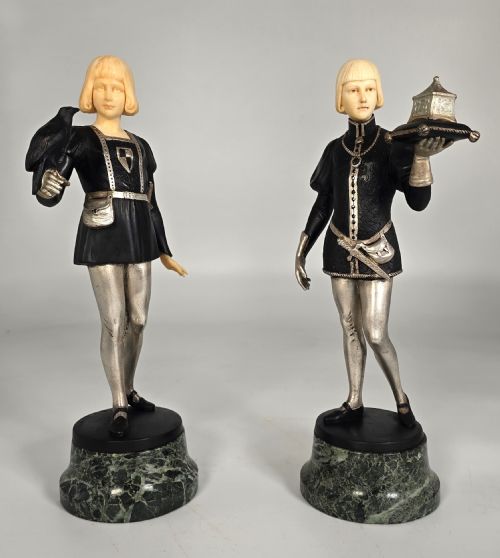


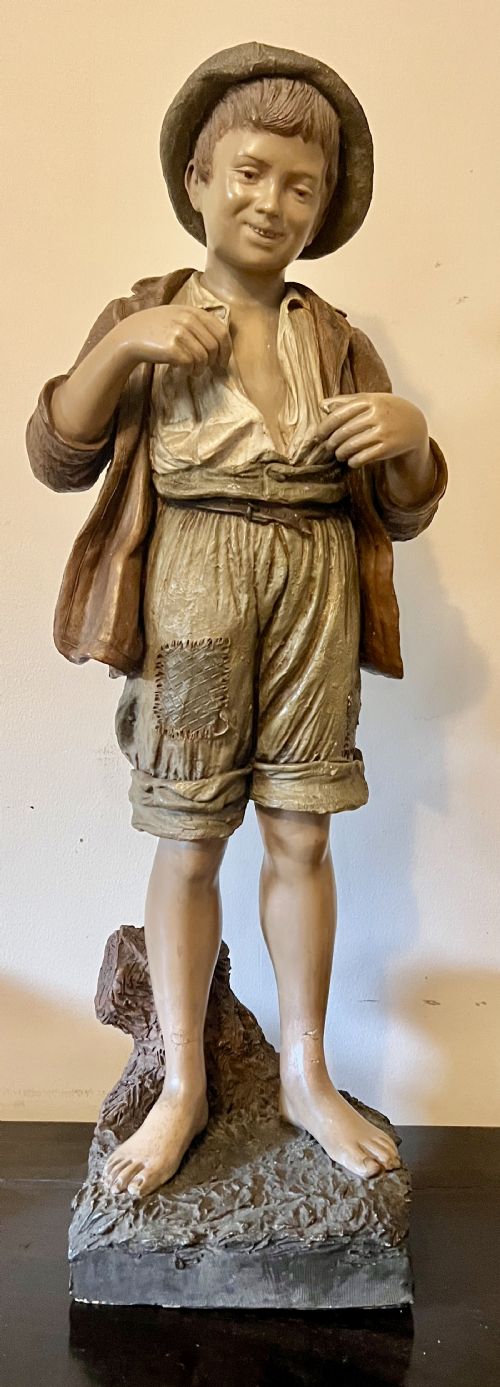


Vintage Boy Statue
A vintage boy statue brings character to a room, ranging from playful porcelain figures to weighty bronze sculptures.
Vintage Boy Statue
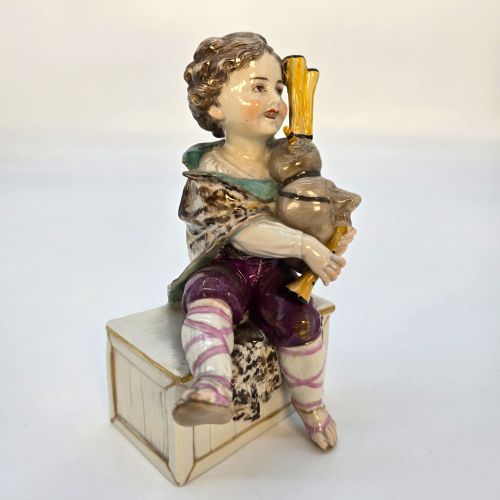
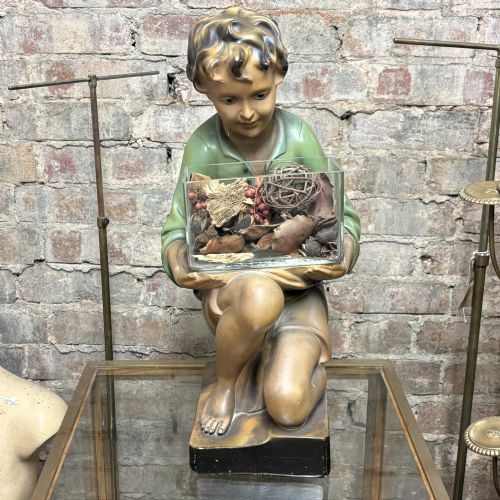
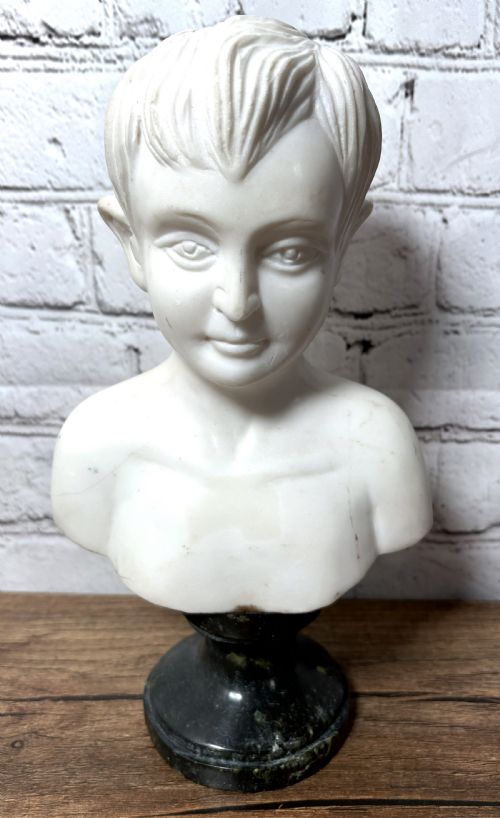
A vintage boy statue encompasses freestanding sculptures, library busts, and decorative figurines produced across the nineteenth and twentieth centuries. These figures capture young subjects in varied pursuits, from mythological themes like Bacchus to everyday labourers such as harvesters and fishers.
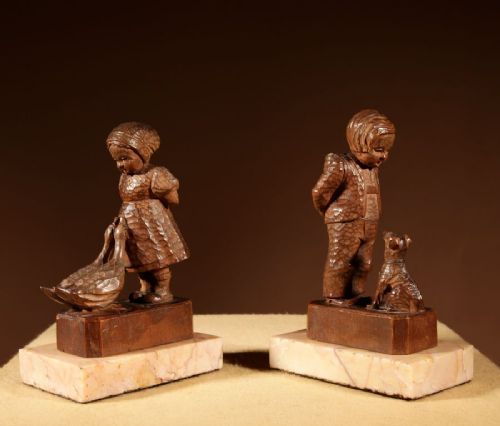
Makers shaped these pieces in diverse regional traditions, spanning Black Forest woodcarvings, German hard-paste porcelain, and French bronze studies. Buyers frequently encounter nineteenth-century works and Art Deco pieces set upon onyx bases.
The assortment includes single figures alongside paired groupings, rendered in materials that range from carved hardwood to cast iron and terracotta.
How they were made
Metal sculptures utilise traditional casting methods, often combining bronze, spelter, or cast iron with patinated finishes or hand-painted details. Bronze pieces frequently employ the lost-wax technique to achieve fine details in drapery and facial expressions.
Ceramic and porcelain examples involve moulding hard-paste or bisque bodies, followed by delicate hand-painting and enamel decoration before firing. Wood and alabaster figures rely on skilled hand-carving, utilising the natural grain of materials like walnut or the smooth surface of Carrara marble.
Vintage Boy Statue Retail Price Guide 2026
Typical asking prices for vintage boy statue among the pieces listed under this phrase on Sellingantiques today, from the lower quarter to the upper quarter. They describe what is for sale here now, not the wider market.
Several figures are caught mid-action, including a boy pulling a thorn from his foot and another preparing to throw a snowball.
What varies in quality
Sculptural definition separates standard decorative items from superior works, particularly in the rendering of hands, hair, and facial expressions. Master modellers and carvers achieved a naturalism in posture and anatomy that lesser workshop copies miss.
Material selection dictates the weight and presence of a piece, from solid cast bronze and carved marble down to hollow spelter or basic ceramic. The crispness of the original cast or the depth of the hand-carved detail determines the visual success of the sculpture.
Volkstedt Rudolstadt Factory·Gotthilf Jaeger·C G Schierholz·Mieczyslaw Leon Zawiejski·Ferdinand Preiss·Auguste Moreau·Charles Anfrie·Royal Dux
The Vintage Boy Statue Glossary
- Spelter
- A zinc alloy used as a less costly alternative to bronze, frequently painted to resemble bronze or patinated. It lacks the heavy weight of true bronze.
- Hard-Paste Porcelain
- A durable ceramic composition fired at high temperatures, allowing for sharp detail and bright enamel colours. Factories in Germany utilised this material extensively for elaborate figurines.
- Patina
- The surface coloration and sheen developed naturally through age or applied artificially by the maker. On metal sculptures, it highlights the contours of the casting.
- Terracotta
- Fired unglazed clay valued for its warm earthy tones and malleability in sculptural modeling. Artists used it to create expressive, detailed figures.
Vintage Boy Statue: Frequently Asked Questions
What materials are used?
These sculptures utilise a diverse palette of materials, including cast bronze, carved marble, terracotta, and hard-paste porcelain. Artisans also worked in wood, alabaster, spelter, and cast iron.
Specific traditions favoured particular mediums, such as Black Forest woodcarvers working in timber and German factories utilising bisque and glazed porcelain.
How do I date a piece?
Dating relies on stylistic markers, such as Neoclassical or Art Deco forms, alongside factory marks stamped or painted on the base. Material choices and casting techniques also provide clues to the period of manufacture.
Victorian pieces often display realism or romantic themes, while early twentieth-century works lean towards cleaner geometric lines or stylised patination.
Are these figures signed?
Certain bronzes and marble busts feature artist signatures or foundry stamps inscribed directly into the base or body. Factory-produced porcelain typically bears underglaze stamps or impressed numbers.
Unsigned examples remain common, particularly in regional woodcarvings and mass-produced cast iron or spelter figures.
How should I display them?
These statues suit placement on mantelpieces, bookshelves, library desks, or dedicated pedestals depending on their scale. Bronze and marble pieces require stable, level surfaces due to their weight.
Keeping them away from direct sunlight protects hand-painted enamels and delicate patinas on wood and metal.