

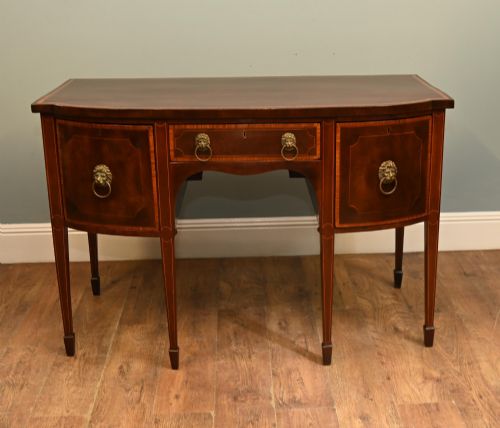

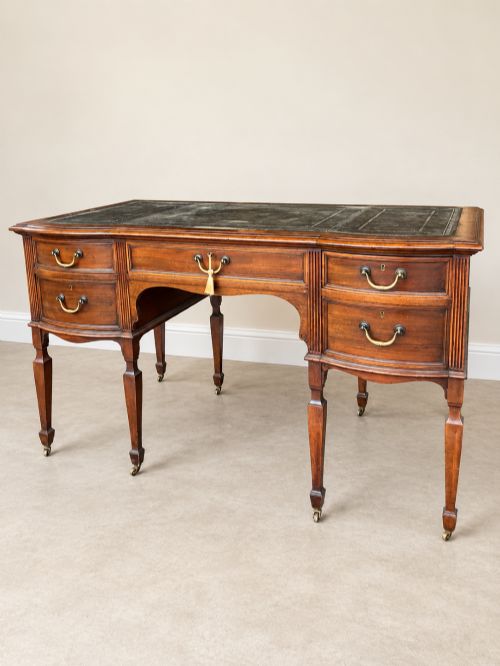
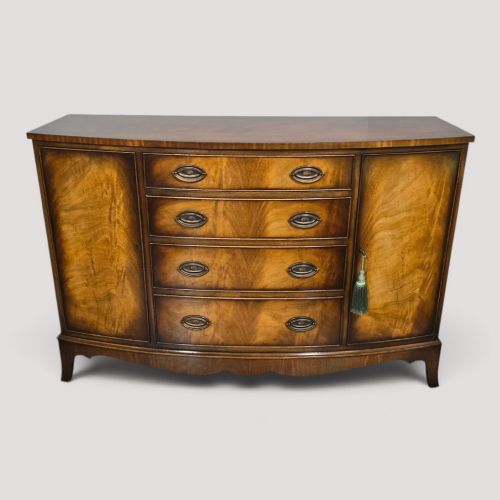
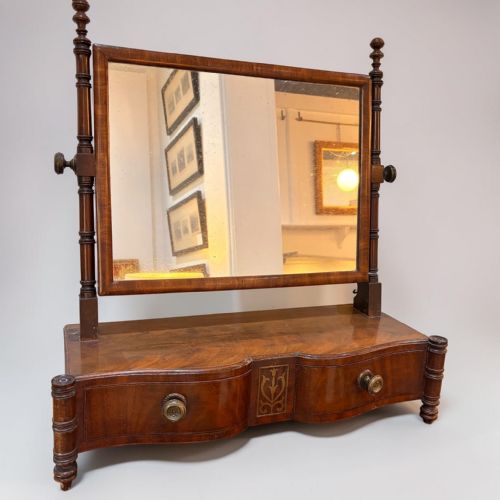

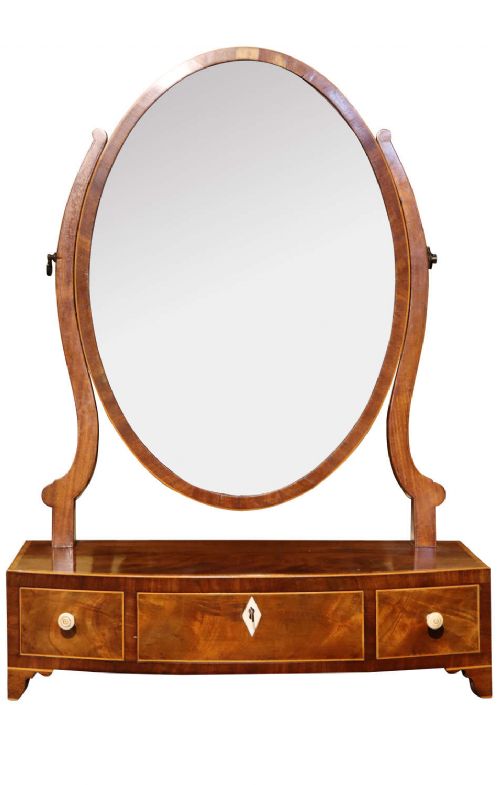

Vintage Bowfront Table
A vintage bowfront table brings the convex curve of Georgian and Regency dining rooms into modern hallways and bedrooms.
Vintage Bowfront Table
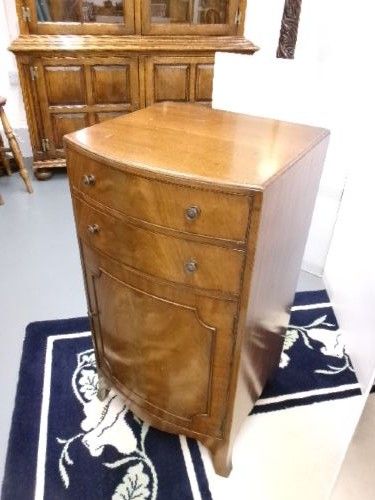
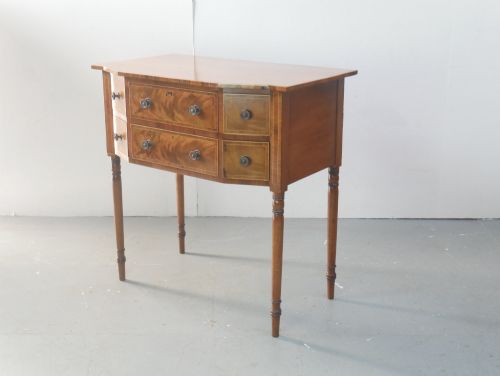
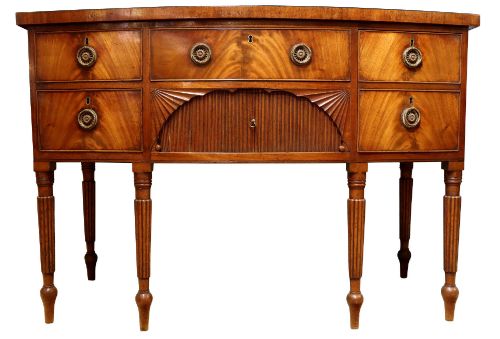
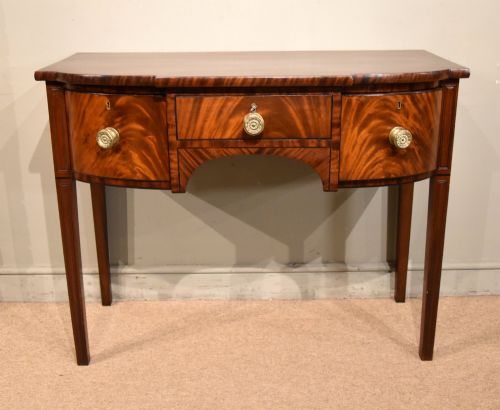
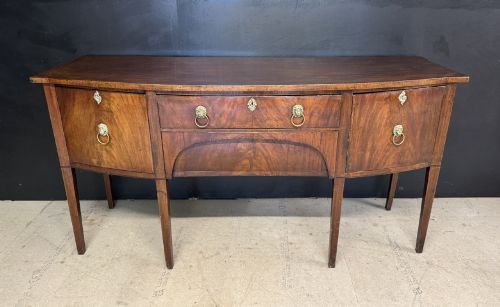
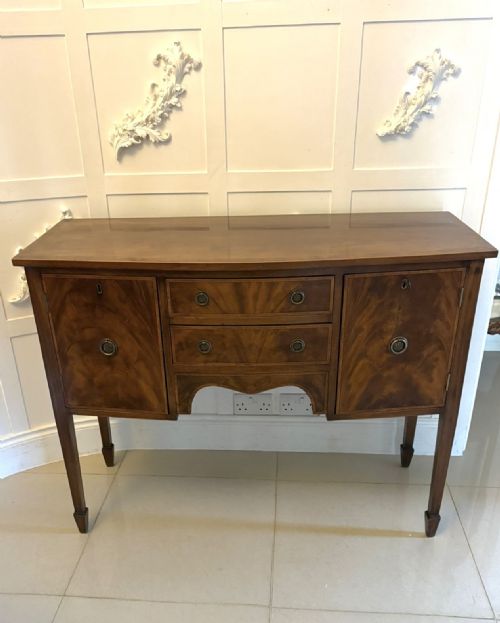
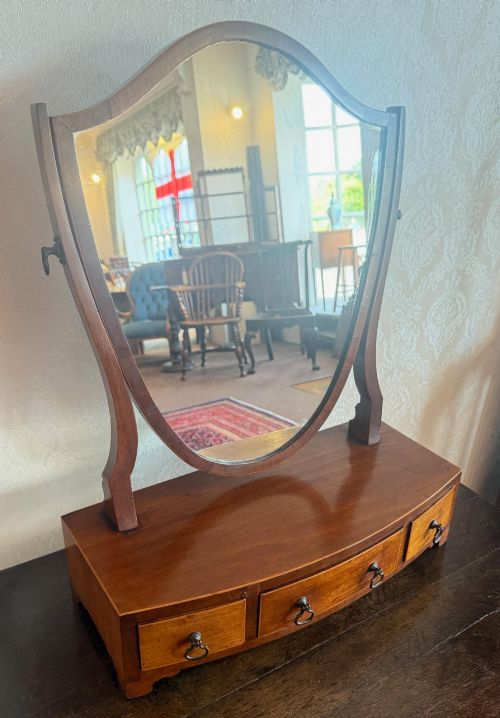
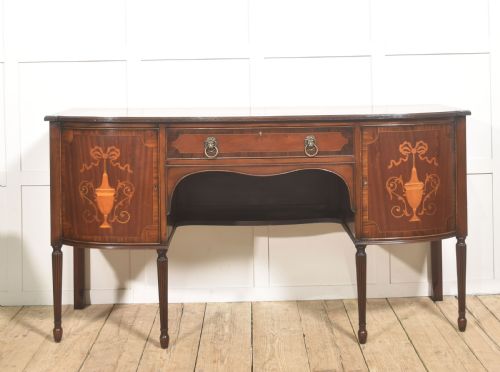
A vintage bowfront table covers a range of curved-front furniture, appearing most frequently on this page as sideboards, side tables, and dressing table mirrors from the Georgian, Regency, and Edwardian periods. These pieces share a characteristic convex curve across the front that softens the linear geometry of a room.
The selection spans substantial dining room sideboards down to compact bedside cabinets and writing desks, demonstrating how cabinetmakers adapted the curved line for different domestic functions over successive centuries.
Materials and construction methods
Mahogany serves as the primary timber across these pieces, frequently enhanced by flame mahogany veneer that creates deep, figured grain patterns on the curved drawer fronts and doors. Cabinetmakers often applied contrasting lighter woods such as satinwood, boxwood, and bone for stringing and decorative inlay.
Constructing a curved front required skilled timber bending and precise joining to ensure the doors and drawers tracked smoothly along the convex radius without warping over time.
Vintage Bowfront Table Retail Price Guide 2026
Typical asking prices for vintage bowfront table among the pieces listed under this phrase on Sellingantiques today, from the lower quarter to the upper quarter. They describe what is for sale here now, not the wider market.
Listings span the 18th, 19th, and 20th centuries, uniting Georgian proportions with Edwardian revival interpretations in solid mahogany and flame veneer.
Distinctions in quality and execution
The sophistication of the secondary detailing separates standard production from finer examples, particularly in the precision of the inlay work and the selection of figured veneers on the principal surfaces. Subtle crossbanding and well-matched timber grains indicate a more deliberate hand in the workshop.
Proportion and the handling of the curved radius dictate the visual success of the piece, with superior examples maintaining balanced lines that integrate the bow shape harmoniously into the overall carcase.
The Vintage Bowfront Table Glossary
- Bowfront
- A convex, outwardly curving furniture front that projects forward from the corners. This profile gained widespread popularity during the late eighteenth century and persisted through the Regency and Edwardian eras.
- Crossbanding
- A narrow strip of veneer laid across the grain of the primary surface to form a contrasting border. It frames the drawer fronts and tabletops of finer case pieces.
- Stringing
- Thin inlaid lines of contrasting wood used to edge panels and drawers. This linear detail defines the geometry of Sheraton and Regency revival designs.
- Flame mahogany
- Timber cut from the fork where a branch meets the trunk, yielding a distinctive ripple pattern resembling flickering flames. Cabinetmakers reserved this veneer for prominent drawer fronts.
- Carcase
- The structural body or framework of a piece of furniture before drawers, doors, and decorative veneers are applied. It provides the foundational stability for curved fronts.
Vintage Bowfront Table: Frequently Asked Questions
Where should I place a bowfront table?
A compact bowfront side table or console suits narrow hallways and landings where standard rectangular furniture might obstruct movement. The curved front offers extra depth in the centre while sparing valuable clearance at the corners.
In bedrooms or living spaces, smaller cabinets and writing desks fit neatly against flat walls to add subtle architectural movement without dominating the room.
How do I distinguish Georgian from Edwardian pieces?
Georgian and George III pieces generally display heavier native timbers, hand-cut dovetails, and simpler structural joinery reflecting eighteenth-century workshop practices. Surfaces often show deeper patination accumulated over centuries of use.
Edwardian items, including Sheraton Revival pieces from around 1900, frequently utilise machine-sawn components alongside lighter decorative inlay and bright mahogany veneers. These later interpretations lean towards crisp symmetry and refined domestic elegance.
Are these tables suitable for daily use?
Solid mahogany construction and sturdy carcases make these tables well-suited for everyday placement as sideboards, desks, or lamp tables. Standard care involves protecting polished surfaces from moisture and direct heat.
Drawers and cupboards function just as they did originally, providing practical storage for modern household items while retaining their period character.
How do I care for mahogany veneer?
Maintain polished mahogany surfaces by dusting regularly with a soft, dry cloth and avoiding silicone-based sprays that build up over time. Applying occasional quality wax preserves the depth of the grain and protects the finish.
Keep pieces away from direct sunlight and radiators to prevent the timber from drying out and the delicate veneer from lifting.