

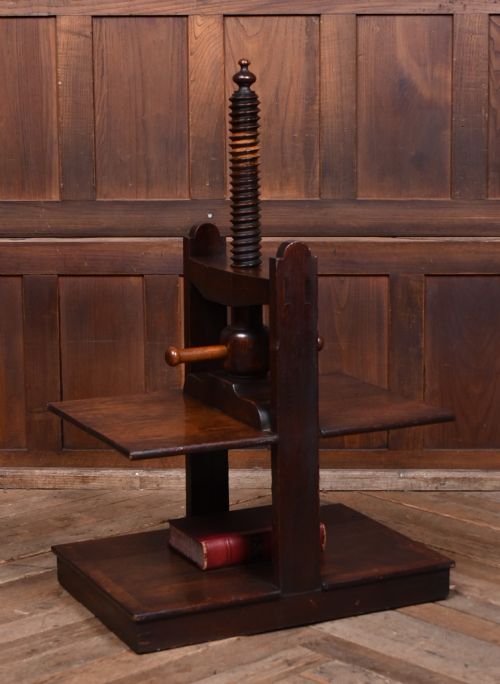


Vintage Bookbinding Press
These heavy presses are sturdy machines designed to flatten paper and bind leaves, bringing practical utility and industrial character to a modern desk or study.
Vintage Bookbinding Press
When you search for a vintage bookbinding press, you are looking at heavy workshop equipment built to apply steady downward pressure through a screw mechanism. These pieces range from compact table-top appliances to substantial cabinet furniture.
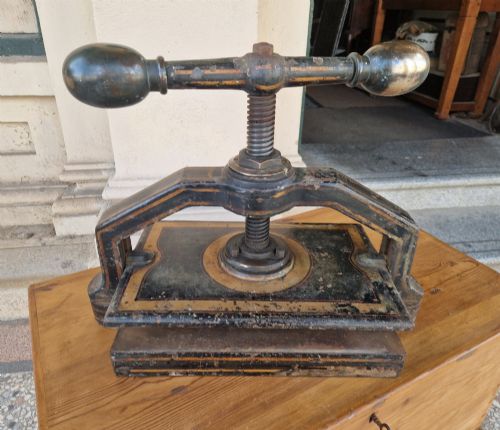
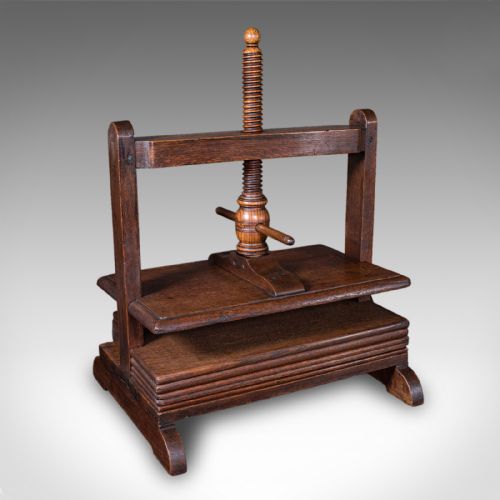
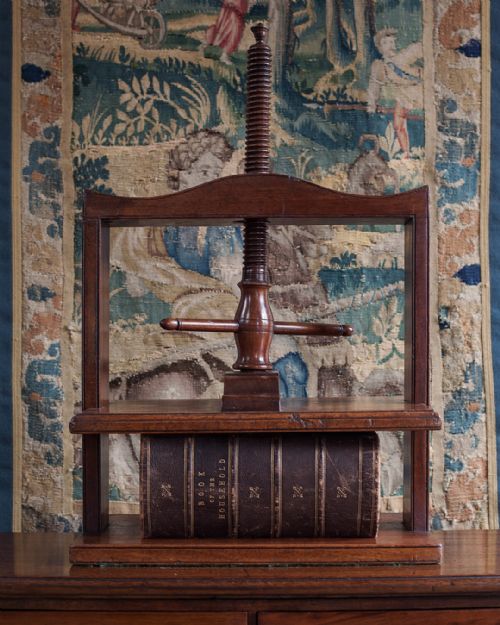
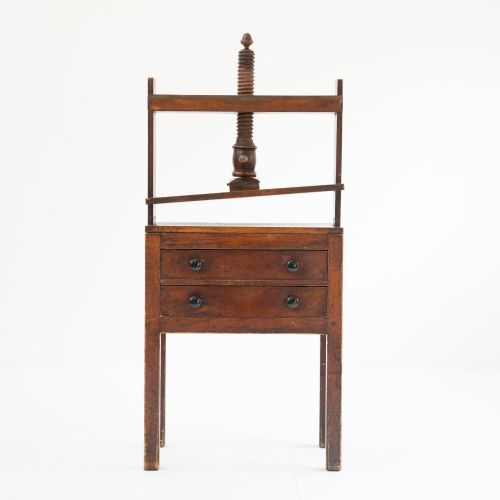
On this page, you are most likely to meet wooden or cast iron examples originating from the Georgian and Victorian periods. Forms vary from simple tabletop book presses to larger country house linen presses and flower presses.
Makers and workshops of the nineteenth century produced these presses in oak, mahogany, pine, and cast iron. They served domestic binderies and estate management long before modern publishing made such machinery obsolete.
How they were made
Cabinet makers utilised dense hardwoods such as oak and mahogany for the main frames and platens of timber presses. Carpenters joined these dense timbers with traditional joinery to withstand the immense torque applied by the central screw.
Foundries cast heavy iron and bronze components to create rigid industrial structures that would not flex under pressure. Manufacturers combined these metal parts with timber beds, adding brass fittings and occasional enamel finishes for durability.
Vintage Bookbinding Press Retail Price Guide 2026
Typical asking prices for vintage bookbinding press among the pieces listed under this phrase on Sellingantiques today, from the lower quarter to the upper quarter. They describe what is for sale here now, not the wider market.
Some heavy iron presses spent decades in dusty printing shops before finding retirement as sophisticated doorstops or bookends in modern studies.
What varies in quality
The distinction between standard utility items and finer pieces lies in the choice of materials and the refinement of the woodwork. Superior examples display carefully selected oak or mahogany with clean, precise joinery rather than purely utilitarian pine.
Mechanical integrity governs the worth of any press, separating smooth-operating screw threads from seized or heavily worn mechanisms. The presence of original makers' markings, such as those from London workshops, elevates the historical interest of the object.
The Vintage Bookbinding Press Glossary
- Platen
- The flat heavy block that presses down upon the paper or linen. This movable wooden or metal plate distributes even pressure across the surface.
- Screw mechanism
- The threaded iron rod turned by a handle to drive the platen downwards. It provides the mechanical advantage needed for pressing.
- Country House
- A term applied to utilitarian furnishings used in large estate management and household administration. These items prioritize robust construction over urban ornamentation.
- Printers stamp
- A heavy metal device used in the printing trade for impressing marks or embossing paper. It shares the industrial lineage of standard book presses.
Vintage Bookbinding Press: Frequently Asked Questions
How do I use a vintage book press today?
These presses work well for flattening botanical specimens, pressing handmade paper, or rebinding old volumes. Simply place your materials between boards and turn the handle to apply steady pressure.
Ensure you do not over-tighten the screw mechanism if the timber shows age-related vulnerability. Regular light oiling on the metal screw keeps the operation smooth.
How can I tell a Georgian press from a Victorian one?
Georgian presses often display simpler, heavier timber construction with deep patination on oak or mahogany. They frequently lack the mass-produced uniformity seen later in the nineteenth century.
Victorian pieces introduce more standardised cast iron components and occasionally bear specific workshop stamps. The transition from pure wood to hybrid iron and wood structures marks this later shift.
Are these presses heavy enough for serious bookbinding?
Most of these machines were built for genuine workshop or estate use, meaning they possess considerable weight and structural strength. Cast iron versions offer immense downward force suitable for binding multiple signatures.
Smaller table-top wooden variants suit lighter craft tasks and decorative paper pressing. Check the span of the opening to ensure it accommodates your specific project size.
What is the difference between a book press and a linen press?
A book press is typically a compact table-top machine designed for concentrated pressure on small areas of paper. A linen press is often a larger piece of furniture incorporating drawers or cupboards beneath the pressing mechanism.
Both rely on heavy screws to flatten textiles or paper, but linen presses served domestic household linen storage in grand houses. Their scale and secondary storage functions set them apart from dedicated desktop binders.