





Vintage Bombe Cabinet
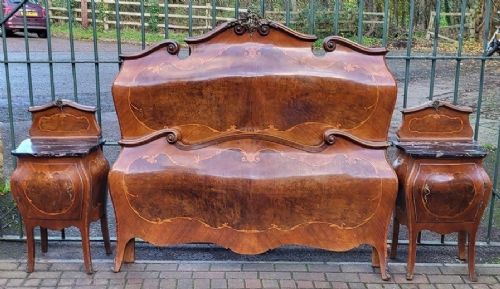
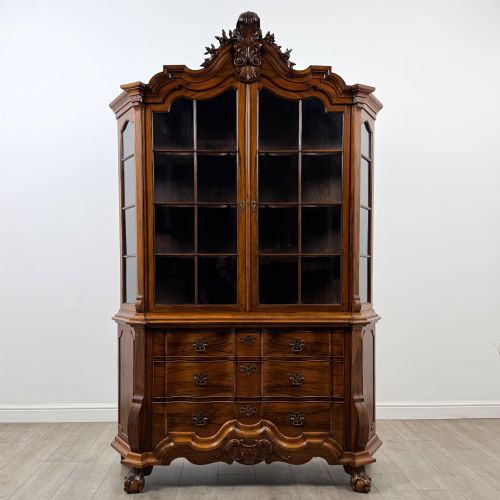
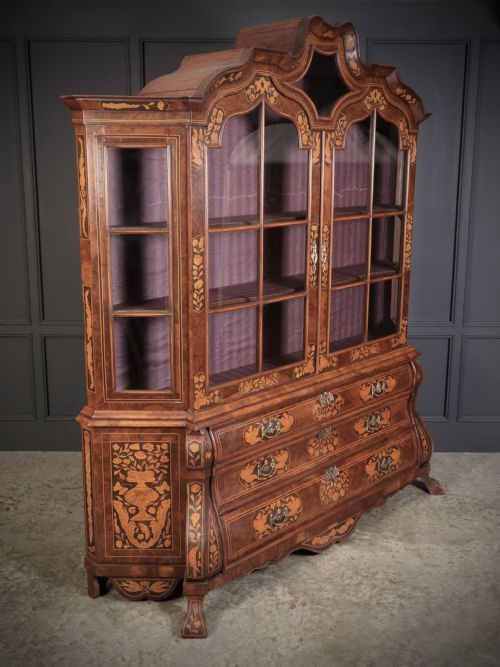
These vintage bombe cabinet pieces bring a swelling serpentine profile and rich marquetry into a room, offering both sculptural presence and deep storage.
Vintage Bombe Cabinet
A vintage bombe cabinet presents a distinctive outward-curving profile, frequently encountered here as chests of drawers, commodes, display cabinets, and bureaus spanning periods from the eighteenth century through to the Edwardian era and the 1920s.
The materials and styles lean heavily toward Continental European traditions, particularly Dutch Baroque, French Louis XV, and Rococo Revival aesthetics, incorporating marquetry inlay and painted finishes.
Buyers seeking this form will find variations ranging from small marble-topped side commodes to large bureau bookcases and sideboards constructed in walnut, kingwood, and fruitwood.
Materials and construction
Cabinetmakers shaped these swelling carcasses using dense timbers such as walnut, kingwood, and burr walnut, often laid over with intricate floral marquetry and fruitwood inlays.
Many examples are fitted with shaped marble tops and cast or chased ormolu mounts, alongside brass hardware that accents the curved drawer fronts and doors.
Vintage Bombe Cabinet Retail Price Guide 2026
Typical asking prices for vintage bombe cabinet among the pieces listed under this phrase on Sellingantiques today, from the lower quarter to the upper quarter. They describe what is for sale here now, not the wider market.
Listings span multiple periods including Georgian, Edwardian, and the eighteenth through early twentieth centuries, featuring materials like marble, ormolu, and burr walnut.
Assessing quality and craftsmanship
Quality rests in the precision of the swelling timber curves and the crispness of the marquetry patterns, where finer pieces display seamless alignment across complex three-dimensional surfaces.
The integration of heavy mounts, such as ormolu on commodes and detailed brass fittings on bureaus, separates standard workshop production from master cabinet work.
The Vintage Bombe Cabinet Glossary
- Bombe
- A swelling, outward-curving shape characteristic of commodes and cabinets produced in continental European furniture traditions. This undulating contour requires sophisticated joinery to maintain structural integrity.
- Marquetry
- Decorative patterns formed by fitting together thin veneers of different coloured woods. Craftsmen cut these elements precisely to create intricate floral and pictorial scenes across the cabinet front.
- Ormolu
- Gilded bronze mounts applied to furniture edges, corners, and feet for decorative accent. These cast metal elements protect vulnerable areas while enhancing the overall visual richness.
- Secretaire a abattant
- A tall cabinet with a drop-front writing flap concealing small drawers and pigeonholes. This form combines storage space with a compact writing surface.
Vintage Bombe Cabinet: Frequently Asked Questions
What is a bombe cabinet?
A bombe cabinet is a piece of furniture characterised by its distinct convex, swelling sides and front. This bulging contour creates a strong visual presence and adds significant volume to the interior storage.
Such cabinets typically take the form of commodes, display pieces, or desks influenced by Dutch and French rococo design traditions.
How do I style a bombe cabinet?
The dramatic profile of a bombe cabinet makes it a natural focal point in a hallway, drawing room, or dining space. Placing a decorative mirror or lamp on top complements the sweeping lines without cluttering the surface.
Because these pieces feature rich timber grains and marquetry, they pair well with neutral walls that allow the detailed woodwork to stand out.
What woods were used for these cabinets?
Cabinetmakers primarily utilised walnut, burr walnut, kingwood, and various fruitwoods to construct these undulating carcases. These dense timbers accepted fine veneers and intricate marquetry cutting exceptionally well.
Secondary woods and structural framing often included oak or pine, depending on the regional workshop and period of manufacture.
How do I date a bombe cabinet?
Dating relies on examining the construction methods of the drawers, the types of veneer used, and the stylistic cues of the mounts and marquetry. Eighteenth-century examples display hand-cut dovetails and native timber usage, whereas later revivals from the nineteenth and early twentieth centuries often incorporate machine-sawn elements and different secondary woods.
Comparing the specific floral inlay patterns and hardware styles against established design periods helps narrow down the decade of production.