




Vintage Boat Diorama
These vintage boat diorama pieces bring maritime folk art into the room, offering framed miniature seascapes and model ships that collectors prize.
Vintage Boat Diorama
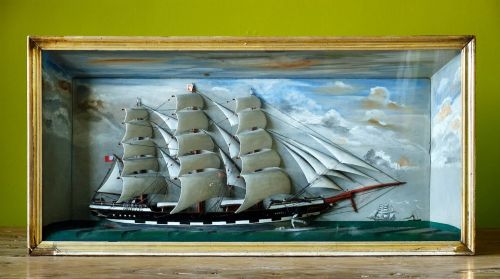
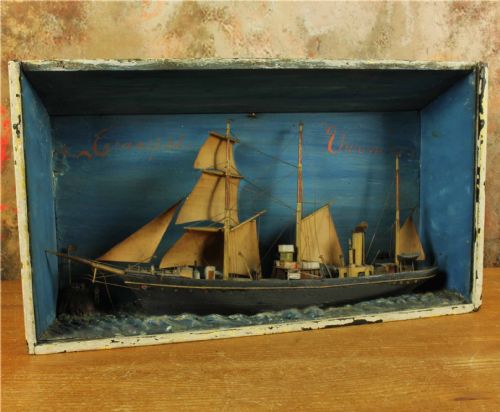
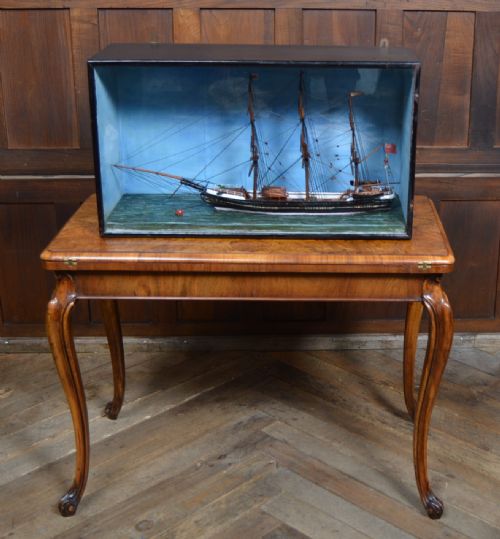
When you search for a vintage boat diorama, you enter a world of maritime folk art spanning the nineteenth century and the early twentieth century. These works capture sailing ships, model boats, and coastal scenes preserved inside glass-fronted shadow boxes, wooden frames, or glass bottles.
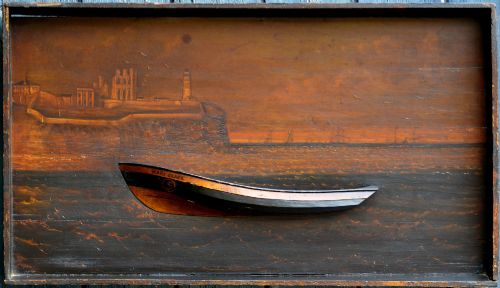
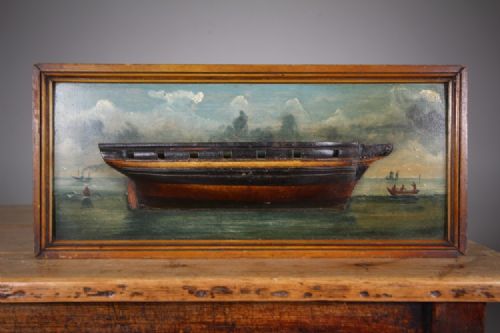
You will encounter pieces from English and French makers, ranging from half-model hulls of fishing cobles against painted backdrops of castles to fully rigged sailing ships like the Glynllifon or the Hippolyta. The forms vary from wall art and shadow box dioramas to scale models mounted on wooden plinths.
The aesthetic is distinctly rooted in nautical tradition, combining handmade boat models with painted canvas, oil paint, and plaster details. Most examples date from the Victorian era up to the nineteen-twenties, reflecting the craftsmanship of self-taught artisans and sailors.
How they were made
Makers constructed these pieces using wood and pine as the primary structural materials for the hulls, frames, and wooden plinths. Scratch-built ship models and half-model hulls demonstrate careful carving and assembly.
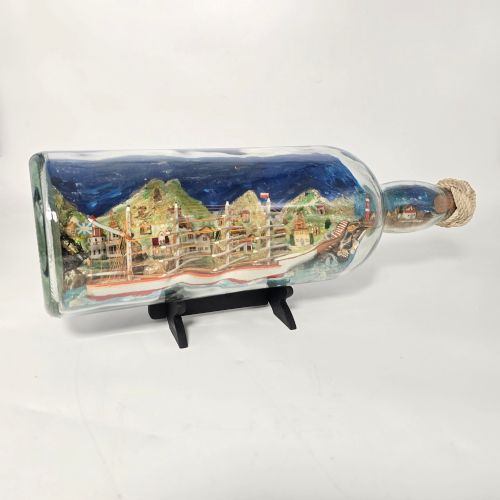
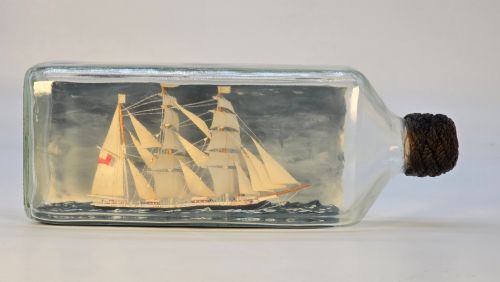
Details were added using canvas, paint, oil paint, plaster, and thread to create the rigging, waves, and coastal backgrounds such as Tynemouth Castle and Priory. The entire assembly was then sealed within glass shadow boxes or glass bottles to protect the delicate elements from dust and damage.
Vintage Boat Diorama Retail Price Guide 2026
Typical asking prices for vintage boat diorama among the pieces listed under this phrase on Sellingantiques today, from the lower quarter to the upper quarter. They describe what is for sale here now, not the wider market.
Some makers managed to fit fully rigged sailing ships directly through the narrow neck of a glass bottle.
What varies in quality
The standard of execution in the painted backgrounds and the complexity of the ship rigging set individual pieces apart. Finer examples display detailed oil paint scenery and precise scratch-built model work rather than simple assembly.
The integrity of the housing container, whether a deep wooden shadow box or a sealed glass bottle, dictates the preservation of the internal materials. Depth and scale within the diorama create a more convincing sense of perspective and maritime movement.
The Vintage Boat Diorama Glossary
- Diorama
- A three-dimensional scene in which models of ships and boats are arranged in front of a painted background. This technique creates a sense of depth and narrative.
- Half model
- A representation of a ship's hull divided vertically along the centerline, mounted against a flat background. These were often used to study hull design or as decorative wall art.
- Coble
- A traditional type of open fishing boat with a flat floor, common in the North East of England. They appear in nineteenth-century maritime folk art.
- Scratch-built
- A model constructed from raw materials rather than from a commercial kit. This method highlights the individual skill of the folk art maker.
Vintage Boat Diorama: Frequently Asked Questions
What is a vintage boat diorama?
A vintage boat diorama is a three-dimensional maritime artwork enclosing a handmade model ship or boat within a glass-fronted box, frame, or bottle.
These pieces combine carved wooden hulls with painted canvas backgrounds to depict sailing ships and coastal scenes from the nineteenth and early twentieth centuries.
How were these dioramas used?
They served as decorative items in homes, offices, and maritime establishments, often commemorating specific vessels or coastal locations.
Sailors and folk art makers also created them as personal keepsakes or trade pieces to record particular ships and maritime scenes.
How do I date a diorama?
Dating relies on the style of the wooden frame, the construction methods of the ship model, and any recorded details such as named vessels or specific periods.
Nineteenth-century examples often feature Victorian maritime folk art styles, while those from around nineteen-twenty show early twentieth-century scratch-building techniques.
Where did these pieces originate?
The available examples show origins primarily in England and France, reflecting strong local maritime traditions.
English pieces frequently incorporate regional subjects like northern castles, while French makers produced boxed boat models in locations such as Vienne.