




Vintage Blue Drop Earrings
These vintage blue drop earrings bring together centuries of fine gemstone work, offering a touch of period elegance for daily wear.
Vintage Blue Drop Earrings
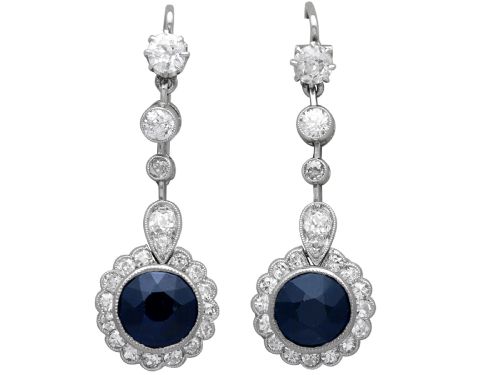
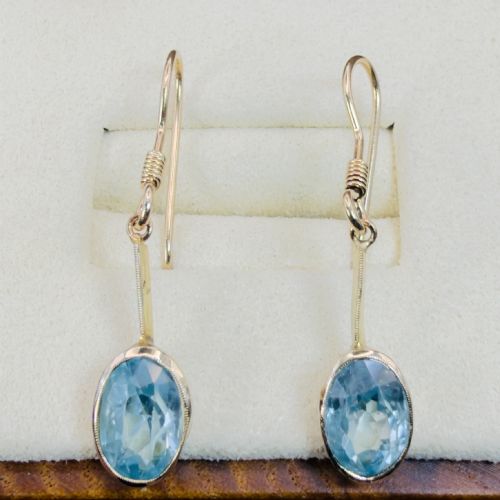
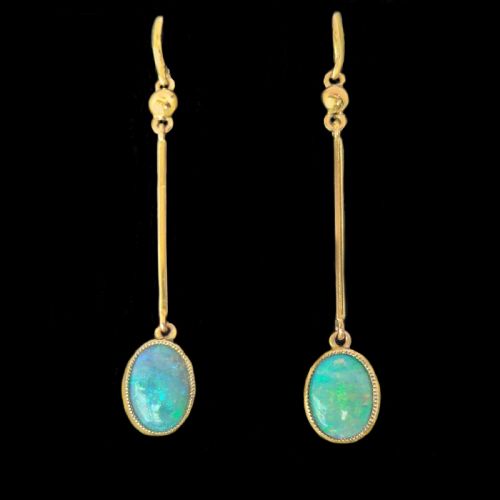
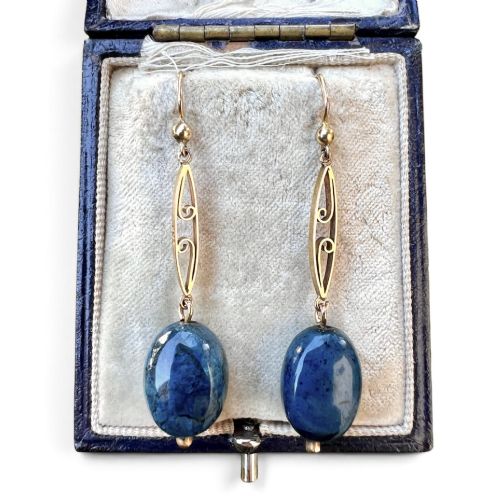
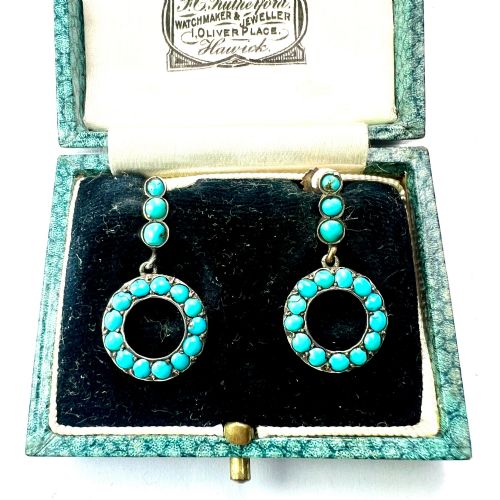
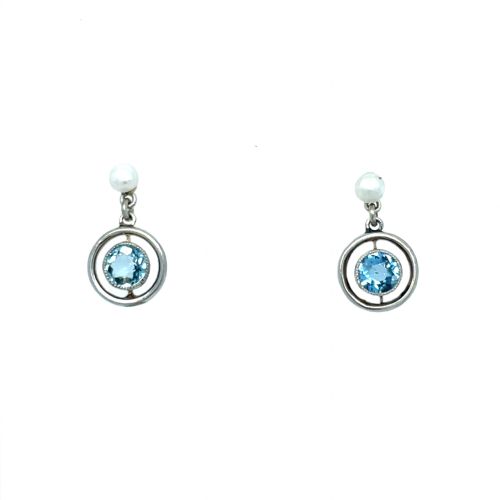
When you search for vintage blue drop earrings, you are looking at a varied selection of dangling designs spanning from the Victorian and Edwardian eras through to the mid-century period. These pieces showcase a spectrum of blue stones, from deep sapphires and aquamarines to topaz, turquoise, and paste.
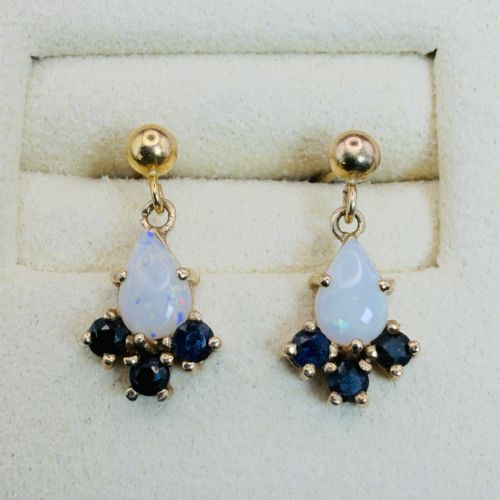
The most common examples you will meet on this page date from the 1950s and the Art Deco period, often set in gold or silver. They range from simple pear-cut drops to elaborate cluster designs featuring surrounding diamonds.
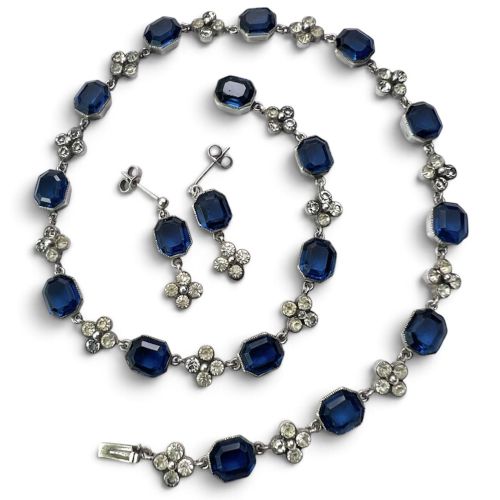
Makers and workshops produced these items across multiple styles, including classic fine jewellery, mid-century modern, and vintage British aesthetics. Drop earrings in this category frequently appear alongside matching necklaces in jewellery sets.
Materials and Techniques
The construction of these pieces relies heavily on precious metals such as 9ct gold, 18ct gold, platinum, silver, and palladium, providing durable settings for delicate stones. Jewellers utilised traditional techniques like claw and cluster settings to secure aquamarines, sapphires, diamonds, and pearls.
Gemstones are shaped into oval, square, and pear cuts, while older examples incorporate rose-cut diamonds and marcasite accents. Screwback mechanisms and dangling hoops appear alongside standard drop fittings, reflecting the specific manufacturing methods of their respective decades.
Judging Quality
Quality in these earrings rests on the calibre and weight of the central blue stones, alongside the presence and grade of accompanying diamonds. Finer examples display superior gemstone clarity and balanced proportions within cluster or drop configurations.
The choice of metal also dictates the tier of the piece, with platinum and 18ct gold settings typically housing more substantial stones than silver or lower carat gold alternatives. The precision of the stone-cutting and the integrity of the metalwork further separate standard production items from exceptional fine jewellery.
The Vintage Blue Drop Earrings Glossary
- Aquamarine
- A pale blue to light green variety of beryl, frequently utilised as the central drop stone in mid-century and Art Deco designs. It is prized for its transparent crystalline appearance.
- Paste
- Hand-cut and polished glass used to imitate gemstones in antique and vintage jewellery. It offers brilliant colour without the natural inclusions found in mined stones.
- Marcasite
- Small, faceted pieces of iron pyrite set into silver to create a sparkling, metallic border. This technique is particularly prevalent in Art Deco pieces.
- Drop Earring
- An earring style where the main decorative element hangs below the earlobe rather than sitting directly on it. These designs often incorporate articulated joints for movement.
- Cluster
- An arrangement of smaller gemstones tightly grouped around a larger central stone. This technique maximises overall visual impact and sparkle.
Vintage Blue Drop Earrings: Frequently Asked Questions
What periods do these earrings come from?
The selection includes pieces from the Victorian and Edwardian eras, alongside items created during the 1920s, 1930s, and 1950s.
Later examples extend into the mid-century modern period and the late 20th century.
Which blue stones are most common?
Aquamarine and sapphire appear most frequently, set into various configurations alongside diamonds and pearls.
Other variations feature blue topaz, turquoise, blue zircon, and blue stone paste.
Are these earrings made of solid gold?
Many listings feature 9ct gold and 18ct gold, including both yellow and white gold variations.
Other pieces utilise platinum, silver, or palladium for their metal settings.
Do these earrings come as part of a set?
Certain items are offered as complete jewellery sets that include a matching necklace alongside the earrings.
These coordinated suites typically share the same gemstone and period characteristics.
How are the earrings secured to the ear?
The fastenings vary by period, including standard drop fittings, dangly hoops, and stud drop configurations.
Some Art Deco designs specifically utilise screwback mechanisms for non-pierced ears.