




Vintage Black Powder Gun
These vintage black powder gun examples bring tactile history to your hands, spanning centuries of craftsmanship from flintlock mechanisms to percussion systems.
Vintage Black Powder Gun
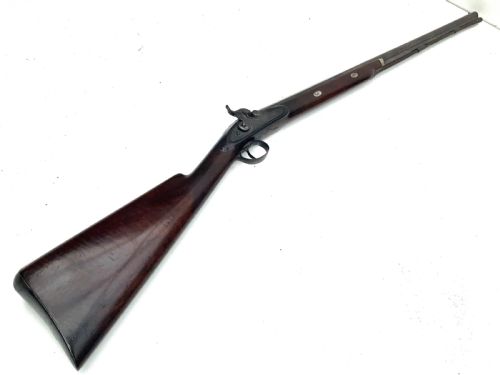
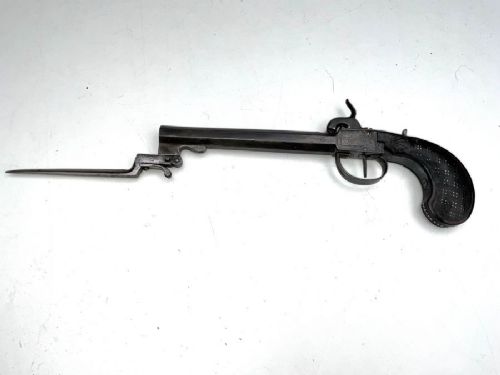
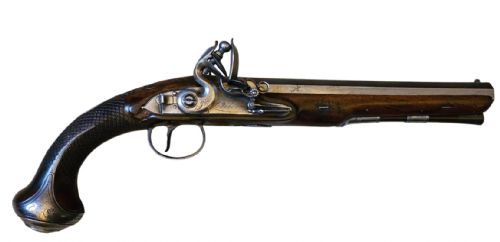
A vintage black powder gun encompasses a diverse selection of antique firearms, militaria, and associated equipment like powder flasks from periods spanning the eighteenth and nineteenth centuries. Buyers encountering this category will find flintlock and percussion system arms, including holster pistols, pocket pistols, muskets, rifles, and revolvers.
The selection ranges from Georgian and Regency eras through Victorian military and civilian pieces. Origins span domestic British makers, French workshops, and American martial arms from the Civil War period.
Among these items, percussion pistols and revolvers alongside copper or brass shot and powder flasks appear frequently. These artefacts represent functional military service arms as well as gentleman's sporting pieces.
Materials and Construction
Constructed primarily from durable hardwoods such as walnut, oak, and mahogany for stocks and grips, paired with robust metals for barrels and lock plates. Steel, iron, and brass provide structural integrity and mechanical reliability.
Accessory equipment incorporates stamped or embossed copper and brass for powder flasks, occasionally lined with materials like velvet. Component parts rely on period smithing, casting, and hand-fitting techniques appropriate to military and civilian workshops.
The inventory encompasses periods from the 18th Century through the Victorian era.
Quality and Distinction
Distinctions in quality rest upon the crispness of maker signatures, the integration of matching serial numbers where applicable, and the preservation of original mechanical action. Maker attributions to notable firms elevate historical significance.
The survival of original fitted boxes and associated accessories creates a more complete artefact. Finer examples maintain the integrity of their stock wood and metal patination without excessive modern intervention.
John Manton & Son·Colt·Barber of Newark·Wilson
The Vintage Black Powder Gun Glossary
- Flintlock
- An ignition mechanism utilising a piece of flint struck against a steel frizzen to create sparks that ignite black powder. This system preceded the percussion cap.
- Percussion cap
- A small detonating device placed on a nipple that ignites the main powder charge when struck by the hammer. It dominated nineteenth-century firearm design.
- Blunderbuss
- A muzzle-loading firearm with a flared barrel designed to scatter shot at close range. These often appeared in coaching and defensive contexts.
- Fowler
- A long-barrelled smoothbore firearm intended primarily for hunting birds and small game. These sporting arms date across the eighteenth and nineteenth centuries.
- Militaria
- Collectable items and equipment connected with military forces. This category includes service pistols, muskets, and dated powder flasks.
Vintage Black Powder Gun: Frequently Asked Questions
How do I clean a vintage black powder gun?
Maintenance requires removing residue left by black powder using appropriate solvents to prevent corrosion on iron and steel surfaces. Care must be taken to preserve the original patina on metal and wood components.
Wooden stocks benefit from occasional treatment with appropriate oils to prevent drying, while brass and copper elements require minimal intervention to maintain their historical character.
What is the difference between flintlock and percussion?
Flintlock mechanisms rely on a flint striking a steel frizzen to generate a spark into the priming pan. This technology was standard through the eighteenth century.
Percussion systems use an external hammer striking a detonating cap placed on a nipple, offering greater reliability in wet weather from the nineteenth century onward.
Are these firearms legal to own?
Antique black powder arms often fall under specific legal exemptions depending on their ignition system and jurisdiction. Buyers should verify local regulations regarding antique firearms ownership.
Many muzzle-loading pieces from the eighteenth and nineteenth centuries do not require standard modern licensing, though specific restrictions apply to certain revolver types.
How do I identify the date of a piece?
Dating relies on maker signatures, proof marks, barrel inscriptions, and distinct mechanical characteristics such as the transition from flintlock to percussion. Patent dates and serial numbers help narrow the timeline.
Stylistic elements of the wood stock and brass mounts also provide clues, aligning with Georgian, Regency, or Victorian manufacturing periods.