


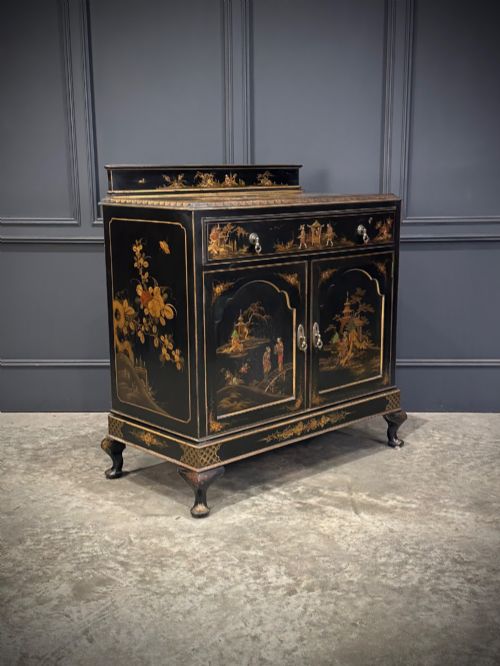


Vintage Black Lacquer Furniture
Vintage black lacquer furniture brings rich oriental motifs, gleaming surfaces and deep dark tones into a room.
Vintage Black Lacquer Furniture
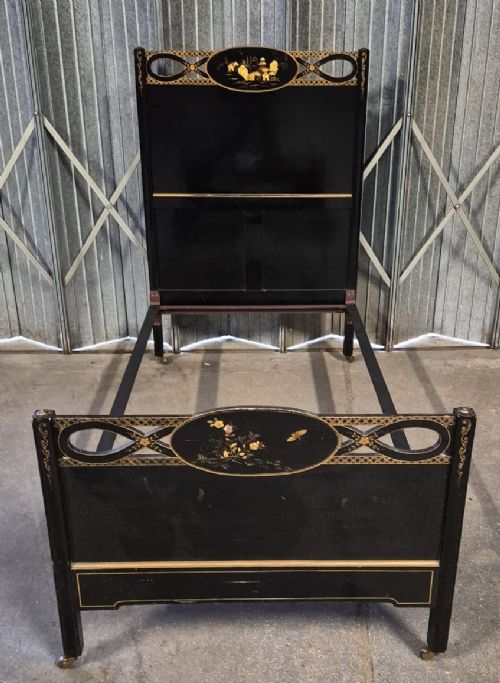
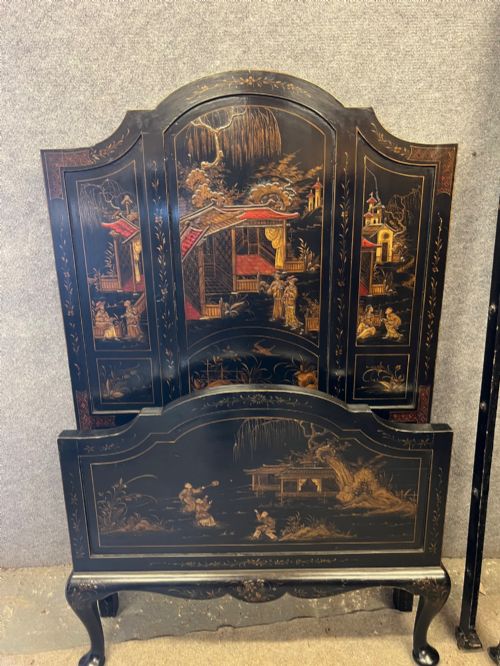
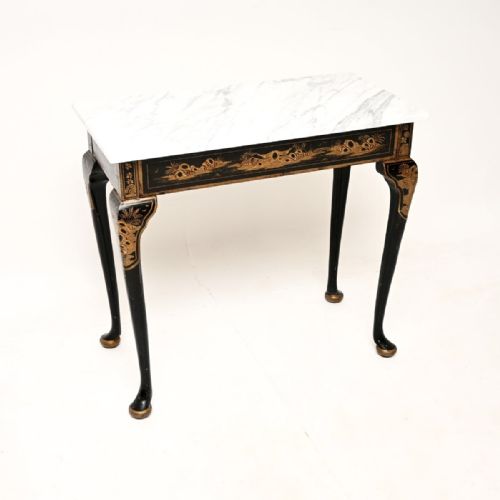
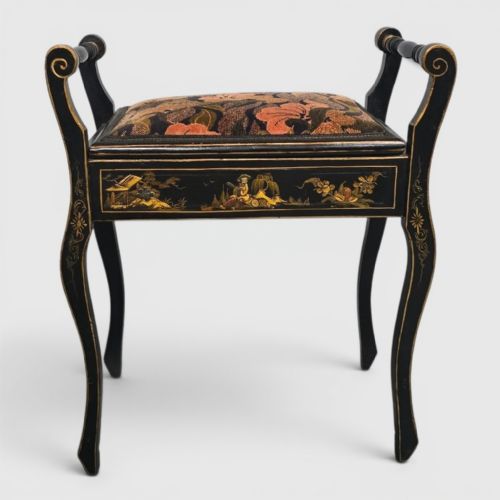
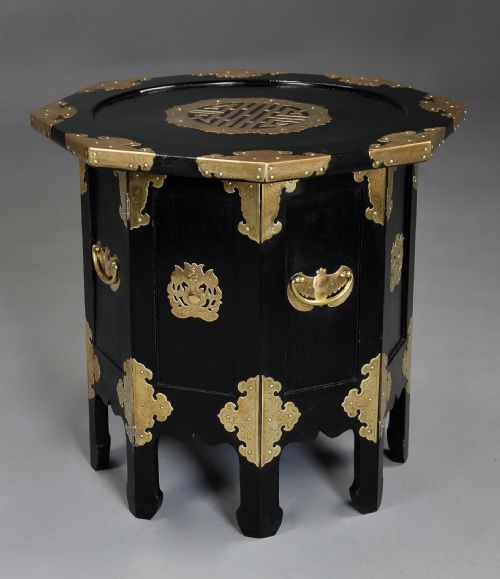
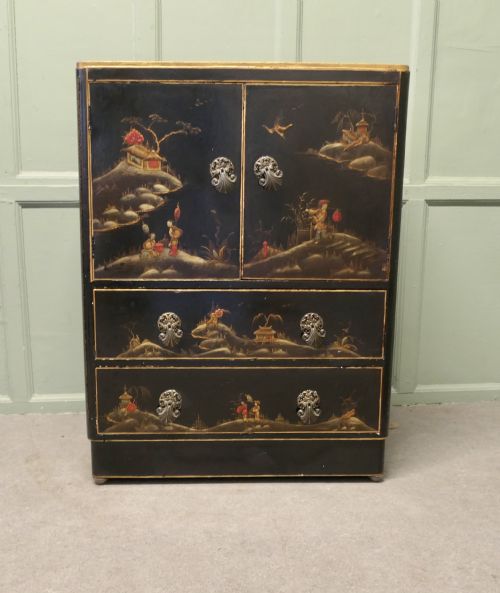
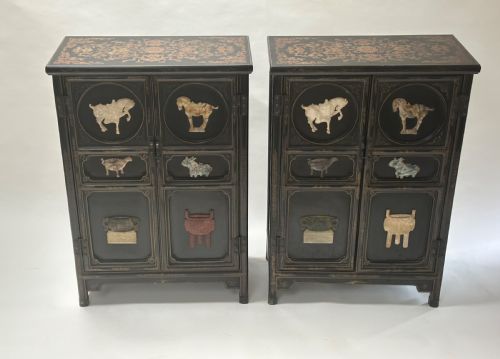
Vintage black lacquer furniture encompasses cabinets, occasional tables, coffee tables, beds and desks that draw heavily on Chinoiserie and Art Deco traditions. When searching for vintage black lacquer furniture, buyers encounter pieces ranging from Victorian marble-top side tables to 1920s cocktail cabinets and Korean painted chests.
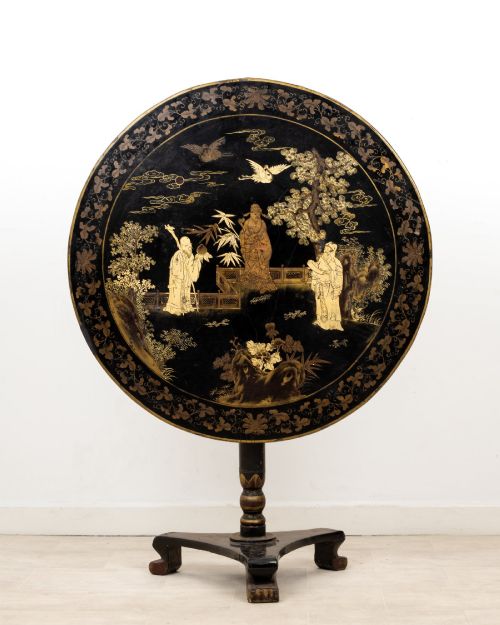
The aesthetic leans towards decorative Oriental designs, featuring hand-painted birds, flowers and traditional landscapes rendered in gold leaf or polychrome pigments. Edwardian cabinets on stands and early twentieth century octagonal tables dominate the selection, offering functional surfaces paired with striking visual depth.
Origins stretch from English workshops interpreting traditional Chinese styles to pieces originating directly from China, Korea and Burma during the nineteenth and early twentieth centuries. Side cupboards, plant stands and writing bureaux provide versatile options for modern interiors seeking historical character.
How they were made
Construction relies upon solid wood substrates, including ebonised wood and maple, coated with layers of lacquer to achieve a durable, glossy black finish. Artisans applied successive coats of varnish and polished the surface extensively between applications to create a deep, reflective sheen.
Decoration often involved the application of gold leaf and intricate paintwork, highlighting motifs of flora and fauna across doors, tabletops and panels. Brass and gilt brass mounts, handles, and occasional cloisonne elements were integrated to accent the dark timber frames.
Techniques varied from European japanning methods emulating Asian exports to authentic regional Asian cabinet-making and painting traditions. Structural integrity relied on traditional joinery, ensuring that side tables, desks and cabinets maintained stability alongside their decorative surfaces.
Vintage Black Lacquer Furniture Retail Price Guide 2026
Typical asking prices for vintage black lacquer furniture among the pieces listed under this phrase on Sellingantiques today, from the lower quarter to the upper quarter. They describe what is for sale here now, not the wider market.
Listings feature black lacquer pieces spanning the Victorian era through the Art Deco period, incorporating materials like brass, gold leaf and ebonised wood.
What varies in quality
The distinction between tiers rests upon the depth and execution of the painted decoration, particularly the fineness of the gold leaf work and hand-painted motifs. Superior examples display crisp detailing in depictions of birds, flowers and figures, whereas lesser pieces show rushed or simplified brushwork.
The integrity of the lacquer finish itself dictates much of the standing of a piece, separating smooth, mirror-like surfaces from those with excessive crazing or clumsy later touch-ups. Original hardware, such as brass mounts and hinges, contributes significantly to the overall authenticity and desirability of cabinets and tables.
Substrate construction and material choices also divide the range, with select items utilising dense hardwoods or premium secondary timbers like maple beneath the lacquer layer. Cohesion between the structural form and the decorative scheme marks the difference between standard utilitarian items and masterworks of the style.
H and L Epstein
The Vintage Black Lacquer Furniture Glossary
- Chinoiserie
- European artistic style reflecting Chinese artistic influences, frequently seen in the decorative lacquer work of cabinets and tables. This style uses motifs of pagodas, landscapes, birds and flowers rendered in gold and colour upon dark surfaces.
- Japanning
- European imitation of East Asian lacquerwork, popular during the eighteenth and nineteenth centuries. The technique involves layering dark varnishes and metallic dust to replicate oriental finishes.
- Ebonised
- Wood treated with a stain or finish to imitate ebony, providing a deep black ground for furniture. This treatment forms the structural base for many early twentieth century tables and etageres.
- Cloisonne
- Enamelling technique where thin metal wires form raised barriers to contain coloured pastes, occasionally found incorporated into side tables. It adds textural contrast to smooth lacquered wooden surfaces.
- Tilt top
- Table mechanism allowing the surface to pivot to a vertical position when not in use, common in occasional tables. This design saved space in period interiors.
Vintage Black Lacquer Furniture: Frequently Asked Questions
How do I care for black lacquer?
Dust surfaces gently with a soft, dry cloth and avoid harsh chemical cleaners or direct sunlight. Maintaining stable room humidity prevents the lacquer from cracking or drying out over time.
Wax should be used sparingly, and only if the specific finish allows, to preserve the high gloss sheen without dulling the underlying gold leaf or paint.
Where does Chinoiserie furniture fit best?
These striking pieces work well as focal points in minimalist rooms, living spaces or hallways where their dark tones and gilded details stand out. Side cabinets, cocktail cabinets and coffee tables anchor neutral interiors by introducing texture and historic narrative.
Pairing a lacquer side table or plant stand with contemporary seating highlights the craftsmanship without overwhelming the space.
Are these pieces waterproof?
Traditional lacquer finishes resist moisture reasonably well, but standing water or damp items can still damage the surface and cause cloudy spots. Using coasters and protective mats on coffee tables and side tables preserves the original finish.
Spills should be blotted immediately with a soft cloth rather than wiped aggressively to protect delicate painted details.
How do I date a lacquer cabinet?
Dating relies on examining construction methods, timber types, and the style of the hardware alongside the decorative motifs used. Edwardian and Victorian pieces often show specific joinery traits and hardware designs distinct from 1920s Art Deco examples.
Consulting the specific period evidence listed for each item helps clarify whether a piece originates from the nineteenth century or the interwar period.