





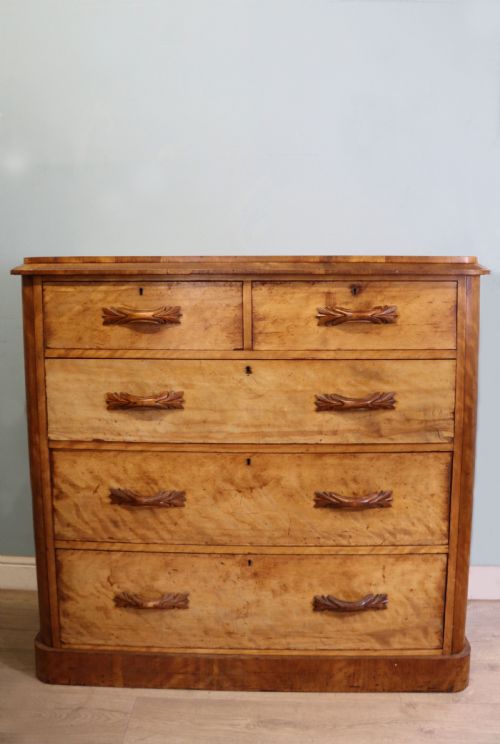

Vintage Birch Commodes
These vintage birch commodes bring pale timber figures and clean lines into a room, offering generous storage with distinctive Scandinavian and Victorian character.
Vintage Birch Commodes
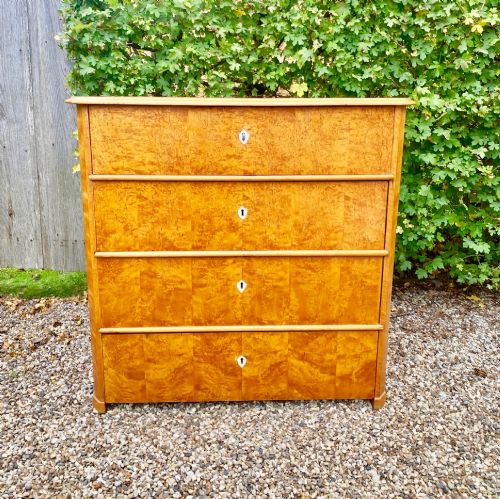
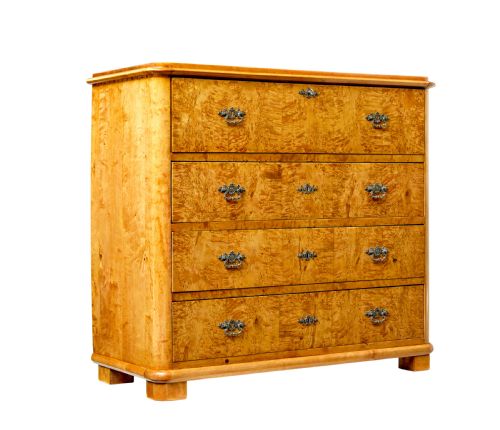
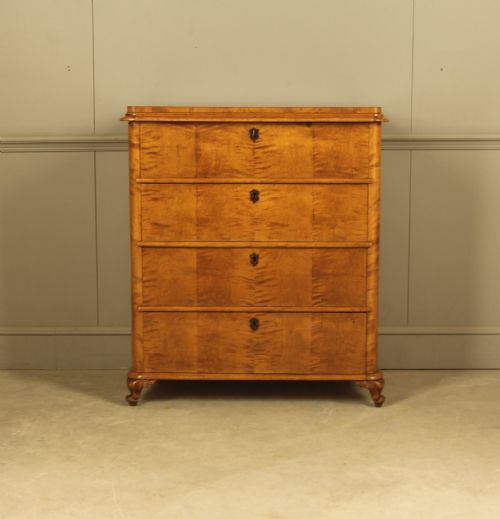
Vintage birch commodes primarily comprise chests of drawers and secretaire chests originating from Sweden and Britain during the nineteenth century. Buyers searching for vintage birch commodes encounter substantial case pieces designed with multiple straight drawers or fitted writing compartments.
The Scandinavian pieces often display the warm tones of Swedish Biedermeier or Scandinavian country aesthetics, while British examples lean towards Victorian proportions. These items function as practical bedroom or hallway storage while serving as strong decorative focal points.
The selection centres heavily on nineteenth-century craftsmanship, alongside occasional twentieth-century interpretations. Formats range from simple four-drawer chests to elaborate caddy top designs and secretaire variants.
How they were made
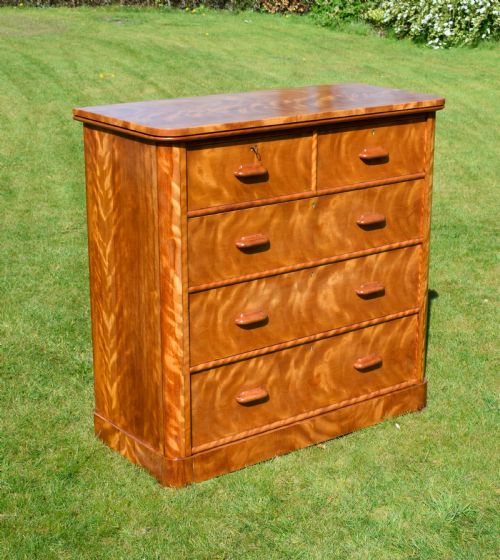
Cabinetmakers utilised solid woods and applied veneers, selecting timber figure carefully to accentuate the natural grain. Flame birch, burr birch, and satin birch appear frequently across the drawer fronts, offering striking patterns.
Hardware details such as brass handles and iron fittings complement the pale wood surfaces. Some pieces incorporate secondary timbers like pine, whilst alternative finishes include hand-painted simulated birch surfaces.
Vintage Birch Commodes Retail Price Guide 2026
Typical asking prices for vintage birch commodes among the pieces listed under this phrase on Sellingantiques today, from the lower quarter to the upper quarter. They describe what is for sale here now, not the wider market.
Materials documented across the inventory include flame birch, burr birch, satin birch, pine, brass, iron, and bone.
What varies in quality
The sophistication of the timber veneer selection dictates much of the visual appeal, with matching flame or burr patterns commanding attention. Superior pieces exhibit seamless book-matching across the drawer fronts rather than random grain orientation.
Construction methods and secondary details like bone or brass accents differentiate standard production from finer cabinetmaking. The precision of the drawer joints and the crispness of the moulded caddy tops reflect the original maker's skill.
GEMLA FABRIKERS
The Vintage Birch Commodes Glossary
- Caddy top
- A raised, moulded tabletop profile resembling the lid of a tea caddy. This edge treatment adds architectural definition to the upper surface of a chest.
- Secretaire chest
- A chest of drawers featuring a hinged writing drawer that folds down to reveal small compartments and a writing surface. It combines storage with a compact bureau function.
- Flame birch
- A distinctive timber veneer grain pattern resembling flickering flames. Cabinetmakers prized this figure for its visual movement across large flat drawer surfaces.
- Biedermeier
- A Central European style spanning the nineteenth century characterised by utilitarian comfort and clean lines. It prioritises honest wood grains over heavy ornamentation.
Vintage Birch Commodes: Frequently Asked Questions
How do I care for birch furniture?
Keep wooden furniture away from direct sunlight and sudden temperature shifts to protect the veneer and finish. Dust gently with a dry cloth and avoid harsh chemical polishes.
Maintaining stable room humidity prevents the timber from warping or splitting over time.
Where were these chests made?
The available selection consists largely of nineteenth-century Swedish pieces alongside Victorian British examples. Scandinavian workshops produced many of the distinctive flame and burr birch variants.
British makers utilised satin birch and pine within domestic Victorian workshops.
What is the difference between satin birch and flame birch?
Satin birch refers to a smooth, lustrous timber surface with a fine grain and gentle sheen. It often appears on Victorian British furniture.
Flame birch displays dynamic, undulating patterns that mimic licking flames, created by cutting across specific tree growths.