

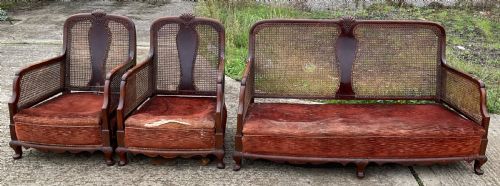
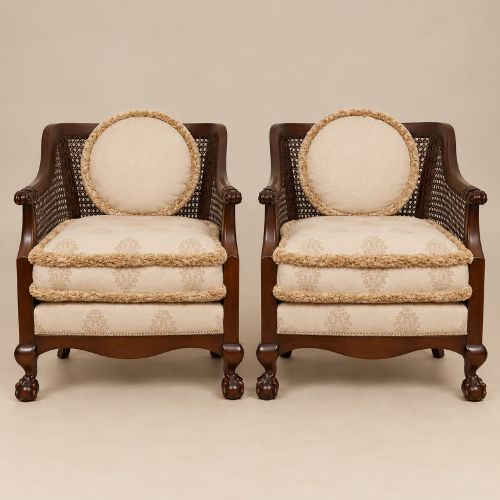
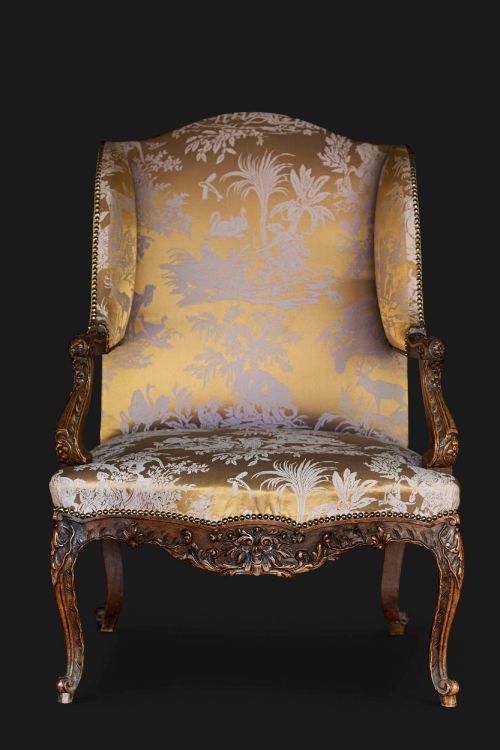
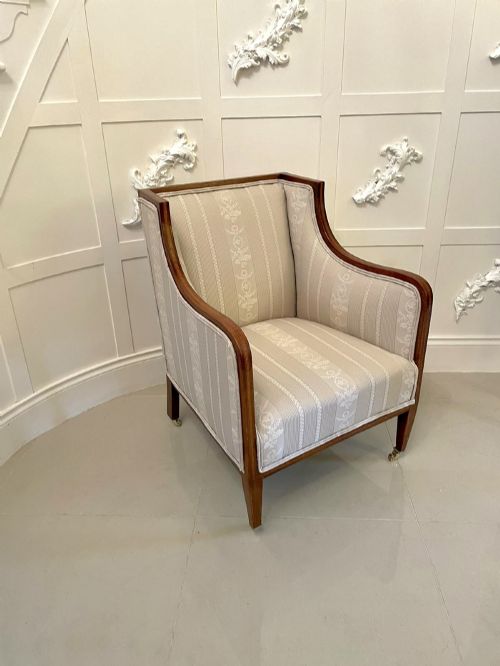
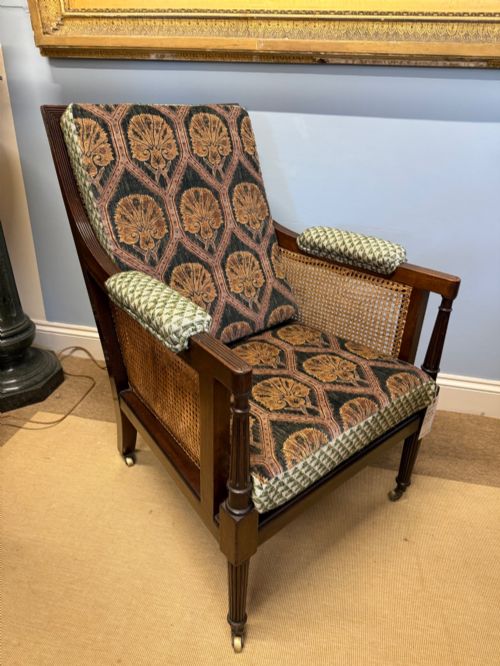
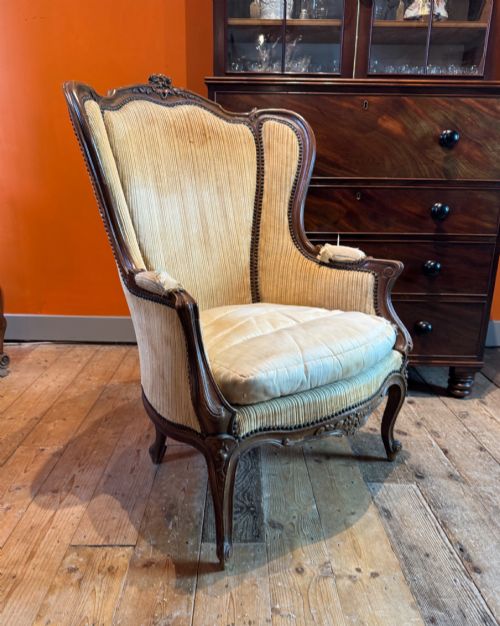
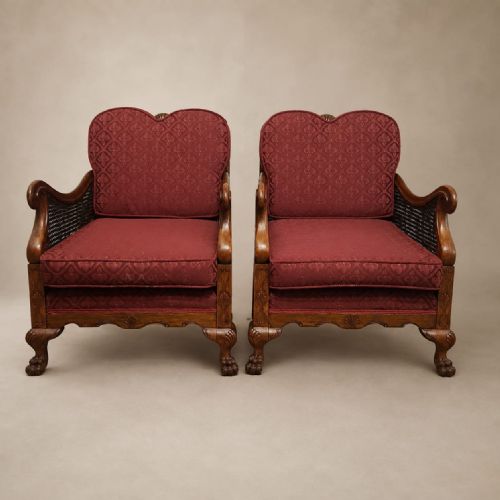
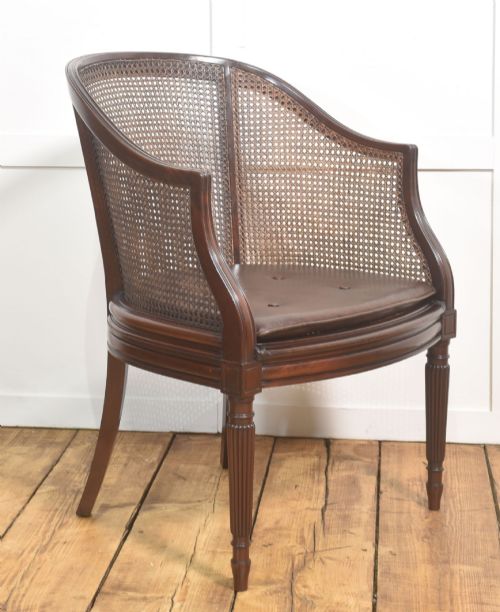
Vintage Bergere Armchair
A vintage bergere armchair offers deep-set caned comfort, bringing classic French and English library elegance into a modern room.
Vintage Bergere Armchair
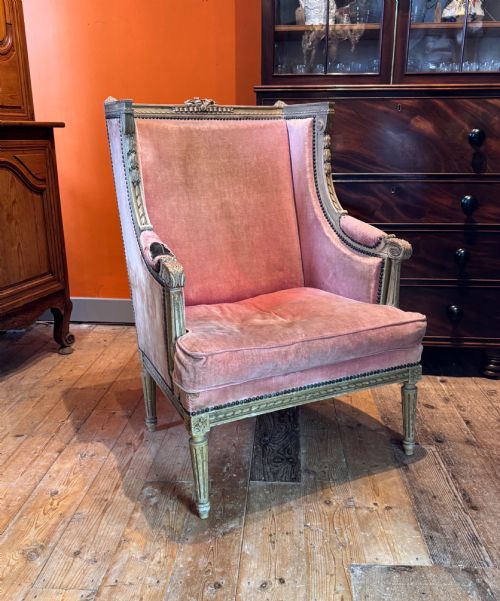
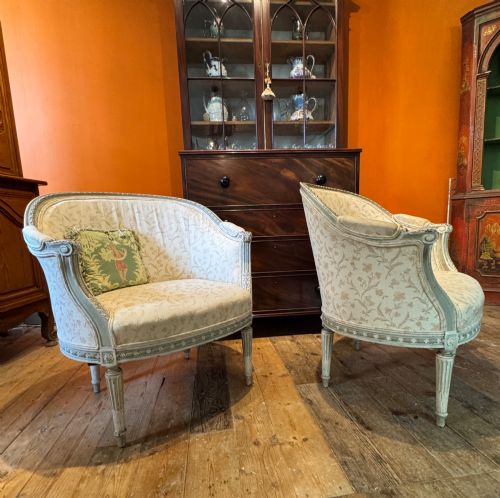
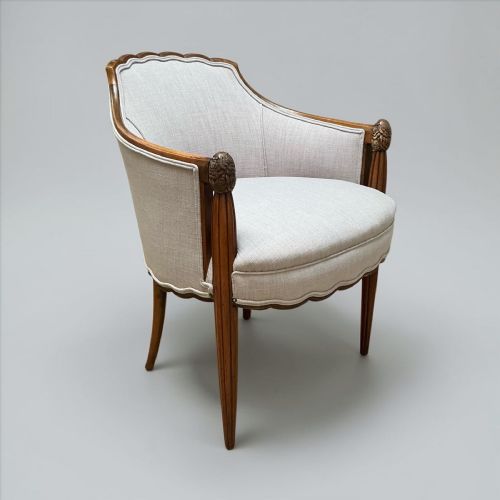
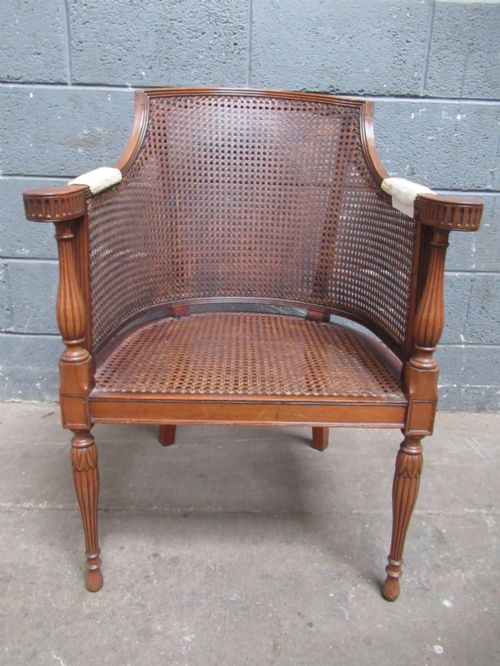
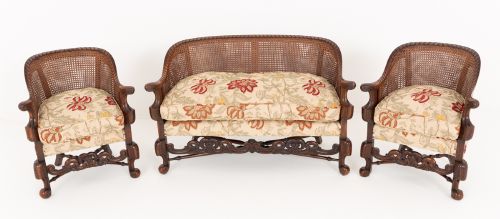
A vintage bergere armchair is a low, upholstered or cane-sided seat designed for relaxation, drawing on historic French forms. Buyers searching for a vintage bergere armchair typically encounter pieces dating from the nineteenth century through the art deco period, often shaped with tub backs or library proportions.
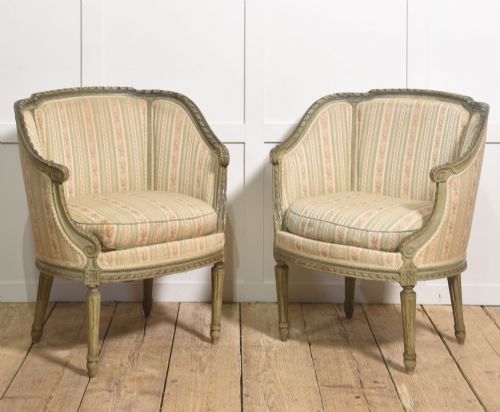
The materials span sturdy hardwoods like mahogany, walnut, and oak, paired with woven cane panels and loose cushions. Many examples reflect revivalist tastes, particularly Louis XV and Louis XVI styles, alongside Edwardian interpretations and streamlined nineteen-thirties designs.
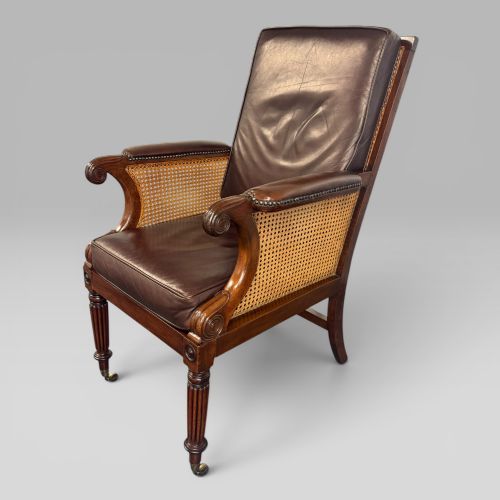
Most selections on this page function as reading chairs or occasional seats in studies and drawing rooms. The format ranges from simple caned tub chairs to large library armchairs equipped with matching footstools or upholstered in plush velvet and leather.
Materials and construction
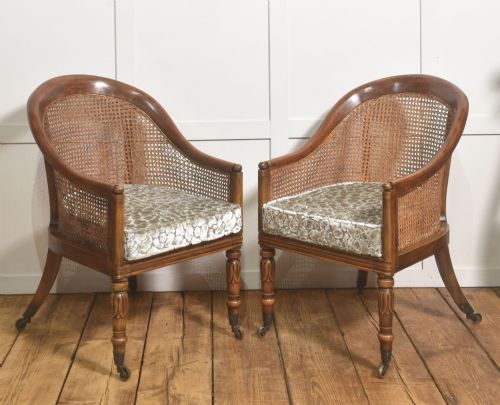
Frames are constructed from solid timbers such as mahogany, walnut, rosewood, and beech, frequently shaped with hand-carved details or painted finishes. Cabinetmakers joined these structural elements using traditional mortise and tenon joints to withstand the outward pressure of the seated weight.
Caning, often referred to as split cane or bergere caning, is meticulously hand-woven through pre-drilled holes along the inner frame to create a resilient, flexible support panel. This open-work technique allows air circulation while maintaining tight tension across the curved back and sides of the chair.
Upholstered versions incorporate traditional stuffing materials secured over webbed bases, topped with down or feather-filled loose cushions covered in fabric, velvet, or leather. Brass hardware, original paint layers, and gilded wood accents appear frequently on French provincial and neoclassical models.
Vintage Bergere Armchair Retail Price Guide 2026
Typical asking prices for vintage bergere armchair among the pieces listed under this phrase on Sellingantiques today, from the lower quarter to the upper quarter. They describe what is for sale here now, not the wider market.
Several armchairs on offer hail directly from a French chateau, bringing centuries of aristocratic slouching straight to your sitting room.
Defining quality and craftsmanship
The standard of a piece rests on the crispness of the timber carving and the integrity of the structural frame. Superior examples display dense, well-figured mahogany or walnut with hand-cut joinery that remains rigid over decades of use.
Caning quality is measured by the tightness of the weave and the uniformity of the strands. Fine pieces retain their original hand-woven cane panels intact, whilst lesser or heavily used specimens often show replacement work or brittle strands.
Stylistic coherence and surface preservation elevate certain pieces above standard production. Original paint finishes, untouched patination on the wood, and balanced proportions distinguishing Louis revival or art deco designs mark the upper tier of available seating.
The Vintage Bergere Armchair Glossary
- Bergere
- An enclosed upholstered armchair with a wooden frame and cane sides or back panels. It originated in France during the eighteenth century.
- Caning
- A method of weaving rattan or reed through frame holes to create a supportive mesh. This technique provides flexible strength for chair backs and seats.
- Tub chair
- An armchair featuring a continuous curved back and arms that form a single semi-circular enclosure. This shape wraps around the occupant for added comfort.
- Fauteuil
- An open-arm armchair with exposed wooden framing, typical of French period seating. Unlike the bergere, the sides remain open beneath the padded armrests.
- Regency style
- A British design aesthetic spanning the early nineteenth century, drawing heavily on classical Greco-Roman motifs. It is characterised by clean mahogany frames and understated brass mounts.
Vintage Bergere Armchair: Frequently Asked Questions
How do I clean caned panels?
Dust the cane regularly with a soft brush and wipe occasionally with a damp cloth using mild soap. Avoid soaking the material, as excess moisture makes the rattan brittle.
Keep the chair away from direct heat sources to prevent the cane from drying out and snapping under tension.
Can I replace the loose cushions?
Loose seat cushions on these armchairs are easily updated with new fabric or feather fillings to match your interior. Original down pads can be retained or re-covered while keeping the historic frame untouched.
Ensure any replacement cushion maintains the original thickness so the seating height aligns properly with the wooden arms.
Are these chairs comfortable for daily sitting?
Most models provide a supportive sit thanks to the angled back and the subtle give of the woven cane sides. Adding a plump feather cushion enhances lumbar support for extended reading sessions.
Library and lounge variants are specifically proportioned for relaxed posture rather than upright formal seating.
How do I identify a French piece?
French examples often display carved cabriole legs, exposed beech frames with original paint, or distinct Louis XV and XVI revival motifs. The joinery and timber choices also point towards continental workshops.
English interpretations tend to favour heavier mahogany or rosewood construction with more restrained neoclassical lines.