




Vintage Bear Figure
These vintage bear figure examples combine European animalier tradition and Japanese folk art woodcarving to bring character and naturalism into any room.
Vintage Bear Figure
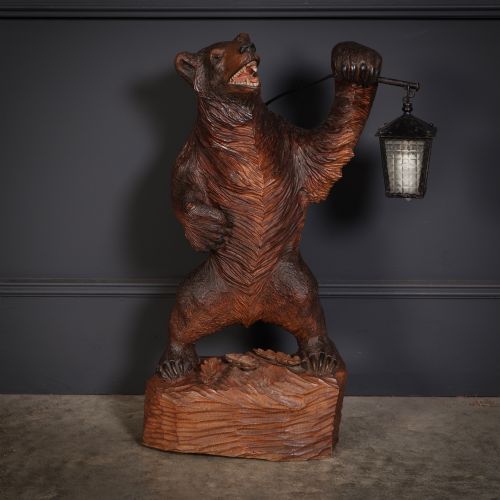
When you search for a vintage bear figure, you encounter diverse sculptural representations spanning European and Japanese traditions from the eighteenth century to the early twentieth century. These pieces range from small silver pin cushions and miniature carved groups to large bronze statues and functional floor lamps.
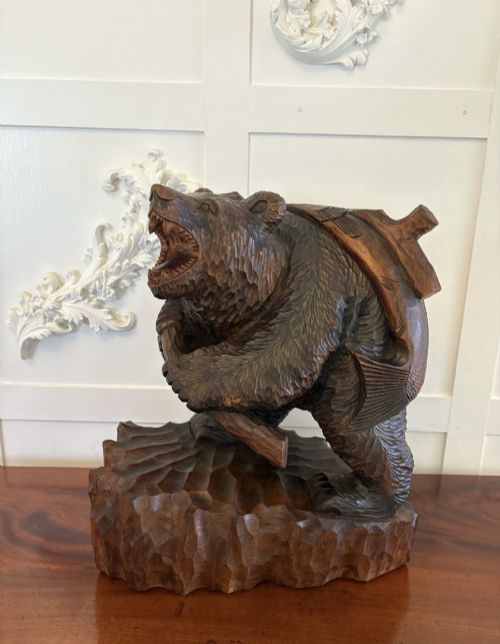
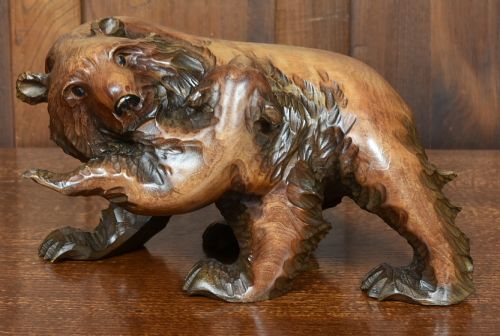
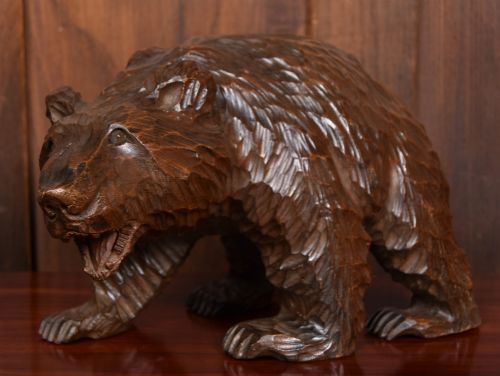
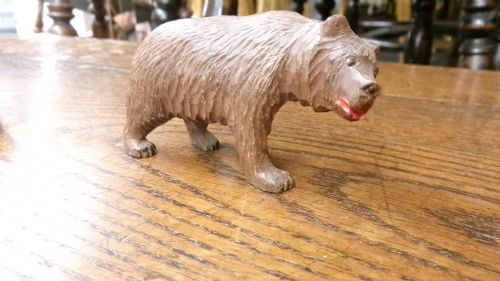
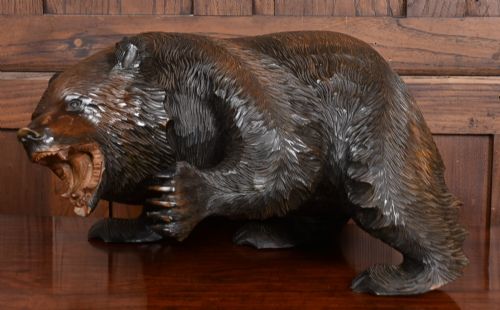
The most common examples on this page are carved wooden sculptures and figures created in regional folk art styles, particularly the Black Forest tradition and Japanese Kibori Kuma. These wooden animals often depict bears engaged in natural activities, such as carrying fish, fighting, or resting with cubs, utilising native timbers like cedar, linden wood, and walnut.
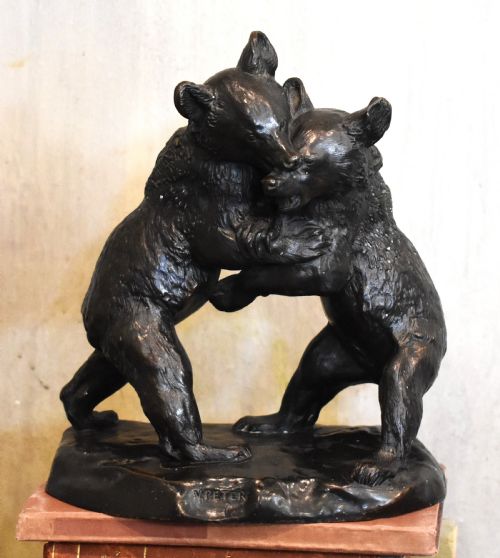
European workshops also contributed metal interpretations, primarily cast in bronze during the nineteenth century by animalier sculptors working in France. Buyers frequently find both domestic decorative objects and larger statement pieces that reflect distinct period aesthetics, from the restrained forms of the Georgian era to Edwardian whimsy.
How they were made
Carved wooden figures rely on traditional woodworking techniques applied to hardwoods and softwoods alike, utilising hand chisels and gouges to define fur texture, facial expressions, and anatomical details. Artisans select materials such as walnut, linden wood, and cedar for their grain and workability, sometimes finishing surfaces with polish or leaving the natural timber exposed.
Metal sculptures utilise the lost-wax casting method for bronze to capture fluid movement and muscular tension in subjects like fighting bear cubs. Smaller metal items, including silver pieces, involve precision smithing, chasing, and mounting techniques to create functional decorative accessories.
Vintage Bear Figure Retail Price Guide 2026
Typical asking prices for vintage bear figure among the pieces listed under this phrase on Sellingantiques today, from the lower quarter to the upper quarter. They describe what is for sale here now, not the wider market.
Dentists and bear enthusiasts alike can ponder the niche appeal of a nineteenth-century gilt bronze dentist bear by Christophe Fratin.
What varies in quality
The sculptural accuracy of the animal form separates finer pieces from simpler items, with superior examples showing careful observation of anatomy, posture, and realistic muscle tension. Hand-carved fur texture and expressive facial detailing indicate the skill level of the original maker, whereas lesser pieces display stiff proportions and generic surface marks.
Material selection and execution also determine the standing of a figure, whether in the crispness of a bronze cast or the deliberate grain alignment in carved hardwood. Original components, such as inset glass or stud eyes and integrated silver mounts, preserve the integrity of the piece against later replacements.
Victor Peter·Timothy Hughes·Christophe Fratin
The Vintage Bear Figure Glossary
- Black Forest
- A regional style of wood carving originating from the wooded mountain region of Central Europe, famous for highly detailed animal sculptures including bears. These carvings often served as decorative objects or functional items like lamps and umbrella stands.
- Animalier
- A nineteenth-century artistic movement focused on the realistic portrayal of animals in sculpture and painting. Practitioners mastered the depiction of animal anatomy and dynamic movement in materials such as bronze.
- Kibori Kuma
- Japanese wood-carved bears produced primarily as folk art in Hokkaido, often depicting the animal holding a salmon in its jaws. This distinct regional tradition combined local motifs with influences from European carving techniques.
- Gilt Bronze
- Bronze metalwork treated with a fine layer of gold applied through amalgamation or electroplating to produce a lustrous surface finish. This technique highlights sculptural contours and protects the metal beneath.
Vintage Bear Figure: Frequently Asked Questions
What materials are vintage bear figures made from?
These figures appear primarily in carved wood, hardwood, bronze, and silver, reflecting the material preferences of nineteenth-century European and Japanese workshops.
Individual pieces also incorporate subsidiary materials like glass for eyes or integrated wooden bases to support larger sculptures.
How do I identify Black Forest carvings?
Black Forest carvings are typically rendered in native European woods like linden and walnut, depicting naturalistic forest animals with deep textural carving.
They often feature realistic poses such as climbing, walking, or bearing objects, frequently associated with the Swiss and German craft traditions of the nineteenth century.
What is Kibori Kuma?
Kibori Kuma refers to Japanese wood-carved bear figures originating from Hokkaido as a form of folk art.
These pieces characteristically portray the bear holding a fish and showcase distinct regional knife-carving techniques applied to local cedar.
Where should I place a bear sculpture at home?
Smaller silver pin cushions and miniature carved wooden bears suit tabletops, shelves, and cabinets where their fine details remain visible.
Larger bronze statues and carved wooden floor lamps function well as focal points in studies, hallways, or living spaces.