




Vintage Beach Art
Vintage beach art brings the shoreline indoors through oil paintings and watercolours spanning the Victorian period to the mid-twentieth century.
Vintage Beach Art
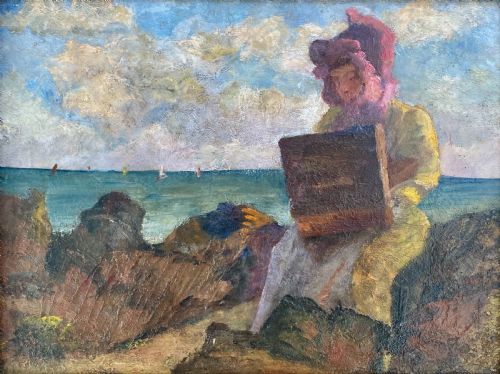
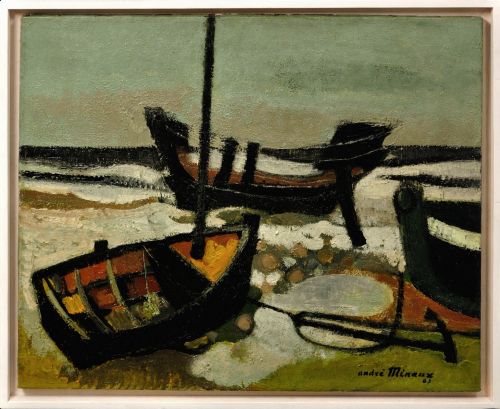
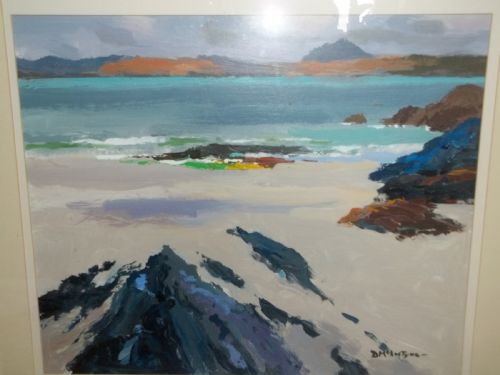
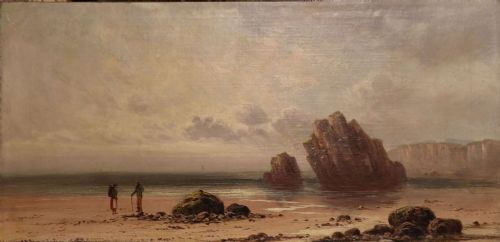
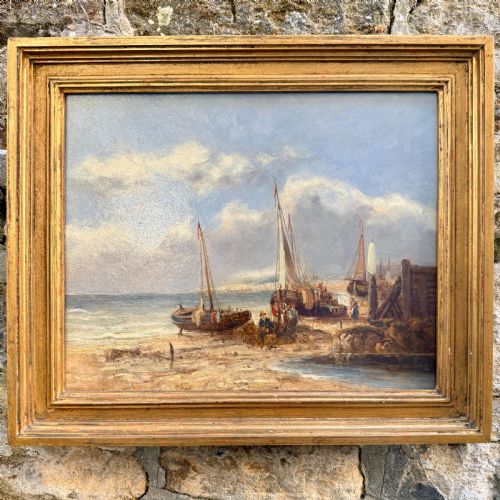
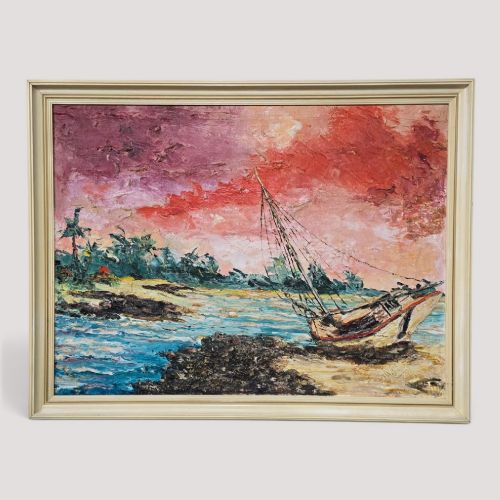
Vintage beach art encompasses coastal landscapes, harbour scenes and shorelines captured primarily through oil paint on canvas or board and watercolour on paper. These works document maritime life, from beached fishing boats and rocky shores to figures gathered by the sea across British and European locations.
The pieces on this page span from the nineteenth century through the Victorian era into the 1920s, 1930s, 1950s and 1960s. Mid-century modern and impressionist interpretations sit alongside traditional coastal watercolours and detailed oil paintings.
Buyers encounter framed oils of stranded boats, marine watercolours depicting harbours like St Ives or Whitby, and occasional lithograph posters or butterfly wing sterling silver pendants with coastal motifs.
How they were made
Artists relied on oil paint applied to canvas, wood or board to build rich textures and deep tones for dramatic sea stacks and calm shorelines alike. Watercolour on paper offered a lighter medium for capturing translucent coastal light and atmospheric harbour views.
Many works retain their original ebonised frames, hand-enamelled polychrome settings or period wooden framing that complement the maritime subject matter. Supporting materials include paper, gold leaf and glass.
Printmakers utilised etching with aquatint and lithography to produce coastal scenes on paper, widening the reach of seaside imagery.
Vintage Beach Art Retail Price Guide 2026
Typical asking prices for vintage beach art among the pieces listed under this phrase on Sellingantiques today, from the lower quarter to the upper quarter. They describe what is for sale here now, not the wider market.
Listings feature works spanning the nineteenth century to the 1960s, executed in oil, watercolour, canvas and paper.
What varies in quality
The distinction between works rests on the artist's brushwork and control of light, shifting from formulaic coastal views to confident plein-air observation. Handling of pigment on canvas determines whether a wave feels kinetic or static.
Compositional strength separates standard topographic records from compelling maritime scenes, particularly in the placement of figures, boats and architectural elements like lighthouses or sea walls. Provenance and the survival of original framing contribute to a piece's standing.
André Minaux·William Shayer·Donald McIntyre·William Banks Fortescue·Joseph Edward Hennah·Robert Leslie Howey·Jules Evarist van Biesbroeck·George Hamilton Constantine·Sir William Russell Flint·Thomas L Mott·Sir David Murray RA·Samuel Edward Kelly·GM de L'Aubiniere·Daniel Sherrin·Edmund Gouldsmith·Norman Janes·Yves Brayer·Charles McAuley·Thomas Bush Hardy
The Vintage Beach Art Glossary
- Watercolour
- A painting method where fine pigment is suspended in water-soluble binders on paper. It allows for luminous, transparent washes that suit coastal skies and water.
- Oil on Canvas
- Pigment bound in an oil medium spread across a woven fabric stretched over a wooden frame. This surface supports thick impasto application and deep colour saturation.
- Impressionism
- A nineteenth-century painting style focused on everyday subjects, visible brush strokes and the shifting qualities of natural light. It appears frequently in coastal scenes capturing open air.
- Etching with Aquatint
- A printmaking technique combining acid-molded lines on a metal plate with tonal resin areas. It creates subtle gradations of shade suitable for atmospheric seascapes.
- Ebonised Frame
- Timber treated with a chemical stain or black finish to resemble ebony. These dark frames often border nineteenth-century watercolours and oils.
Vintage Beach Art: Frequently Asked Questions
What subjects appear in vintage beach art?
The works depict a range of maritime subjects including beached fishing boats, rocky shores, harbours, and figures gathered along the coastline. Locations extend from British coastal towns like St Ives and Whitby to Welsh bays and European shores.
Scenes also record everyday seaside activities, such as seaweed hauling, children playing at the water's edge, and figures promenading near the sea during different historical periods.
How do I date a coastal painting?
Dating relies on stylistic shifts, clothing styles of figures in the composition, framing materials, and artist signatures or documentation. Victorian works often show detailed realism, while twentieth-century pieces lean towards impressionist or mid-century modern brushwork.
Mediums and supports also offer clues, as early twentieth-century pieces introduce modern poster techniques and etching alongside traditional oils and watercolours.
Where were these coastal scenes painted?
Artists travelled to active fishing ports, quiet bays, and dramatic coastlines across Britain and Europe to capture marine life. Popular locations recorded in the titles include Cornwall, Yorkshire, Dorset, and the Scottish borders.
International settings also feature, reflecting the travels of artists working in France, Cyprus, and Arabic coastal regions during the nineteenth and twentieth centuries.
How should I display vintage coastal paintings?
These works suit spaces that benefit from natural light and traditional or eclectic interiors. Pairing them with their original wooden or ebonised frames preserves their historical character.
Protecting the paintings from direct sunlight prevents fading on delicate watercolours and paper supports, while stable room humidity safeguards oil on canvas and wood pieces.