




Vintage Banker Lamp
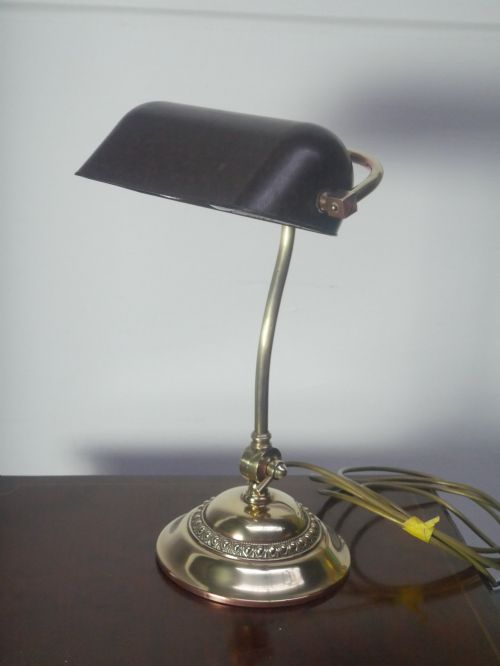
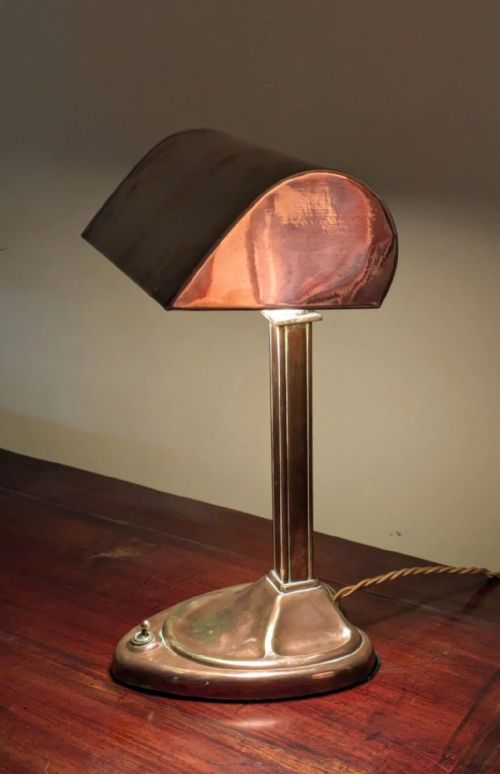
A vintage banker lamp brings focused task lighting and period character to a desk, combining brass frames with characteristic glass shades.
Vintage Banker Lamp
A vintage banker lamp is a dedicated task light designed for desks and workspaces, appearing in forms such as adjustable desk lamps, notary lamps, and reading lamps. These pieces originate from periods spanning the nineteenth century through the nineteen-thirties, reflecting distinct design movements from the Victorian era onward.
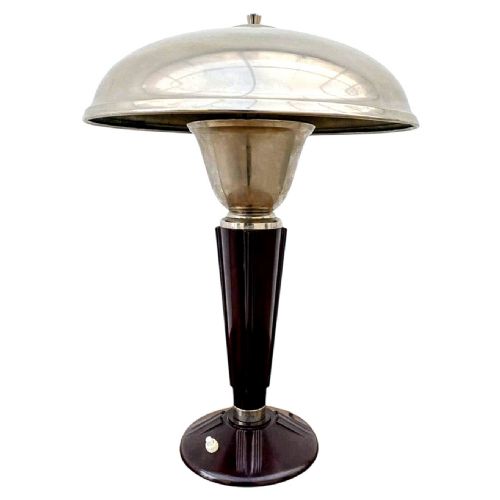
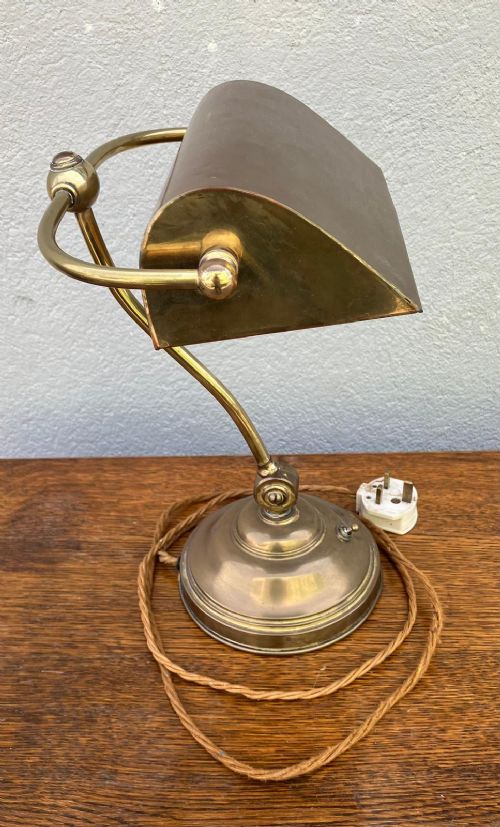
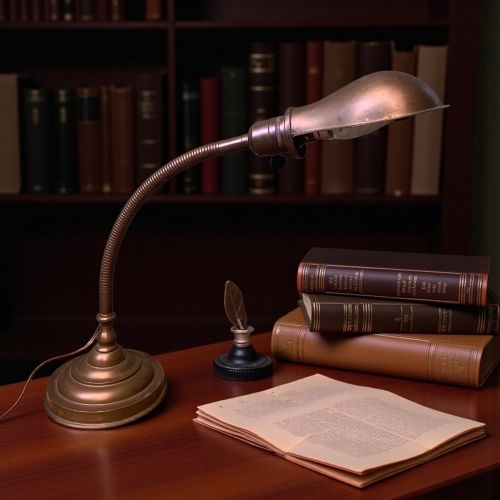
The most common versions on this page are brass desk lamps fitted with adjustable arms or swan neck frames. Many feature green toleware or glass shades, while others incorporate copper, bronze, and early plastics like bakelite.
Geographic origins vary widely across the selection, with French industrial, Art Deco, Edwardian, and Arts and Crafts examples represented. Buyers encounter both straightforward utilitarian lighting and decorative pieces influenced by Jugendstil and Bauhaus aesthetics.
Materials and construction methods
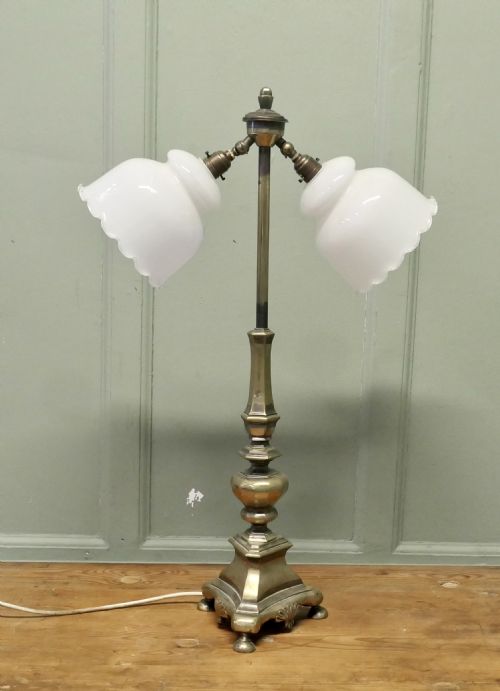
Makers constructed these lamps primarily using brass, bronze, and copper frames, often combined with spun metal bases and weighted internal components for stability. Articulated models utilise pivoting joints, twin angled arms, and flexible stems to direct illumination precisely where needed.
Shades are formed from pressed glass, frosted glass, opaline, and painted toleware, diffusing light downward onto work surfaces. Detail work includes repoussé decoration, gilt finishes, and components moulded in early synthetic materials such as bakelite.
Vintage Banker Lamp Retail Price Guide 2026
Typical asking prices for vintage banker lamp among the pieces listed under this phrase on Sellingantiques today, from the lower quarter to the upper quarter. They describe what is for sale here now, not the wider market.
Listings feature desk lamps spanning from eighteen-fifty to nineteen-thirty, incorporating brass, copper, bronze, and bakelite materials.
Distinctions in manufacture and preservation
Quality separates in the robustness of the articulated joints, the weight of the cast metal base, and the finish applied to the brass or bronze. Superior examples display crisp casting detail, substantial gauge metal, and preserved original patination rather than modern replating.
The integrity of the original shade, whether frosted glass, opaline, or painted toleware, heavily influences the standing of a piece. Mechanisms that hold their position securely without drooping demonstrate higher initial manufacturing standards.
Eileen Grey·Wilhelm Wagenfeld
The Vintage Banker Lamp Glossary
- Toleware
- Painted or enamelled sheet metal commonly used for lamp shades and bases in green and other traditional colours. It provides a durable, smooth surface finish.
- Swan neck
- A curved tubular metal arm that positions the lamp head above the workspace. This form allows smooth directional adjustment of the light source.
- Bakelite
- An early thermosetting phenol formaldehyde resin used for electrical fittings and switches. It marks the technological shift toward synthetic materials in twentieth century lighting.
- Notary lamp
- A specific European desk lamp typology featuring a heavy bronze or brass base and an adjustable tubular shade. These pieces served professionals who required stable, concentrated illumination.
- Repoussé
- A metalworking technique where the metal is hammered from the reverse side to form a raised design. It appears on decorative nineteenth century lamp bases.
Vintage Banker Lamp: Frequently Asked Questions
What is a vintage banker lamp?
A vintage banker lamp is a task light designed for desks and tables, typically featuring a metal stand and a contrasting shade.
These lamps originated to provide focused illumination for reading and paperwork in offices and studies.
How do I date a brass desk lamp?
Dating relies on stylistic markers such as Art Deco geometric lines, Edwardian proportions, or nineteenth century casting techniques.
Materials like bakelite and specific switch types also offer clear clues to the manufacturing decade.
Were these lamps used in offices?
Yes, many of these pieces served as functional lighting for professionals, notaries, and receptionists.
Their adjustable arms and directional shades suited environments requiring extended desk work.
Are the shades original to the lamps?
Many retain their original glass, opaline, or toleware shades, which match the period of the base.
Examining the fitter size and glass type helps confirm whether shade and base belong together.