





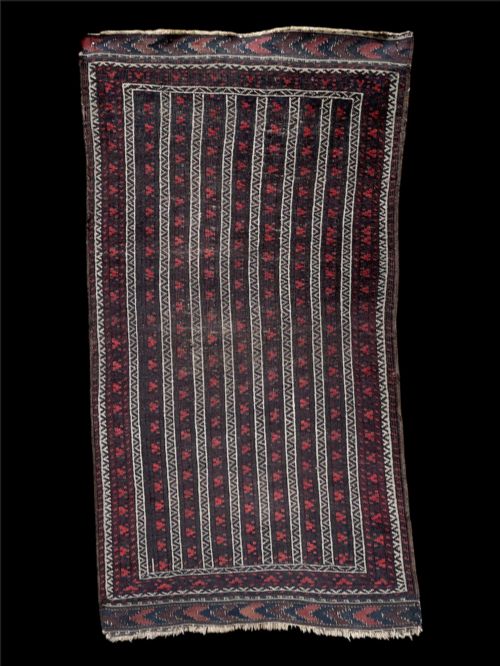

Vintage Baluch Weaving
Vintage baluch weaving encompasses tribal wool carpets, prayer rugs, and utility bags from the borderlands of Persia and Afghanistan.
Vintage Baluch Weaving
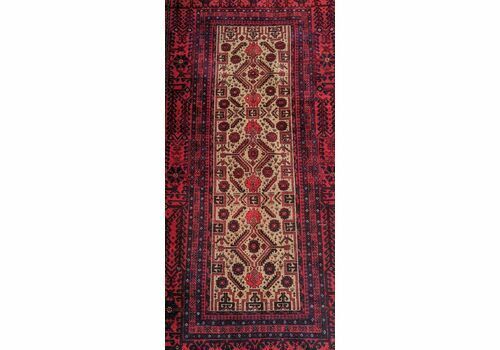
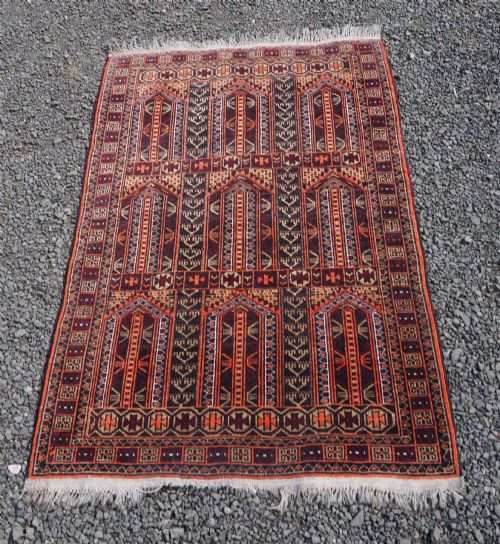
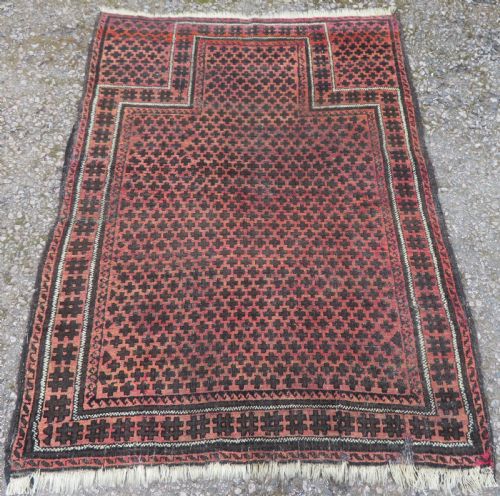
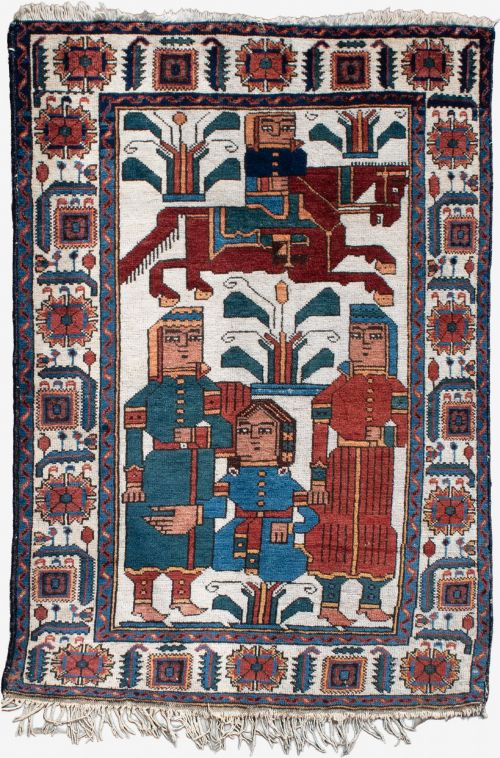
When you search for vintage baluch weaving, you encounter hand-knotted rugs, flatweave kilims, and nomadic storage bags created by tribes across Afghanistan, eastern Persia, and Khorasan. These pieces span from the late nineteenth century into the early decades of the twentieth century, reflecting a rich tribal heritage rooted in nomadic life. The forms range from main carpets and prayer rugs bearing mihrab designs to utilitarian storage containers and eating cloths.
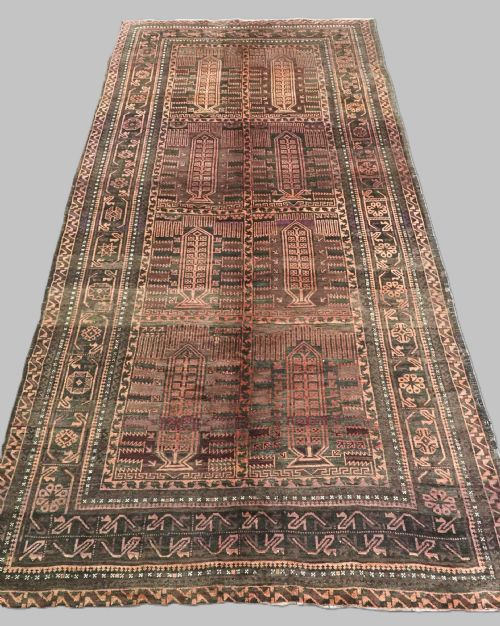
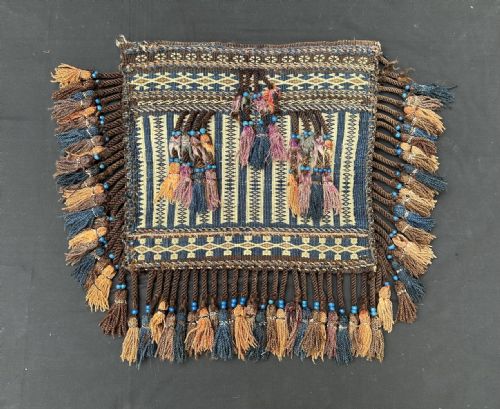
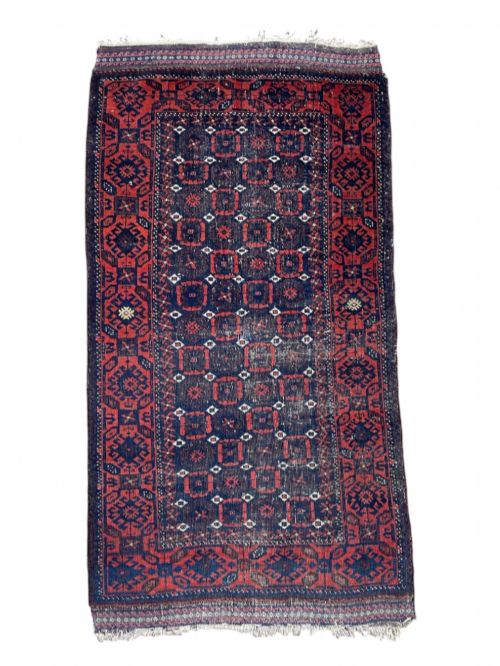
On this page, you are most likely to meet rectangular wool rugs featuring geometric motifs, repeat octagons, and pencil box patterns. Many items originate from specific regional groups such as the Timuri and Mahdad Khani tribes, or the Sistan province. Smaller formats like bird bags and vanity bags also appear regularly alongside room-sized carpets.
The aesthetic is distinctly tribal and nomadic, utilising dark ground colours, geometric medallions, and specialised structures like banded weftwork. Pieces often display traditional motifs including the mina khani pattern, lotus leaves, and chevron bands. This selection captures the utilitarian artistry of weavers working in the borderlands during the late nineteenth and early twentieth centuries.
Materials and Construction Methods
The foundational material of vintage baluch weaving is wool, often hand-spun and combined with cotton foundations or goat hair for durability in nomadic textiles. Weavers utilised natural dyes to achieve deep indigo blues, madder reds, and earthy brown tones that mellow with age. Occasional pieces incorporate camel hair and decorative glass beads to accent tribal bags and rugs.
Construction techniques include both pile knotting and flatweave construction, sometimes seen in two-part kilims joined together. The weaving structure incorporates banded weftwork and double-sided vanity bag formats requiring precise manipulation of the warp and weft. Nomadic artisans produced these functional objects using vertical or ground looms set up across the Afghan and Persian borderlands.
Vintage Baluch Weaving Retail Price Guide 2026
Typical asking prices for vintage baluch weaving among the pieces listed under this phrase on Sellingantiques today, from the lower quarter to the upper quarter. They describe what is for sale here now, not the wider market.
Geographic origins span Sistan, Khorasan, and South-West Afghanistan, showcasing tribal styles from Mahdad Khani and Timuri makers.
Factors Distinguishing Quality in Tribal Textiles
Quality in vintage baluch weaving is determined by the fineness of the knotting, the handling of the wool, and the clarity of the natural dyes. Tightly spun wool and resilient hand-spun yarns produce a denser handle that withstands heavy utility over generations. The precision of geometric execution in complex designs like the pencil box or repeating octagons also separates finer pieces from simpler village work.
The Vintage Baluch Weaving Glossary
- Sofreh
- An eating cloth or spread woven by nomadic groups for sharing meals on the ground. These flatweave or pile textiles often feature utilitarian geometric borders and durable construction.
- Mihrab
- A prayer niche design resembling an arch, pointing the worshipper toward Mecca. In tribal rugs, this motif serves as the central focus of prayer formats.
- Kilim
- A flatweave textile produced without pile by tightly interweaving warp and weft strands. These lightweight pieces often display bold chevron bands and geometric stripes.
- Mina khani
- A repeating floral or geometric lattice pattern traditionally associated with Persian and tribal carpets. This layout creates an orderly network across the field of the rug.
- Timuri
- A tribal group inhabiting the borderlands of north-eastern Persia and north-western Afghanistan. Their weaving output frequently shares structural and design traits with broader Baluch traditions.
Vintage Baluch Weaving: Frequently Asked Questions
What is a baluch prayer rug?
A baluch prayer rug is a portable tribal mat featuring a distinct architectural arch or mihrab design used for daily devotions. These smaller format rugs were easily rolled and transported by nomadic weavers across Persia and Afghanistan.
They often incorporate geometric lotus leaves or repeat motifs within the field, woven in durable wool with natural dyes. Their compact size made them practical items for travel as well as domestic worship.
How were tribal storage bags used?
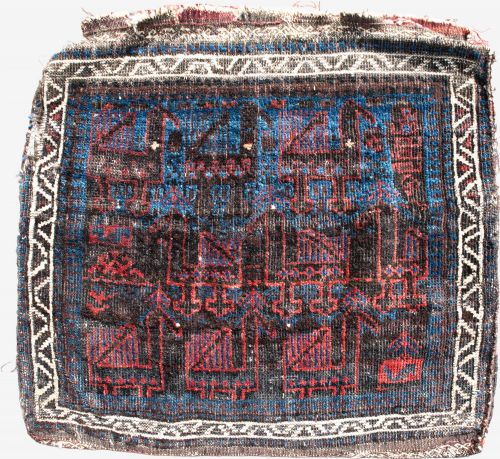
Tribal storage bags served as practical containers for bedding, clothing, and household provisions inside nomadic tents. Their sturdy construction with goat hair and wool protected contents from dust and dampness during seasonal migrations.
Many examples feature original backs, hanging loops, and intricate banded weftwork or pile designs on the face. Today, these pieces function as decorative wall hangings or compact floor accents.
What is a pencil box design?
The pencil box design, also known as kalam donneh, is a distinct repeating geometric motif found in nineteenth and twentieth-century tribal carpets. It consists of compartmentalized stacked boxes filled with minor floral or hooked ornaments.
This pattern is a hallmark of specific regional weaving traditions associated with Timuri and Baluch tribes in the borderlands. It creates an ordered, rhythmic grid across the main field of the rug.
How do I identify a kilim?
A kilim is constructed entirely through flatweaving rather than knotting pile yarn around the warp threads. This technique results in a thin, supple textile without a plush surface.
They frequently display banded chevron patterns, slit-weave details, and geometric stripes. Their lightweight nature made them versatile coverings and utility cloths for nomadic households.