



Vintage Balloon Back Seating
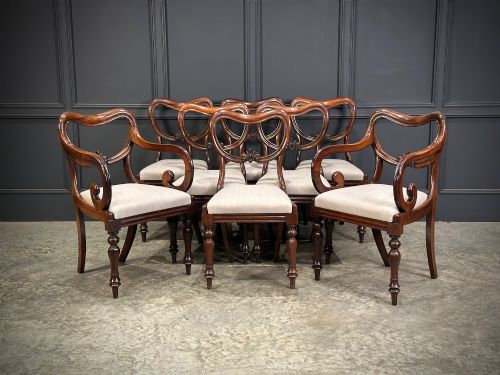
Vintage balloon back seating brings curvilinear elegance to dining rooms and parlours through classic nineteenth-century timber frames.
Vintage Balloon Back Seating
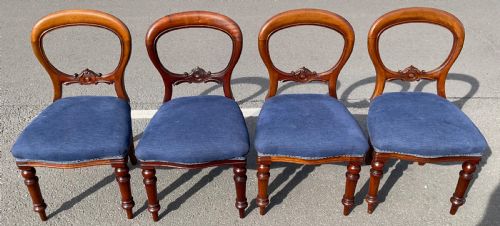
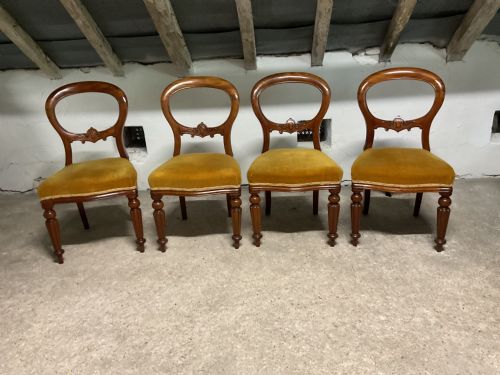
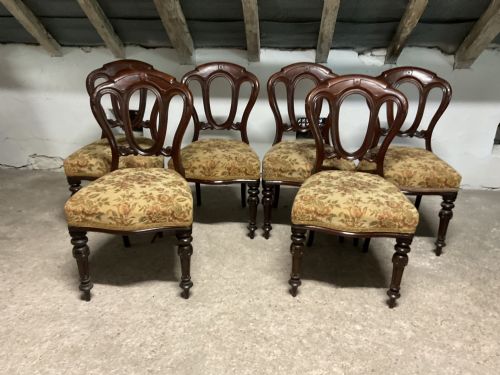
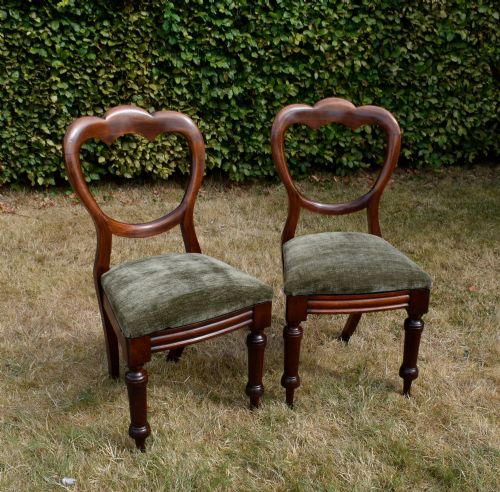
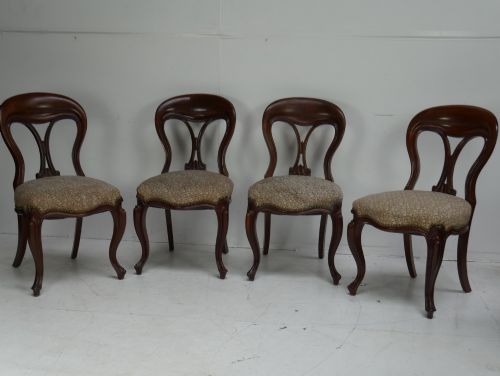
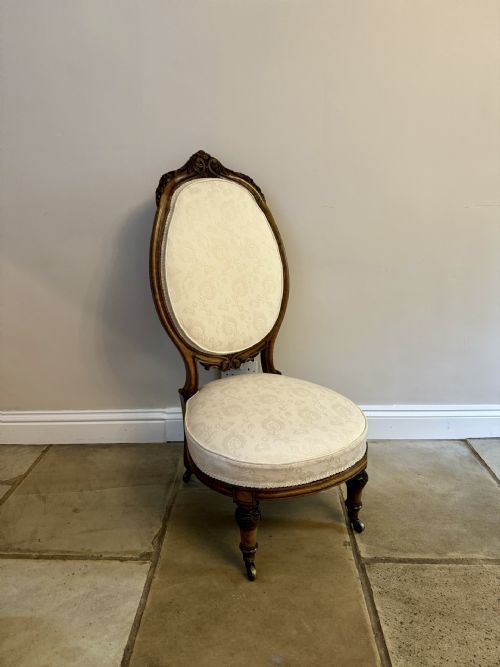
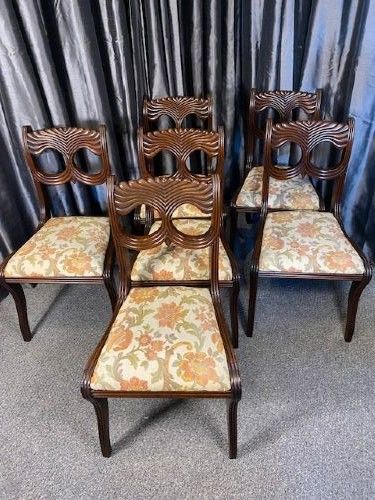
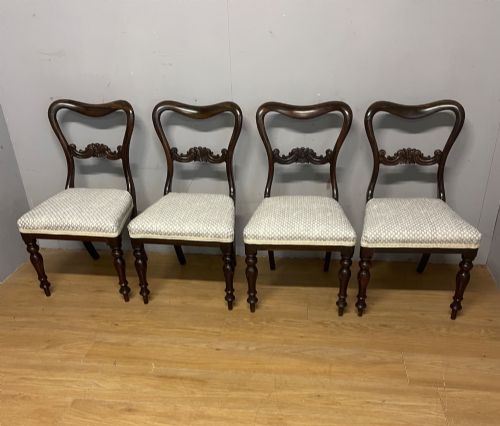
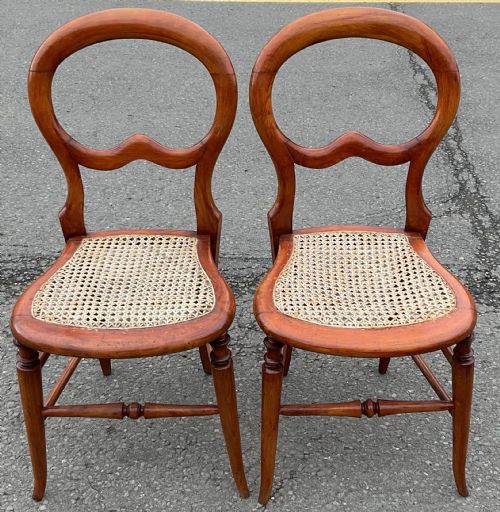
Vintage balloon back seating encompasses chairs defined by an oval or rounded backrest resembling the shape of a floating balloon. Buyers seeking vintage balloon back seating commonly encounter sets of dining chairs or smaller salon and nursing chairs from the nineteenth century.
The form developed through the Victorian and Regency eras, remaining popular across walnut and mahogany variants. Individual side chairs and large matched sets appear frequently alongside low bedroom and nursing seating.
Craftsmen built these pieces primarily for formal dining spaces and intimate reception rooms. The curved back provides both distinct visual rhythm and lumbar support through a continuous loop of timber.
How they were made
Cabinetmakers constructed these frames using dense hardwoods such as mahogany, rosewood and walnut, which permitted deep carving without compromising structural integrity. Timber was selected for grain alignment to allow steam bending or sectional carving of the characteristic curved back rail.
Upholstery techniques involved traditional stuffing over supportive webbing, finished with fabric, velvet or cane inserts. Brass components occasionally reinforced structural joints or served as subtle decorative accents on castors.
Vintage Balloon Back Seating Retail Price Guide 2026
Typical asking prices for vintage balloon back seating among the pieces listed under this phrase on Sellingantiques today, from the lower quarter to the upper quarter. They describe what is for sale here now, not the wider market.
Nineteenth-century nursery chairs were built remarkably low to the floor so parents could tend to infants without tripping over their own crinoline skirts.
What varies in quality
Quality in these chairs rests upon the depth of the timber carving and the harmony of the matched sets. Examples featuring intricate rail carving and serpentine seats demonstrate superior workshop execution compared to plain iterations.
The selection of figured rosewood or rich mahogany elevates certain pieces above standard production. Original finish preservation and the tightness of the frame joints distinguish fine examples from heavily restored or loose pieces.
Gillows
The Vintage Balloon Back Seating Glossary
- Balloon back
- A chair back shaped in a continuous oval curve resembling a balloon. This silhouette defined mid-nineteenth-century seating design.
- Serpentine seat
- A chair seat with a wavy, convex front edge. This contour added visual movement and comfort to formal dining chairs.
- Carved rail
- The decorative horizontal wooden member across a chair back or crest. Artisans shaped these rails with floral or scroll motifs.
- Overstuffed
- Upholstery that completely covers the wooden frame of the seat. This method maximised soft padding for formal sitting.
- Nursing chair
- A low-seated chair designed for childcare or relaxation in private chambers. These pieces often feature balloon backs and compact proportions.
Vintage Balloon Back Seating: Frequently Asked Questions
How do I identify a true balloon back chair?
Look for a continuous, rounded wooden top rail that forms an enclosed oval shape above the seat. This distinctive silhouette separates them from straight or shield-backed variants.
Examine the junction where the back meets the seat for traditional joinery and period timber characteristics. The curve should appear balanced and proportioned to the overall scale of the frame.
Were these chairs only used for dining?
While dining sets form a large portion of surviving pieces, makers also adapted the balloon back for salon chairs, nursing chairs and bedroom seating. Lower proportions and upholstered arms distinguished parlour variants from formal dining chairs.
Smaller side chairs and children's versions served diverse domestic functions across nineteenth-century households. Their versatile silhouette suited both public reception rooms and private chambers.
How do I care for antique timber and upholstery?
Maintain wood finishes with occasional application of quality wax polish while avoiding excessive moisture. Keep chairs away from direct heat sources to prevent timber shrinkage and veneer splitting.
Protect period fabrics and cane inserts by limiting direct sunlight and handling them with care. Professional conservation ensures fragile nineteenth-century textiles and frame joints remain stable.