
Vintage Armoire
These vintage armoire selections bring substantial period storage to a room, offering grand proportions and fitted interiors built to last.
Vintage Armoire
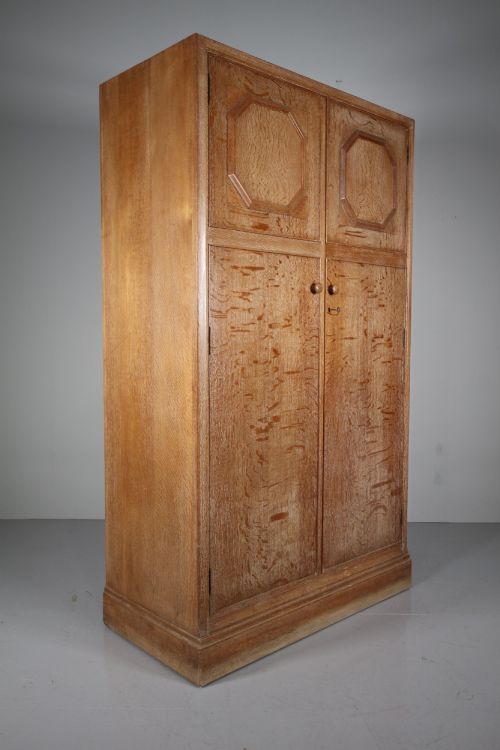
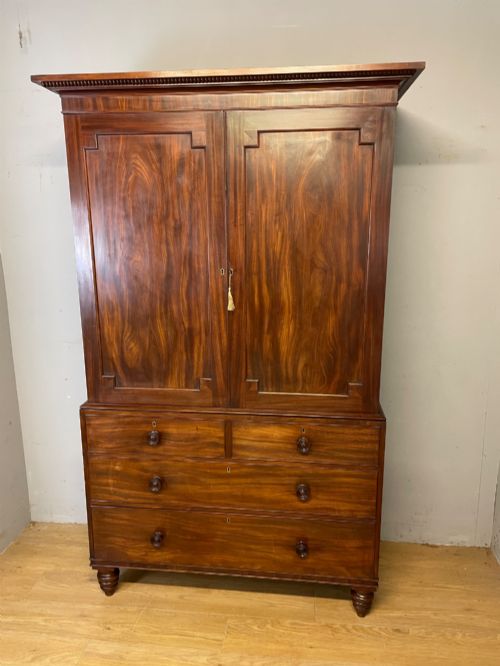
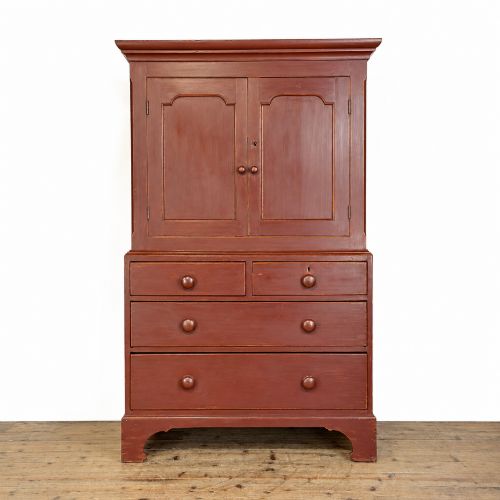
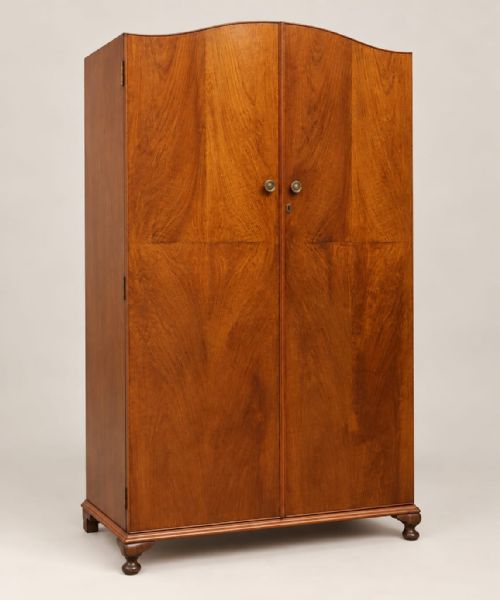
A vintage armoire encompasses large freestanding storage furniture, appearing frequently as wardrobes, linen presses, and compactums across this page. Pieces span periods from the Georgian era through to Art Deco designs of the 1930s, alongside Victorian and Edwardian examples.
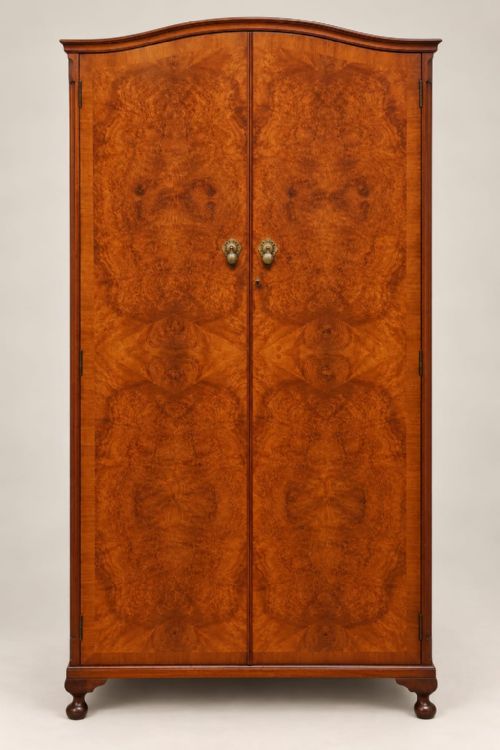
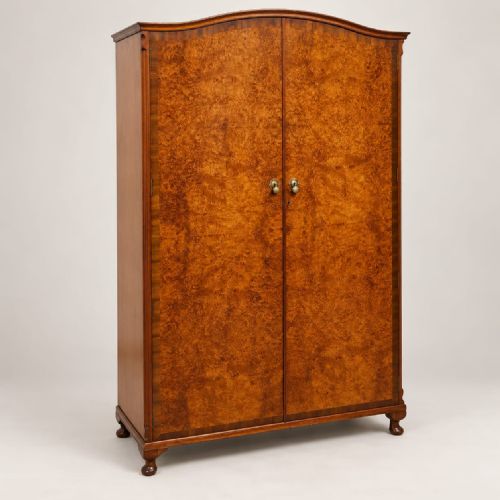
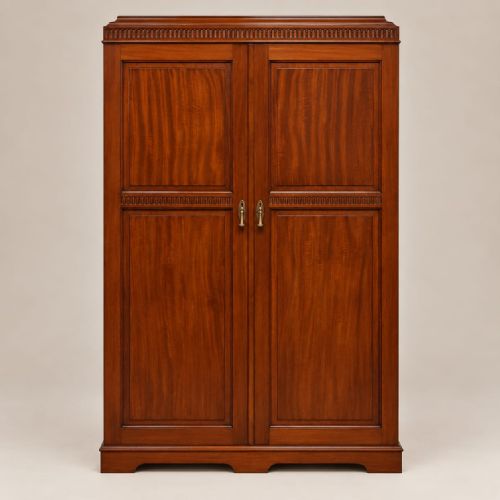
The materials reflect traditional cabinet making, utilising oak, mahogany, walnut, and pine. Oak and mahogany dominate the earlier centuries, while burr walnut and birds eye maple emerge in later twentieth-century pieces.
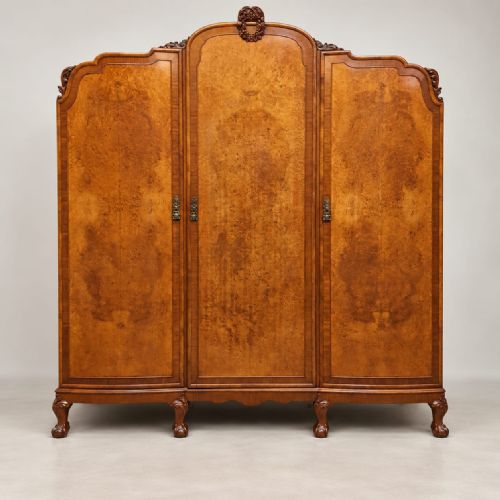
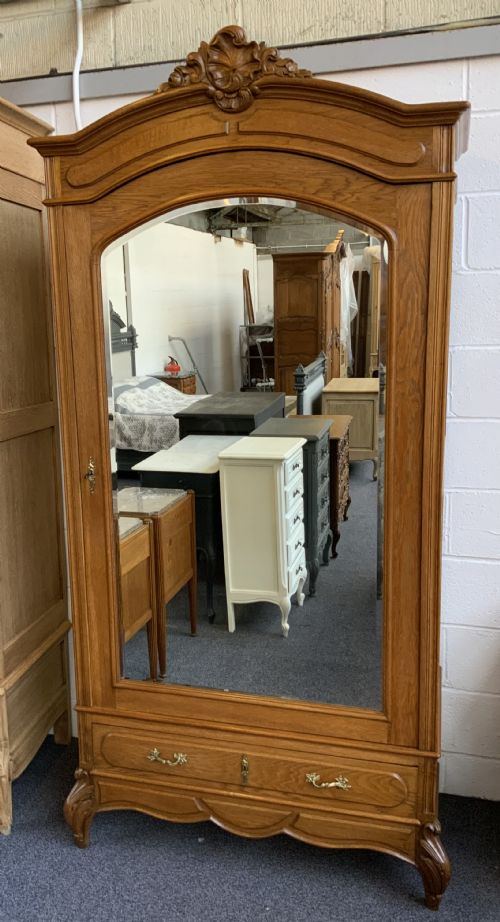
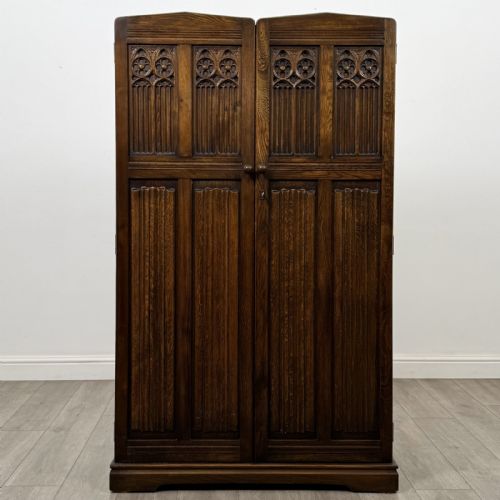
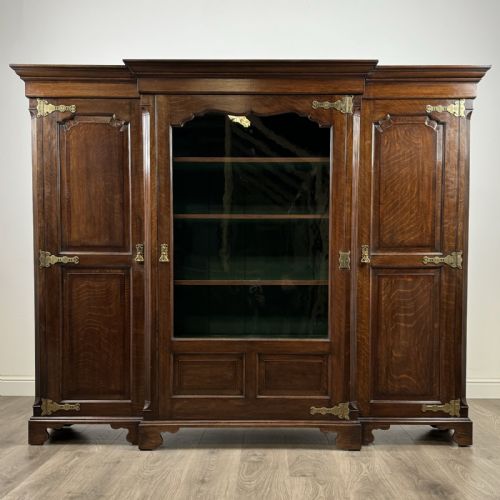
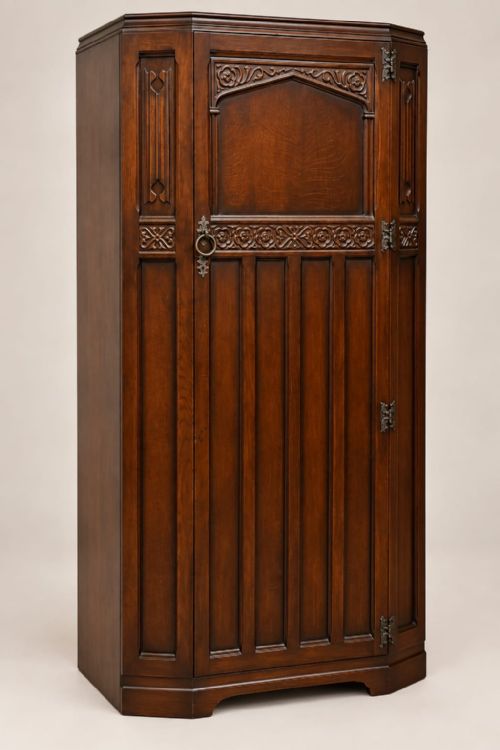
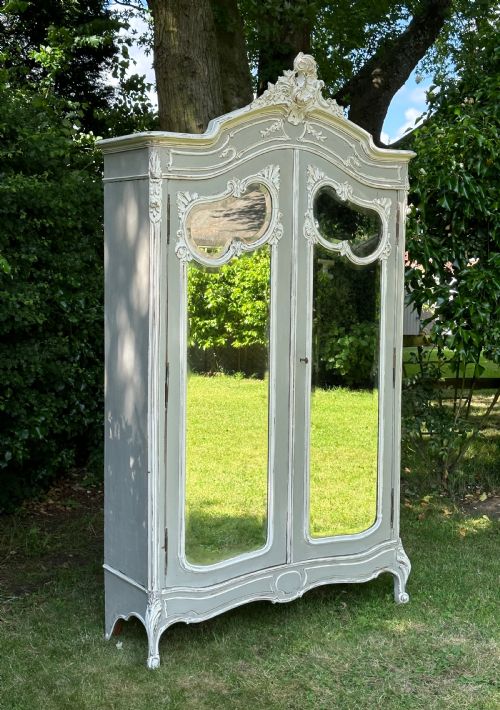
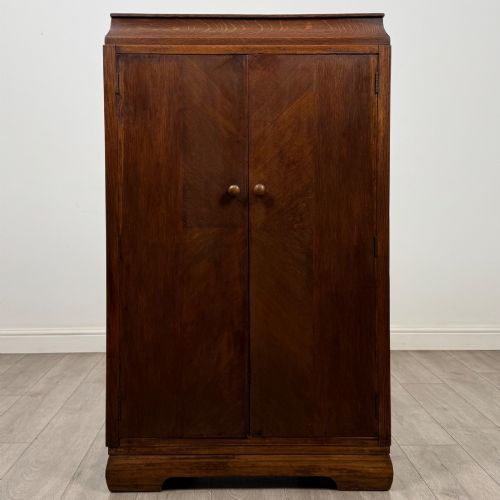
Buyers encounter single, double, and triple configurations, some fitted with internal drawers or hanging space. French provincial and Gothic revival styles sit alongside British country house pieces and clean-lined Art Deco breakfronts.
Materials and construction methods
Construction relies on solid timbers like oak, mahogany, and pine for structural integrity, often faced with decorative veneers including burr walnut and satinwood inlay. Cabinet makers utilised traditional joinery techniques, combining pegged joints, dovetail drawers, and hand-carved details.
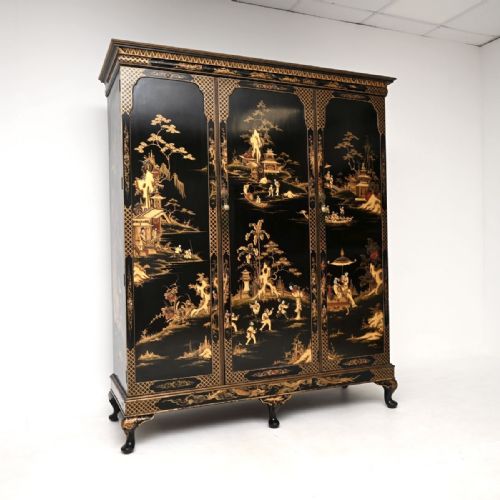
Surface finishes range from polished french polish on mahogany and walnut to painted surfaces and lacquered Chinoiserie. Brass hardware, glass panels, and mirrored doors appear across Victorian and Edwardian examples, adding functional and decorative contrast to the timber.
Cabinet designs range from utilitarian pine larder cupboards to elaborate Chinoiserie lacquered wardrobes produced by major department store workshops.
Assessing quality in large storage furniture
Quality rests upon the selection of timber and the precision of the cabinet work, separating standard utility pieces from fine workshop productions. Well-executed carving, balanced veneer matching on burr walnut surfaces, and intact original brass fittings indicate higher grade manufacture.
The internal configuration and structural soundness dictate daily utility. Pieces retaining original fitted interior shelving, clean drawers, and sturdy doors that hang true demonstrate superior preservation compared to heavily altered examples.
Hille for Harrods·Crown Furniture·Edwards and Roberts
The Vintage Armoire Glossary
- Linen Press
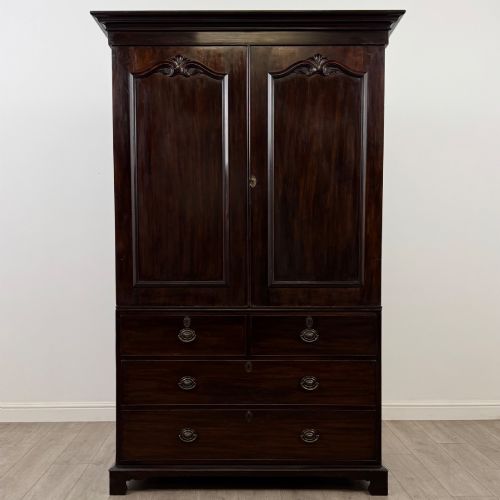
- A tall piece of furniture combining upper sliding trays for linen storage with lower base drawers. Georgian and Victorian examples frequently utilise mahogany and burr walnut.
- Compactum
- A fitted wardrobe designed to maximise storage efficiency by incorporating hanging space, shelves, and internal drawers within a single carcass. These often date from the Edwardian and Art Deco periods.
- Linenfold
- A style of carved wooden panelling that resembles folded fabric, commonly found on oak furniture from the medieval period onwards and revived in later eras.
- Breakfront
- A piece of furniture where the central section projects forward from the flanking outer sections. This architectural arrangement appears on larger wardrobes and cabinets.
Vintage Armoire: Frequently Asked Questions
How do I distinguish an armoire from a standard wardrobe?
An armoire traditionally denotes a large standing cupboard of European origin, often featuring decorative carved panels and deep internal storage. Wardrobes tend to follow British domestic forms with specific hanging provisions.
Many listings use the terms interchangeably, but historical French pieces generally retain distinctive provincial carving styles and heavy door hinges.
What periods do these storage pieces cover?
The selection spans from the 18th century through the Georgian and Victorian eras, extending into Edwardian times and the 1930s Art Deco period. Each era brings distinct timber choices, from early oak and mahogany to later burr walnut.
Stylistic shifts mark these periods, moving from heavy Gothic revival and classical proportions to streamlined modern veneers.
Are interiors usually fitted with hanging space?
Internal layouts vary significantly depending on whether the piece began life as a linen press, wardrobe, or cupboard. Many Edwardian and 1920s examples provide modern hanging rails alongside fitted interior shelving and drawers.
Earlier linen presses utilise sliding trays rather than hanging rails, reflecting historical storage methods for folded garments and textiles.
How should I measure a room for placement?
Large wardrobes and armoires require careful measurement of both floor space and ceiling height, particularly for triple door or breakfront models. Cornices often overhang the main body, adding extra width at the top.
Access routes into the room, including stairwells and doorways, must also be checked because many of these large antique carcasses do not dismantle completely.