
Vintage Architectural Landscape Artwork
Vintage architectural landscape artwork brings buildings and settings together on paper and canvas, offering a clear window into historic streets, grand monuments and quiet squares.
Vintage Architectural Landscape Artwork
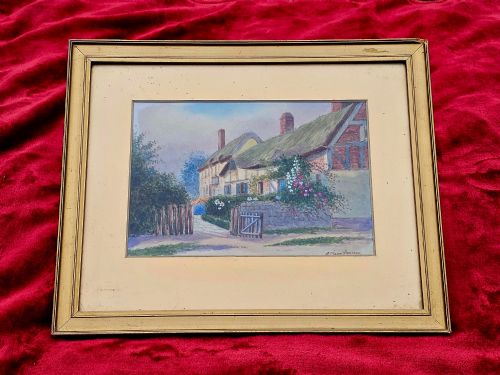
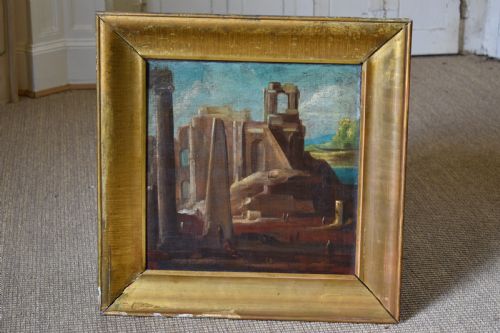
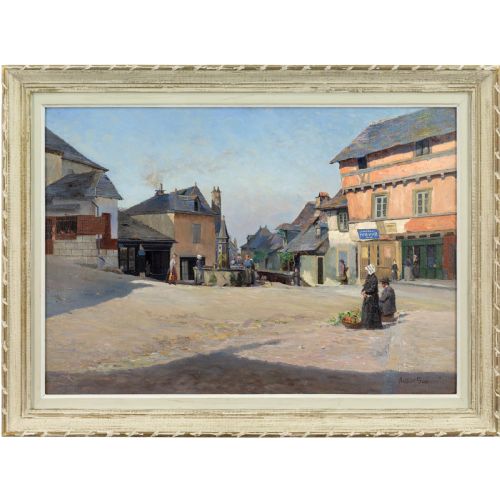
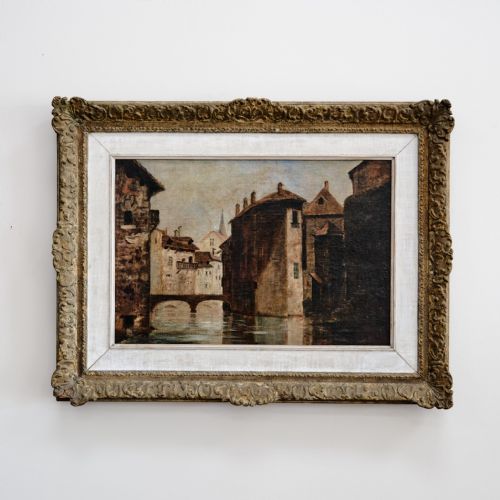
Vintage architectural landscape artwork captures built structures set within natural or urban surroundings, ranging from quiet country cottages to grand cathedrals and bustling foreign squares. When exploring vintage architectural landscape artwork, buyers will frequently encounter pieces executed in watercolour, oil on canvas, and ink dating from the nineteenth century through to the mid-twentieth century.
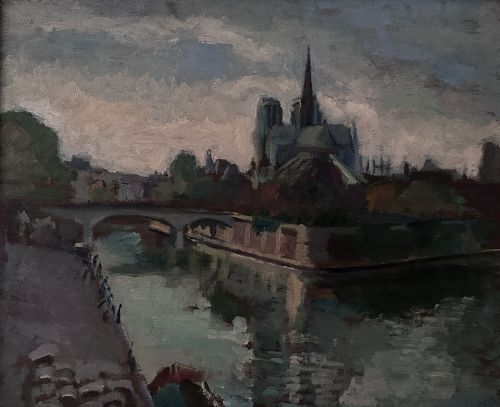
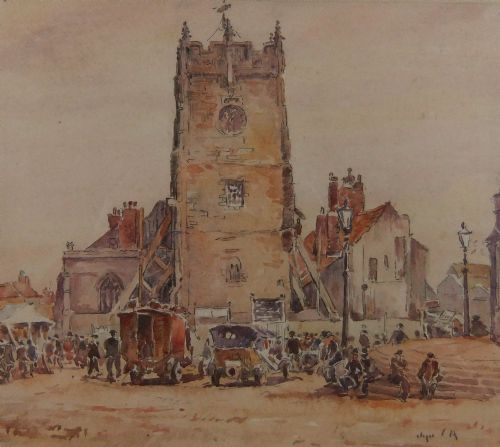
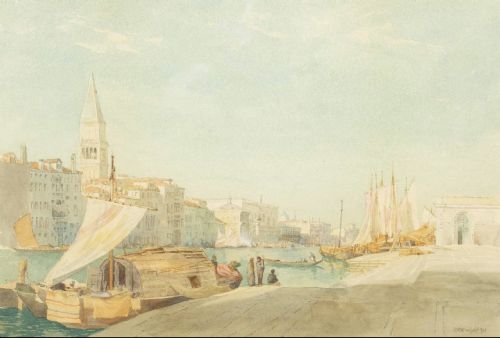
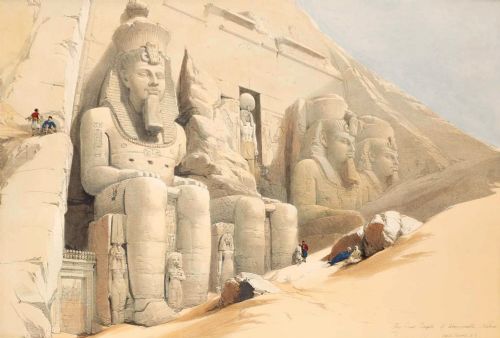
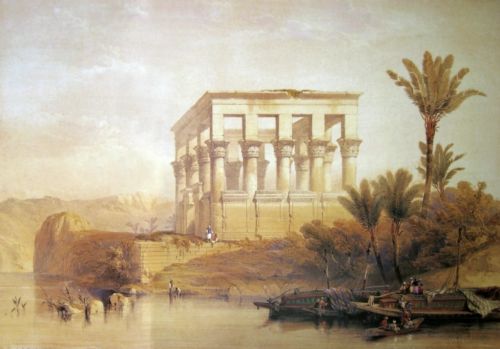
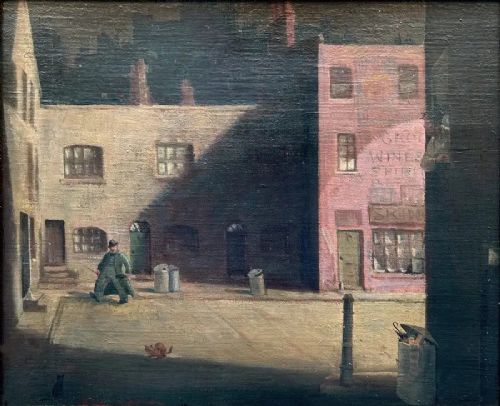
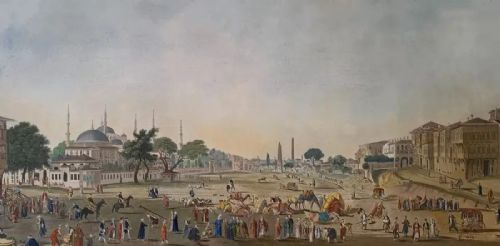
The selection encompasses diverse geographical subjects, from British street scenes and Parisian riverbanks to Venetian canals and Egyptian temples. Works span several distinct periods, including Victorian productions, Edwardian watercolours, and mid-century interpretations.
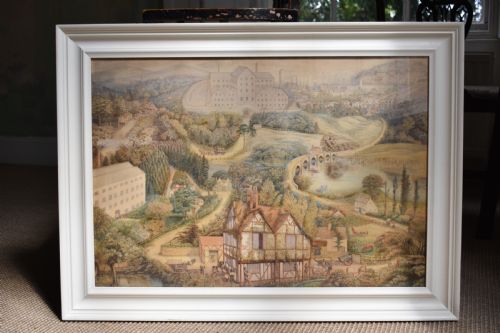
The assortment balances detailed topographical views with looser, more expressive interpretations influenced by impressionism and post-impressionism. These framed pieces provide an immediate sense of place and history, serving as focal points for domestic interiors.
Materials and methods behind the work
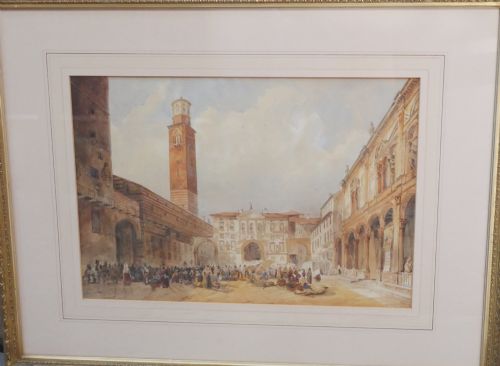
Artists working within vintage architectural landscape artwork relied primarily on traditional supports such as paper, canvas, wood panels, and glass. Watercolours were applied with fluid washes to paper, whilst oils utilised rich pigments on canvas or board to build texture and depth.
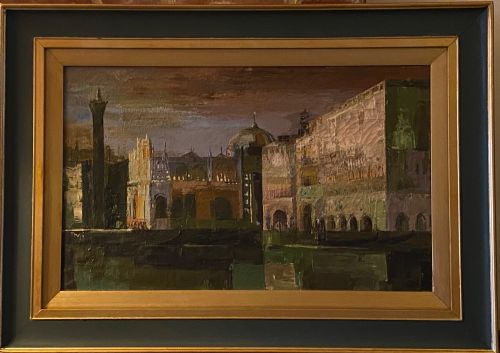
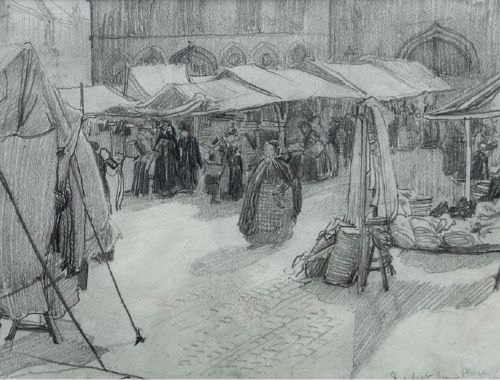
Draftsmanship formed the foundation of these pieces, often combining pencil or ink outlines with washes of colour to define structural geometry and perspective. Later twentieth-century examples occasionally incorporated impasto techniques, applying thick paint to emphasise the physical presence of buildings and light.
Several artists clearly spent too long admiring Venetian canals before putting brush to paper.
Distinctions in quality and execution
Quality within vintage architectural landscape artwork rests upon the artist's command of perspective, light, and structural proportion. Stronger examples demonstrate a confident handling of architectural lines combined with atmospheric control, whereas weaker pieces struggle with spatial depth and anatomical or structural accuracy.
The integration of the landscape with the built environment also dictates merit, separating mechanical topographical records from works possessing genuine compositional harmony and painterly vitality.
Henry Percy Huggill·A. Marie Parsons·Arthur Gué·John Smith Atherton·Richard Henry Wright·David Roberts·Francisco Sancha·Anton Ignaz Melling·Alfred Wolmark·L. De Gent·Henry de Waroquier·Robert Leslie Howey·Lilian Colbourn·Paul Élie Gernez·Fred Lawson·Anne Dorrien Smith·Charles James Lauder·Ron Folland·T.A Prior·Caroline Burnett
The Vintage Architectural Landscape Artwork Glossary
- Watercolour
- A painting method where fine pigment is suspended in a water-soluble binder and applied to paper. It allows for translucent washes that capture shifting light on stone and foliage.
- Impasto
- Paint laid on an area of the surface in thick layers, usually thick enough that the brush or painting-knife strokes are visible. This technique adds tactile dimension to architectural surfaces and textured walls.
- Etching
- A printmaking process where lines are incised into a metal plate with acid before ink is applied and transferred to paper. Hand-coloured etchings combine precise architectural outlines with applied washes of tint.
- Pietra dura
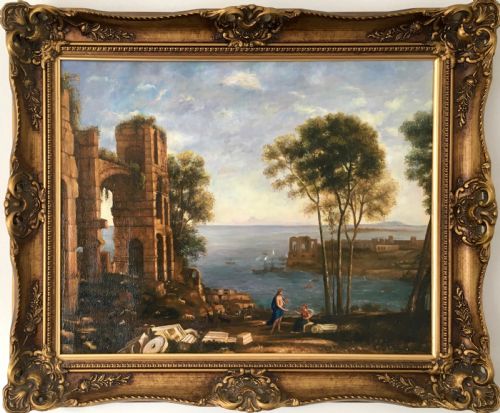
- An artistic technique of using cut and fitted, highly polished coloured stones to create images. These framed panels often depict architectural monuments and classical ruins.
- Post-Impressionism
- A predominantly French art movement that developed from about 1886 to 1905, extending impressionism while rejecting its limitations. Artists applied arbitrary colours and distinct brushstrokes to structure landscape and architectural views.
Vintage Architectural Landscape Artwork: Frequently Asked Questions
What periods do these artworks cover?
The available selection spans from the Victorian era through Edwardian productions and into the mid-twentieth century, including works from the nineteen-twenties, thirties, forties, and fifties.
This broad chronological spread allows collectors to choose between tightly rendered nineteenth-century topographical studies and freer twentieth-century impressionist interpretations.
How should I frame and display them?
Works on paper, such as watercolours and etchings, require acid-free mounts and protective glass to prevent environmental degradation. Oil paintings on canvas or board are typically housed in wooden frames that complement the period of the piece.
Keep them away from direct sunlight and excessive moisture to preserve the integrity of the pigments and supports.
How do I tell watercolours apart from oil paintings?
Watercolours are executed on paper under glass, showing translucent washes where the texture of the paper remains visible beneath the pigment. Oil paintings use heavier, opaque media on canvas, board, or panel, often exhibiting visible brushstrokes and raised paint layers.
Oils do not require glass protection, whereas works on paper rely on it for structural safety.
What subjects are most common?
Common subjects include European street scenes, urban squares, cathedrals, ancient monuments, and architectural landmarks in cities such as Paris, Rome, Venice, and London. Coastal villages and rural architectural settings also appear frequently across the selection.
These views capture both famous civic centres and quiet domestic corners.