

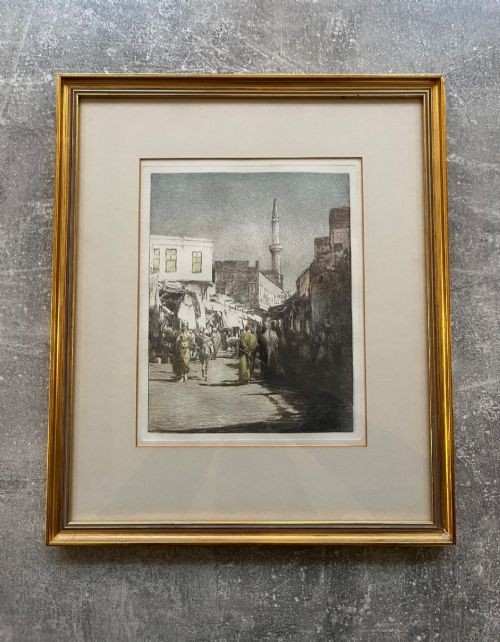


Vintage Architectural Etching
These vintage architectural etching works bring centuries of structural draughtsmanship and cityscapes into domestic spaces, prized for their fine line work and historical depth.
Vintage Architectural Etching
When you search for vintage architectural etching items, you encounter framed paper prints, engravings, and structural glass panels spanning the eighteenth century to the early twentieth century. These pieces record historic facades, bridges, classical ruins, and urban scenes from London, Paris, and beyond. Most items on this page lean towards nineteenth-century works and early twentieth-century prints.
The material forms range from works on paper housed in original frames to large etched glass windows and architectural salvage doors. You will find hand-coloured prints alongside deep copperplate engravings and drypoint etchings. The subject matter captures monuments, colleges, and public buildings with meticulous precision.
Originating across different European centres, these works reflect shifts in taste from neoclassical grandeur to Victorian realism and Edwardian documentation. The selection balances intimate framed artwork with large-scale interior fittings such as etched pub windows and mirror surrounds. Every piece offers a tangible link to historical building design and graphic skill.
Quality factors
The distinction between ordinary prints and superior works rests on the crispness of the plate impression and the skill of the original draughtsman. Finer examples show sharp, deliberate lines in intricate masonry and perspective without blurring or ink bleeding. Hand-colouring quality also separates standard prints from master-level works.
The integrity of the supporting material dictates overall value, from the preservation of the paper to the originality of the wooden frame. Pieces retaining their period frames or original glass carry greater historical authenticity. The clarity of the subject and the eminence of the artist elevate specific plates above commercial reproductions.
Vintage Architectural Etching Retail Price Guide 2026
Typical asking prices for vintage architectural etching among the pieces listed under this phrase on Sellingantiques today, from the lower quarter to the upper quarter. They describe what is for sale here now, not the wider market.
Several prints record ancient stone serpents and grand Vatican ceilings, proving that past artists found inspiration in both mythical beasts and masonry.
Francesco Piranesi·Claes Jansz Visscher·Francis Dodd RA RSW·Edgar J. Maybery·Alessandro Mocchetti·Giovanni Ottaviani·James Basire·Frank Greenwood
The Vintage Architectural Etching Glossary
- Drypoint etching
- A printmaking process where an artist scratches a design directly into a metal plate with a sharp needle. This technique produces rich, velvety lines due to the burr raised along the furrow.
- Copper engraving
- A method where the design is cut directly into a copper plate with a burin tool rather than using acid. It yields precise, clean lines ideal for architectural precision.
- Hand-coloured print
- An etching or engraving finished with watercolour washes applied by hand after printing. This adds tonal depth and colour to specific elements of the scene.
- Architectural salvage
- Building elements rescued from older structures for reuse or display, including windows, doors, and fire surrounds. These items retain period craftsmanship and design.
- Hogarth frame
- A narrow, dark wooden picture frame featuring a stepped or profile moulding, popular for framing prints from the eighteenth century onwards.
Vintage Architectural Etching: Frequently Asked Questions
How do I hang a heavy framed etching?
Heavy framed prints require secure fixings into wall studs or solid masonry using appropriate picture hooks. Distribute the weight evenly across two anchor points for large frames.
Ensure the hanging wire or brackets match the weight of the wood and glass. Professional framing support helps protect older timber frames from strain.
Where should I place an etched glass window?
Etched glass panels work well as interior doors, room dividers, or wall art where light can pass through them. Placing them near light sources highlights the intricate glasswork.
Avoid areas with constant moisture unless the glass is properly sealed. They serve as focal points in hallways, bathrooms, or living spaces.
How can I tell an etching from a print?
Etchings display a visible plate mark where the edge of the metal plate pressed into the damp paper during printing. Under magnification, the ink lines appear slightly raised rather than flat.
Photomechanical reproductions lack this physical indentation and show dot patterns under close inspection. Original etchings also exhibit unique variations in ink density.
How do I care for antique paper art?
Keep paper works out of direct sunlight to prevent fading of the ink and watercolour pigments. Stable indoor humidity protects the paper fibres from degradation.
Use UV-filtering glass when framing to provide an extra layer of protection. Avoid hanging pieces in damp environments like unheated porches.