




Vintage Aquamarine Earrings
Vintage aquamarine earrings bring pale blue brilliance to the ear, spanning Edwardian elegance through to mid-century modernism.
Vintage Aquamarine Earrings
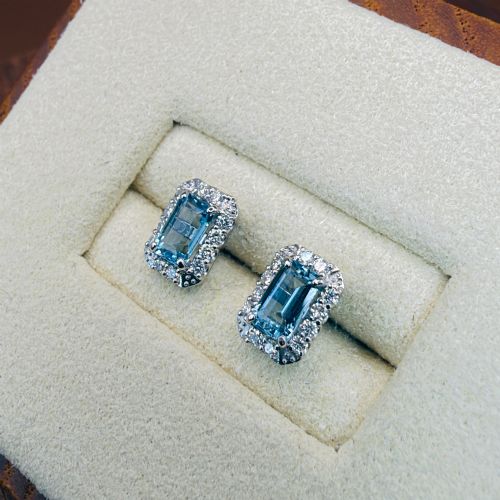
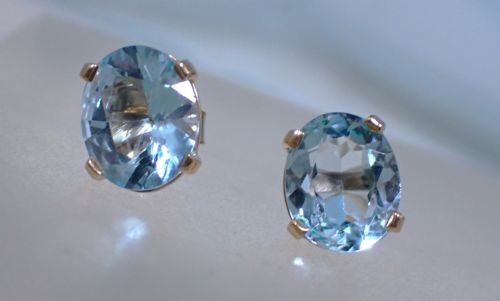
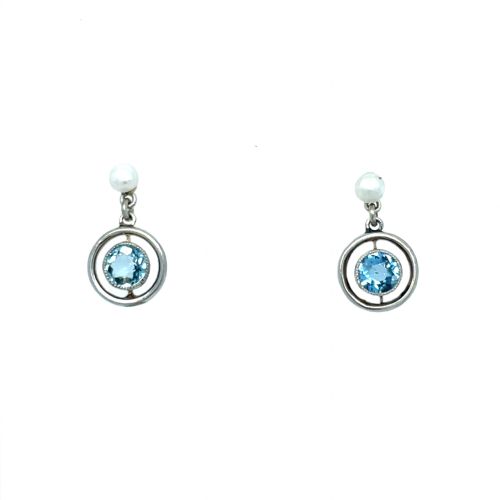
Vintage aquamarine earrings take several distinct forms, primarily appearing as cluster studs, linear drops, and dangles set with cool blue beryl. Buyers exploring this category encounter pieces dating from the late nineteenth century through the 1950s and 1960s, reflecting changing tastes in jewellery design over successive decades.
The selections available range from delicate Edwardian filigree work and geometric Art Deco platinum settings to robust mid-century gold designs. Stud earrings offer a restrained daily option, whereas drop and cluster configurations deliver greater movement and presence by incorporating supporting diamonds or pearls.
Materials and construction
Goldsmiths and platinum smiths built these mounts using a mixture of precious metals, pairing yellow gold and white gold with enduring platinum. The stones themselves receive various cuts, including emerald cuts, square cuts, step cuts, and baguettes, which emphasise the pale transparency of the beryl.
Diamonds and occasionally pearls commonly accompany the central aquamarines in cluster and drop formats, secured via claw settings or millegrain edges. The metalwork reflects the technological shifts of each era, moving from hand-pierced Edwardian mountings to the cleaner geometric lines of the 1930s and post-war construction.
Some past pieces paired pale blue beryl with unexpected purple amethyst, proving Victorians loved a contrasting colour palette just as much as we do.
Judging quality in early beryl jewellery
Quality rests significantly on the saturation and clarity of the aquamarine crystal, alongside the precision of its faceting and the weight of the central stone. Superior examples display a clean, lively ice-blue colour without excessive internal cloudiness, partnered with well-matched accompanying diamonds.
The integrity of the metal setting also separates standard production from finer workshop output, particularly in how securely stones are held within delicate platinum or gold claws. Evidence of original hand-finishing, such as crisp millegrain work and well-balanced proportions in drop designs, elevates the piece.
The Vintage Aquamarine Earrings Glossary
- Aquamarine
- A pale blue variety of the mineral beryl, traditionally favored in high-end jewellery for its clean transparency and ocean-like hue. It shares its mineral family with emerald and morganite.
- Art Deco
- A design style dominant in the 1920s and 1930s characterised by geometric symmetry, stylised motifs, and extensive use of platinum alongside diamonds. This aesthetic favours straight lines and sharp angles.
- Millegrain
- A decorative technique involving a row of tiny raised metal beads along the edges of a setting, popular in Edwardian and Art Deco jewellery. It creates a soft, textured border around stones.
- Cluster
- An arrangement of smaller gemstones surrounding a larger central stone, designed to maximise overall brilliance and visual impact. In this category, diamonds frequently surround the central aquamarine.
Vintage Aquamarine Earrings: Frequently Asked Questions
How do I date my vintage earrings?
Dating relies on stylistic clues such as the geometry of Art Deco mounts or the softer floral motifs of the Edwardian period, alongside hallmarks stamped on the metal.
Changes in metal preference, like the shift from yellow gold to platinum and white gold, also help narrow down the decade of manufacture.
Are aquamarines fragile for daily wear?
Aquamarine is a relatively durable gemstone measuring around 7.5 to 8 on the Mohs hardness scale, making it suitable for regular wear if handled with reasonable care.
Drop earrings experience less physical impact than rings, but protecting them from harsh chemicals and sharp blows preserves the metal and stones.
What is the difference between stud and drop styles?
Stud earrings sit directly on the earlobe, making them a discreet choice for everyday elegance and simpler outfits.
Drop and dangle variants hang below the ear, incorporating movement that catches the light and suits evening occasions or formal attire.
How should I clean vintage gold and platinum settings?
Gentle cleaning involves warm water, mild soap, and a soft brush to remove dust from behind closed-back or cluster settings without disturbing the metal.
Ultrasonic cleaners should be avoided for jewellery containing pearls or fragile antique mountings.