


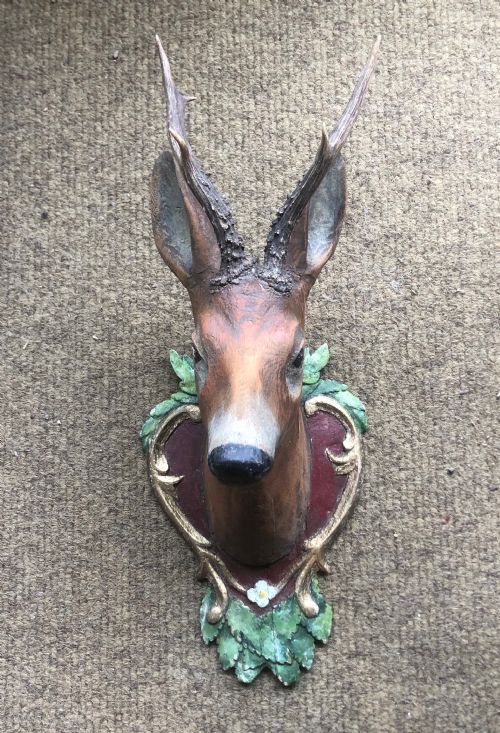


Vintage Animal Plaque
These vintage animal plaque examples bring together carved timber, taxidermy, and hammered brass to animate a room with natural form.
Vintage Animal Plaque
When you search for a vintage animal plaque, you find wall-mounted representations of beasts and birds spanning taxidermy mounts, carved timber masks, ceramic tiles, and metal chargers. The pieces on this page draw from the nineteenth century, the Edwardian era, and around nineteen ten, presenting fauna through varied international styles.
You are most likely to meet carved wood wall masks, brass repoussé work, and folk art wall pieces on this page. These items range from Black Forest tiger heads and Swedish painted deer to hammered brass trays and earthenware tiles depicting cheetahs.
How they were made
Makers shaped these items using traditional techniques in oak, walnut, brass, copper, and earthenware. Carvers worked wood deeply to form realistic lion, tiger, and ram masks, while metalworkers hammered brass and copper into chargers and trays with animal motifs.
Taxidermists prepared specimens like otter fur mounts over secure forms, and ceramic artists utilised glazed earthenware tiles such as those from Longwy. Plaster was cast into deep moulds to capture architectural details, and folk artists painted directly onto Swedish wood.
Vintage Animal Plaque Retail Price Guide 2026
Typical asking prices for vintage animal plaque among the pieces listed under this phrase on Sellingantiques today, from the lower quarter to the upper quarter. They describe what is for sale here now, not the wider market.
One listed item preserves the fierce gaze of an otter mask prepared by taxidermists who clearly took pride in every whisker.
What varies in quality
The standard of carving determines much of the quality in wooden wall masks, separating energetic, deep relief work from flat or mechanical shaping. Naturalistic proportion and expression in the rendering of a tiger head or ram's head set finer studio pieces apart.
Material selection and surface finish dictate the merit of metal and ceramic items. Crisp hammering on brass trays and well-preserved taxidermy preparation indicate skilled execution by workshops such as Peter Spicer and Sons.
Peter Spicer and Sons
The Vintage Animal Plaque Glossary
- Repoussé
- A metalworking technique where the artist hammers sheet metal from the reverse side to form a raised design on the front. This method appears on brass trays and chargers with animal motifs.
- Taxidermy mount
- The art of preserving and mounting animal skin and fur over an anatomical form to create a lifelike display. Otter masks and similar specimens demonstrate this craft.
- Wall charger
- A large decorative decorative plate designed specifically to be hung on a wall rather than used at the table. These often feature chased or hammered metal surfaces.
- Folk art
- Creative work produced within a traditional community culture, typically untutored and utilitarian in origin. Swedish painted deer with antlers represent this expressive tradition.
Vintage Animal Plaque: Frequently Asked Questions
What is a vintage animal plaque?
A vintage animal plaque is a decorative wall-mounted item depicting fauna, made from materials such as carved wood, brass, ceramic, or taxidermy.
These pieces capture wildlife in varied regional styles ranging from Black Forest carving to Swedish folk art.
How were these wall plaques used?
They were hung in studies, halls, and grand interiors to display an appreciation for nature, hunting, or artistic craftsmanship.
Metal chargers and ceramic tiles served as striking focal points on domestic walls.
How do I care for wooden carvings?
Keep wooden wall masks and carvings away from direct sunlight and sudden temperature changes to prevent timber splitting.
Dust them gently with a dry, soft cloth to maintain the natural finish.
How do I identify the period?
Examine the materials, mounting hardware, and carving style, comparing them with documented Victorian, Edwardian, and arts and crafts standards.
Signatures, stamps, or specific taxidermy tax tags also help date the work.