








Vintage Anatomical Model
These vintage anatomical model pieces are tactile studies of human and animal form that bring scientific history and sculptural presence to any room.
Vintage Anatomical Model
When you search for a vintage anatomical model, you encounter a specialised group of sculptures and specimens spanning the nineteenth and early twentieth centuries. These objects range from educational teaching aids to studio lay figures used by artists.
The pieces on this page draw from Victorian and Edwardian medical history, alongside French and German studio traditions. You meet carved wood mannequins, plaster casts, and wax models designed for study.
Most entries combine scientific utility with distinct sculptural forms, taking the shape of full torsos, articulated figures, or specific joints and skeletal specimens.
Materials and construction
Carved wood and plaster dominate the construction of these pieces, often combined with metal pins and hinges to achieve full articulation in lay figures. Artisans shaped timber into flexible joints for artists, while plaster allowed for detailed life-size casts of torsos and animals.
Wax and paint feature heavily in medical specimens, applied to capture the realistic textures and hues of anatomical subjects. Selected examples utilise iron and bone to provide structural integrity or specific biological detail.
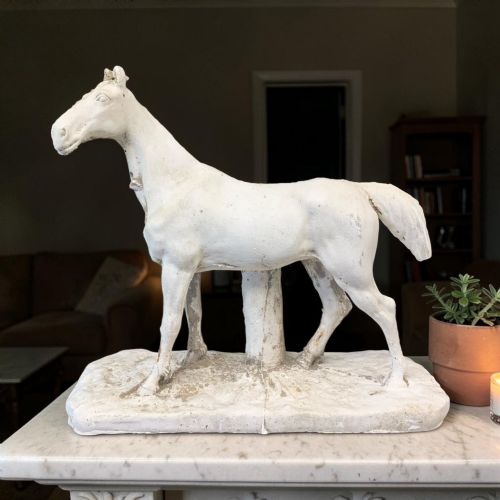
A stoic plaster horse stands shoulder-to-shoulder with Victorian medical specimens, proving that studio companions come in unexpected species.
Judging quality in anatomical pieces
Quality rests in the anatomical accuracy of the carving or casting, alongside the preservation of original paint and surface patination. Pieces that retain their original articulation mechanisms command attention for their mechanical and visual complexity.
The skill of the maker dictates whether a plaster cast or carved wood torso transcends a mere teaching aid to become a compelling sculpture. Finer items display meticulous attention to musculature and skeletal proportion.
D. Brucciani & Co, London·Educational & Scientific Plastics Ltd
The Vintage Anatomical Model Glossary
- Lay figure
- An articulated wooden or mannequin doll used by artists to study drapery and human form. These figures feature jointed limbs that hold poses.
- Memento mori
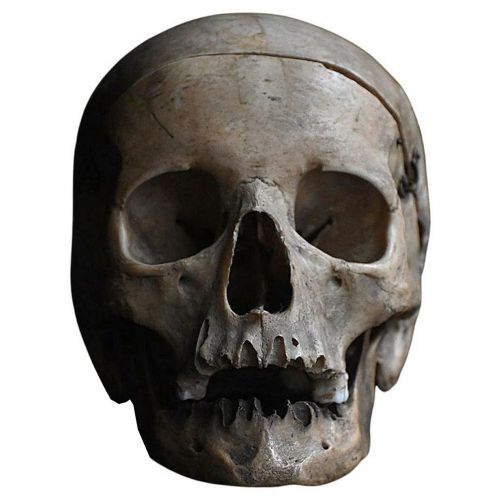
- An artistic reminder of the inevitability of death, frequently represented by skulls and skeletons in these collections. Such items served as philosophical reflections in Victorian interiors.
- Plaster cast
- A three-dimensional copy formed in a mould using wet plaster, common in nineteenth-century studios and academies. These casts served as instructional tools for students of sculpture.
- Medical specimen
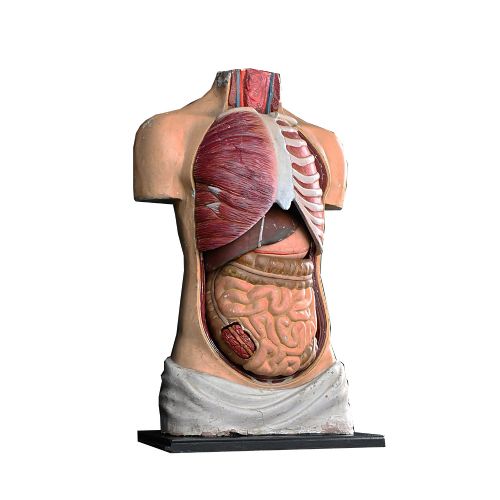
- An object used for the study of pathology or human anatomy, often preserved in wax or rendered in plaster and paint. They record the scientific methods of nineteenth-century institutions.
Vintage Anatomical Model: Frequently Asked Questions
What is an artist lay figure?
An artist lay figure is a fully articulated wooden mannequin designed to help painters and sculptors study human posture and clothing folds.
These objects feature moving joints held together by pegs and pins, allowing the figure to hold specific poses for long periods in the studio.
How were plaster models used?
Nineteenth-century studios utilised plaster casts as teaching aids for art students learning to render human and animal anatomy accurately.
Institutions and academies relied on these durable models because they provided consistent lighting and form compared to live subjects.
Are these pieces strictly medical?
The selection includes both clinical specimens and studio equipment created for fine artists rather than hospitals.
While some items document medical history through wax and human form, others focus purely on proportion and movement for artistic instruction.
How do I care for wax models?
Wax anatomical specimens require stable room temperatures away from direct sunlight and heat sources to prevent softening or cracking.
Gentle dusting with a soft brush preserves the delicate painted surfaces without damaging the fragile material underneath.