



Vintage Amethyst Charm
A vintage amethyst charm brings deep purple colour and rich historic character to a traditional bracelet or chain.
Vintage Amethyst Charm
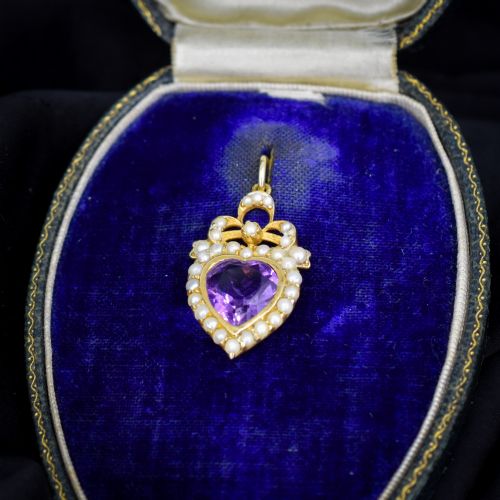
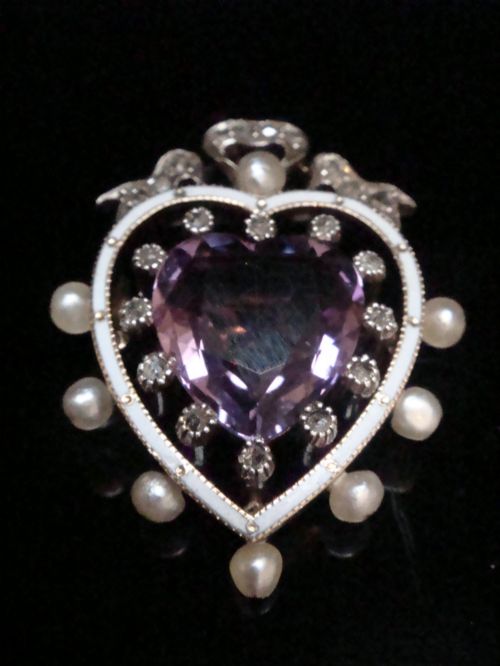
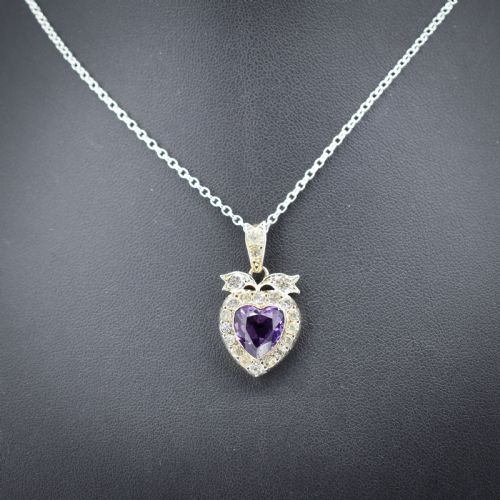
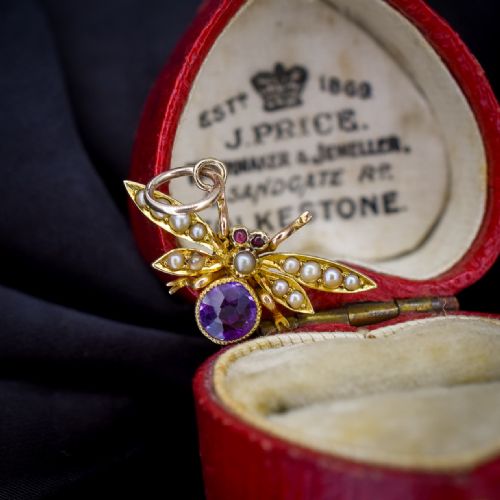
A vintage amethyst charm combines vibrant purple stones with gold or silver settings, frequently fashioned into distinct heart shapes or insect forms. These small pieces span periods from the nineteenth century through the Edwardian era, capturing the decorative spirit of Victorian and Art Nouveau design.
Buyers browsing this selection will most frequently encounter heart-shaped pendants and charms executed in nine carat or eighteen carat yellow gold. Many examples incorporate seed pearls, enamel work, or paste stones alongside the central amethyst to enhance the overall visual appeal.
Assessing quality and craftsmanship
The distinction between standard items and finer pieces lies in the depth of the amethyst colour, the precision of the gold or silver work, and the intact condition of delicate enamel and seed pearls. Superior examples display clean gemstone facets and robust metal settings without heavy wear.
Artistic execution also separates ordinary production from exceptional work, particularly in pieces featuring complex motifs like insects or intertwined hearts. The integration of supporting stones such as diamonds or tourmaline elevates the overall refinement of the charm.
Vintage Amethyst Charm Retail Price Guide 2026
Typical asking prices for vintage amethyst charm among the pieces listed under this phrase on Sellingantiques today, from the lower quarter to the upper quarter. They describe what is for sale here now, not the wider market.
The Vintage Amethyst Charm Glossary
- Amethyst
- A purple variety of quartz prized for its colour. It serves as the primary gemstone in these vintage charms and pendants.
- Seed pearl
- A very small, natural or cultured pearl used in clusters or borders. These tiny pearls add a soft white contrast to the deep purple amethyst.
- Paste
- Hand-cut glass or lead crystal used to imitate gemstones. Antique paste provides brilliant sparkle in historical jewellery.
- Guilloche enamel
- Decorative enamel applied over engine-turned metal. This technique creates geometric patterns beneath a translucent coloured surface.
- Fob
- A short chain or ornamental pendant formerly attached to a pocket watch. Many pieces function interchangeably as fobs and charms.
Vintage Amethyst Charm: Frequently Asked Questions
What periods do these charms come from?
These pieces originate from the nineteenth century, the Victorian era, and the Edwardian period. The listed items span roughly from eighteen ninety through to nineteen hundred.
Design traits shift from ornate Victorian symbolism towards flowing Art Nouveau lines and Edwardian delicacy in later examples.
How were these charms originally worn?
Owners typically suspended them from chatelaines, charm bracelets, or delicate gold neck chains. Some items served a dual purpose as pocket watch fobs.
Their substantial loops and rings allowed secure attachment to various types of historical jewellery.
What metals support the amethysts?
Maker settings utilise nine carat gold, fifteen carat gold, eighteen carat gold, silver, and gold-on-silver combinations. Yellow gold is the predominant metal colour seen across the selection.
Each metal choice reflects the prevailing tastes and standards of its specific period.
Are other stones combined with the amethyst?
Many designs incorporate seed pearls, diamonds, tourmaline, or amethyst paste alongside the main gemstone. Enamel work also appears on select pieces.
These additional materials create textural contrast and enrich the overall aesthetic of the pendant.