



Vintage Adjustable Lounge Chairs
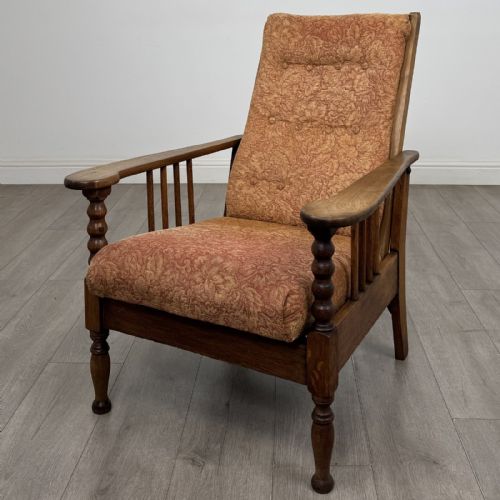
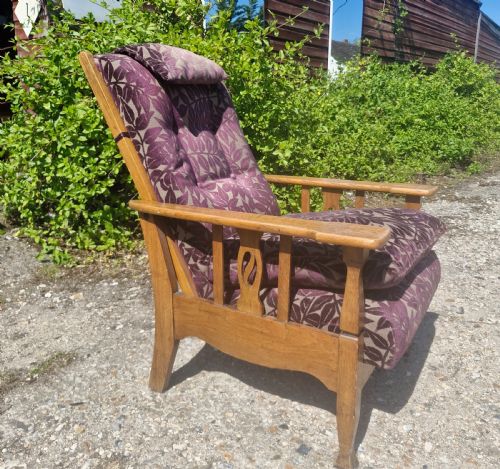
These vintage adjustable lounge chairs are heavy timber seats with moving backs that let you sit upright or recline entirely at will.
Vintage Adjustable Lounge Chairs
When you search for vintage adjustable lounge chairs, you encounter heavy wooden seating designed to shift from an upright posture to a tilted rest position. These pieces span eras from the nineteenth century into the twentieth century, bringing mechanical movement to domestic comfort.
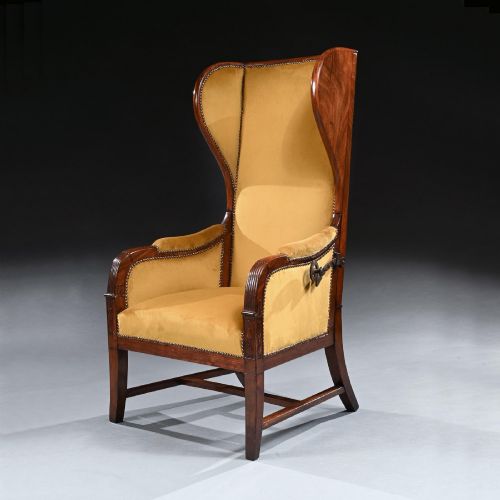
The most common form on this page is the oak armchair built in the Arts and Crafts or Edwardian manner, often featuring slatted backs or drop-in cushions. Alongside these timber frames appear nineteenth century campaign designs, French Empire mahogany wing backs, and Art Deco leather models.
Originating from British workshops and continental makers alike, these chairs utilise clever mechanisms involving brass rods, ratchet teeth, or extending footrests. They serve as functional seats for libraries and living spaces where relaxation requires a customized angle.
How they were made
Makers constructed the primary frames from solid oak and mahogany, joining the heavy timbers with traditional mortise and tenon joints to withstand the stress of reclining. Teak also appears in Edwardian examples, offering natural durability for moving components.
Upholstery materials range from plain fabric and tapestry to velvet and brown leather, often secured over sprung bases or webbed foundations. Brass fittings provide the adjustable mechanics, including hinges, castors, and rod catches that lock the seat into position.
Vintage Adjustable Lounge Chairs Retail Price Guide 2026
Typical asking prices for vintage adjustable lounge chairs among the pieces listed under this phrase on Sellingantiques today, from the lower quarter to the upper quarter. They describe what is for sale here now, not the wider market.
Foot & Sons provided chairs with built-in foot mechanisms so patrons could elevate their feet without ever leaving the book.
What varies in quality
The distinction between ordinary and superior pieces rests on the ingenuity of the adjusting mechanism and the integrity of the original timber frame. Chairs with smooth, reliable brass ratchets and solid oak construction represent the high water mark of workshop production.
Subtleties in carving, the weight of the mahogany or teak, and the preservation of original leather or tapestry upholstery elevate certain examples above standard utilitarian seating. The presence of known stylistic influences, such as Liberty or Heal's, adds further distinction to a piece.
Heals of London·Foot & Sons
The Vintage Adjustable Lounge Chairs Glossary
- Morris chair
- An armchair featuring an adjustable reclining back supported by a wooden rod or metal bar resting on pegs or notches.
- Campaign chair
- A portable folding or dismantling piece designed for military officers on the move during the nineteenth century.
- Ratchet
- A mechanical device consisting of a notched wheel or bar that allows movement in only one direction, used here to hold the backrest at set angles.
- Castor
- A small wheel mounted on a swivel assembly at the base of a chair leg to allow easy rolling across floorboards.
- Tapestry fabric
- A heavy, thick textile woven with pictorial or decorative designs, often utilised for traditional upholstery.
Vintage Adjustable Lounge Chairs: Frequently Asked Questions
How do vintage adjustable lounge chairs recline?
These seats typically use a hinged back connected to a brass rod or wooden bar that rests in a series of rear notches. Lifting or shifting the back allows you to drop the frame into a laid-back angle for resting.
Some campaign or metamorphic designs incorporate extending footrests or folding mechanisms that shift the entire geometry of the chair as you lean.
Where were these reclining armchairs used?
Owners placed these substantial seats in libraries, studies, and drawing rooms where reading or resting for long periods demanded extra physical support. Their sturdy timber frames and adjustable backs made them versatile additions to domestic living spaces.
Campaign versions also travelled with officers on colonial service, offering portable comfort in temporary quarters.
What wood types appear most often?
Oak is the dominant timber, particularly in Arts and Crafts and Edwardian examples linked to English workshop traditions. Mahogany also appears frequently, especially in nineteenth century wing backs and steamer chairs.
Teak occasionally surfaces in pieces from the early twentieth century, chosen for its dense and durable qualities.
How do I care for leather upholstery?
Keep antique leather conditioned with appropriate balms to prevent the hide from drying out over time. Avoid placing the chair near direct heat sources or strong sunlight that can fade the finish.
Regular dusting with a soft, dry cloth preserves the surface without harming the aged patina.