


Vintage 18k Gold Jewellery
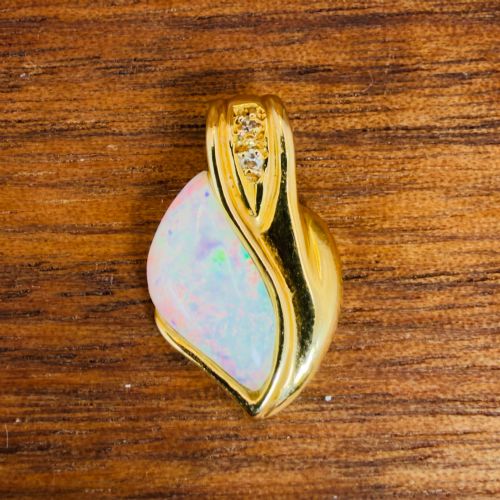
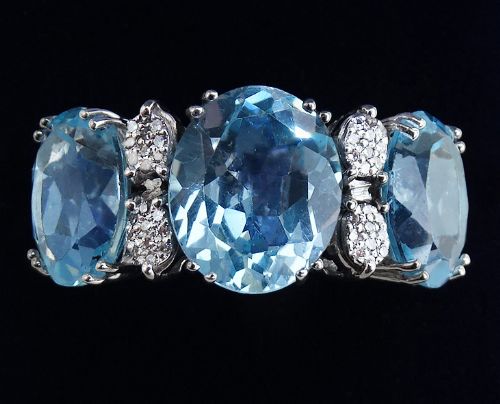
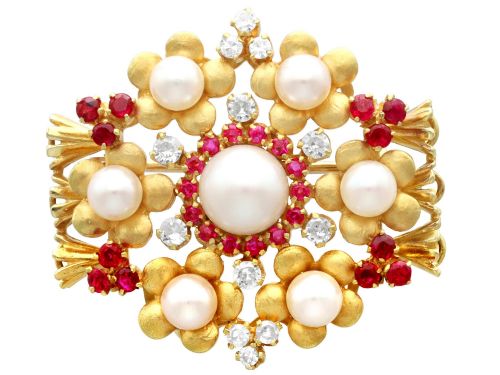
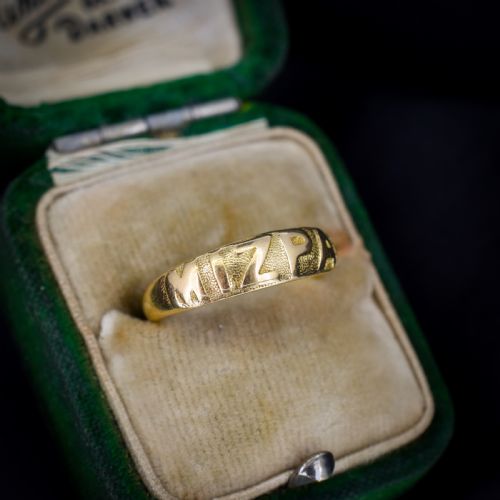
Vintage 18k gold jewellery spans eras from the late nineteenth century through the mid-century, offering rings, pendants, and earrings fashioned in rich yellow and white gold.
Vintage 18k Gold Jewellery
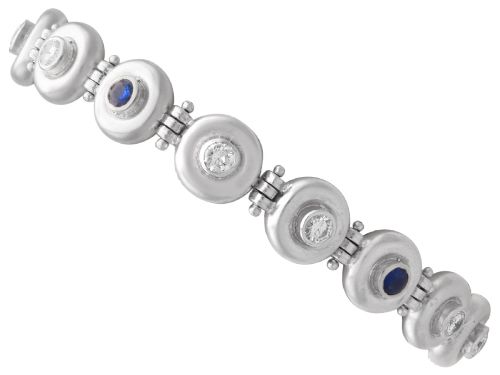
The objects span varied stylistic movements, uniting geometric Art Deco settings with fluid Art Nouveau motifs and minimalist mid-century forms. Each piece utilises high-purity gold to secure diamonds, pearls, jade, and coloured stones.
Materials and methods of construction
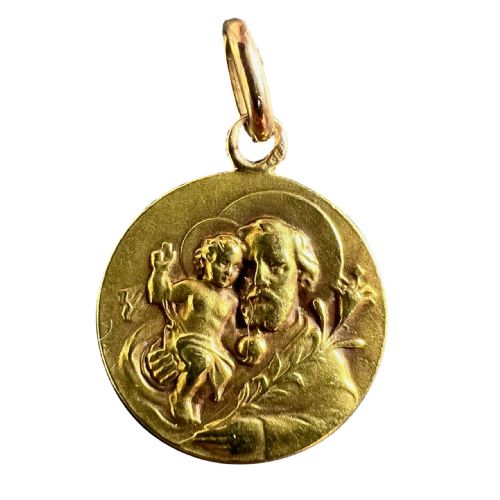
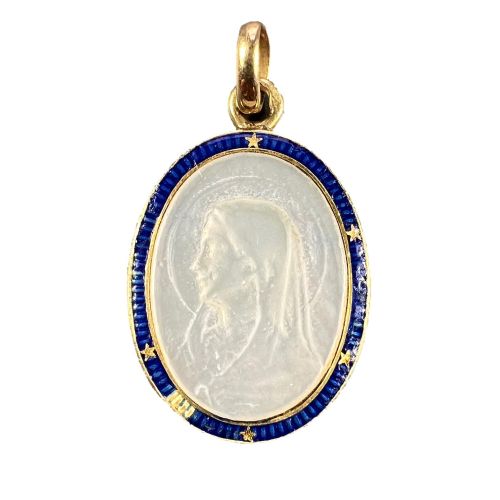
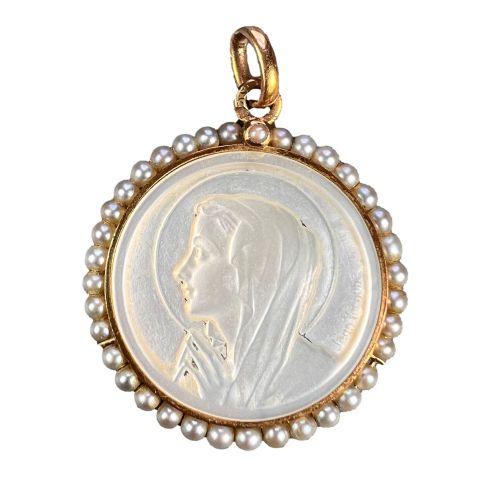
Makers utilised 18ct yellow, white, and rose gold as the foundational metal for these items, frequently pairing the high-purity alloy with gemstones such as diamonds, rubies, sapphires, and aquamarines. Enamel work, including plique-à-jour techniques, appears on religious medals alongside organic materials like mother of pearl.
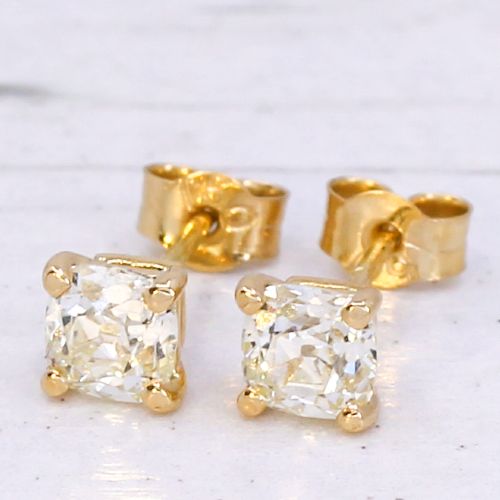
Artisans employed stone-setting methods appropriate to the era, from old mine cut diamond bezels in Victorian pieces to calibrated channel settings in Art Deco rings. Metal forming techniques involved twisting wire frames, casting religious medallions, and assembling hollow or solid link chains.
Vintage 18k Gold Jewellery Retail Price Guide 2026
Typical asking prices for vintage 18k gold jewellery among the pieces listed under this phrase on Sellingantiques today, from the lower quarter to the upper quarter. They describe what is for sale here now, not the wider market.
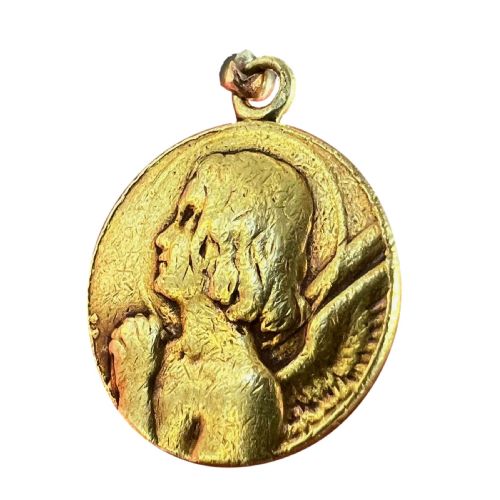
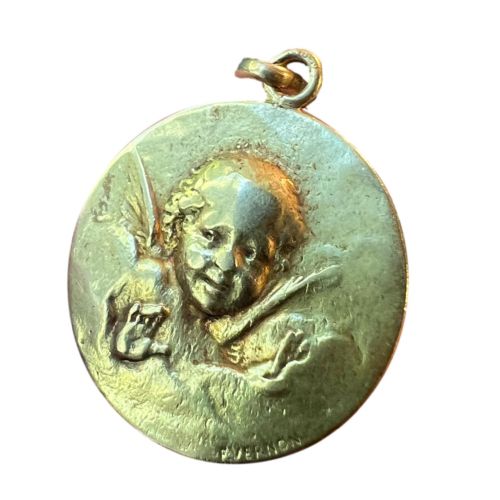
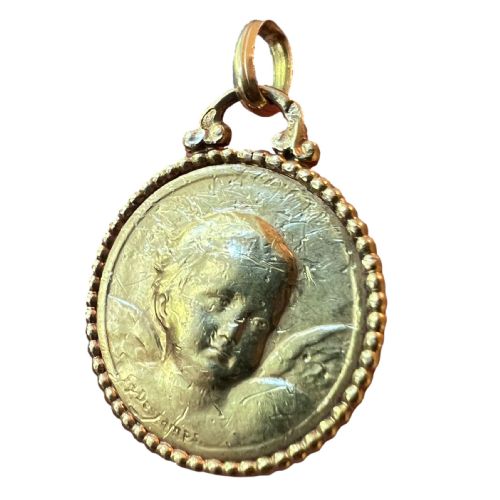
A tiny cherub charm swings quietly from a nineteenth-century gold loop, witnessing over a century of whispered prayers and daily wear.
Distinctions in construction and design
The standard of execution in vintage 18k gold jewellery relies heavily on the precision of the goldsmith's hand, particularly in chased details on medals and the symmetry of geometric stone arrangements. Maker attribution, visible through signed elements or discernible workshop styles, elevates a piece above standard commercial production.
Gemstone selection dictates the upper tier of quality, seen in natural unheated rubies, clear aquamarines, and well-matched old-cut diamonds. The integration of specialised decorative elements, such as translucent plique-à-jour enamel or carved jade, demonstrates advanced technical proficiency.
Vernon·Descamps·Rasumny·Jampolsky·Emile Monier·Paul Brandt·Perroud·Mazzoni·Pageli Perriat·Guilbert
The Vintage 18k Gold Jewellery Glossary
- Plique-a-Jour
- An enamelling technique where the enamel is applied without a backing, allowing light to shine through the transparent or translucent coloured glass similar to stained glass.
- Old Mine Cut
- An antique diamond cut featuring an approximate square shape with rounded corners, a high crown, and a small table, typical of nineteenth and early twentieth-century stones.
- Navette
- A boat-shaped gemstone setting or ring design that tapers to a sharp point at both ends, popular in late Victorian and Edwardian jewellery.
- Albert Chain
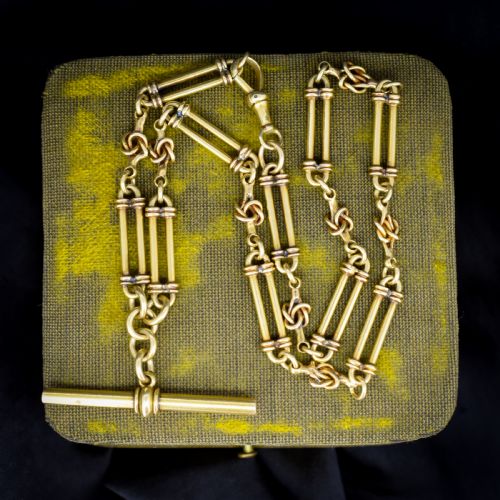
- A short pocket watch chain named after Prince Albert, frequently adapted as a necklace or bracelet in antique pieces.
- Trombone
- A distinctive link chain design named after its resemblance to a musical instrument slide, characteristic of fine period goldwork.
Vintage 18k Gold Jewellery: Frequently Asked Questions
What is an Art Deco ring?
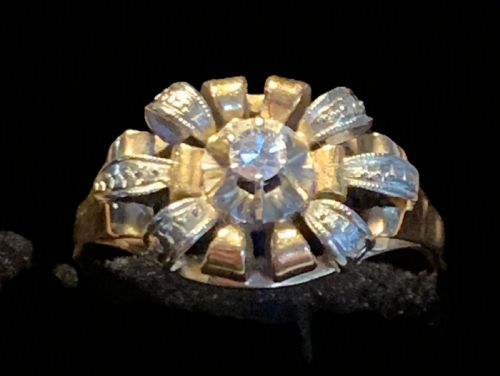
Art Deco rings originate from the interwar period, defined by geometric lines, symmetry, and stylised motifs. Makers frequently paired 18k white gold or platinum with diamonds, jade, and calibre-cut coloured stones.
These pieces emphasise architectural structures and sharp angles rather than the flowing organic curves of earlier styles.
How should I care for vintage gold jewellery?
High-karat gold is relatively soft compared to lower alloys, so store pieces individually to prevent scratching from other items. Clean them gently with mild soapy water and a soft cloth rather than harsh chemical dips.
Enamel, pearls, and softer gems require particular care to avoid damage to delicate surfaces.
What are French religious medals?
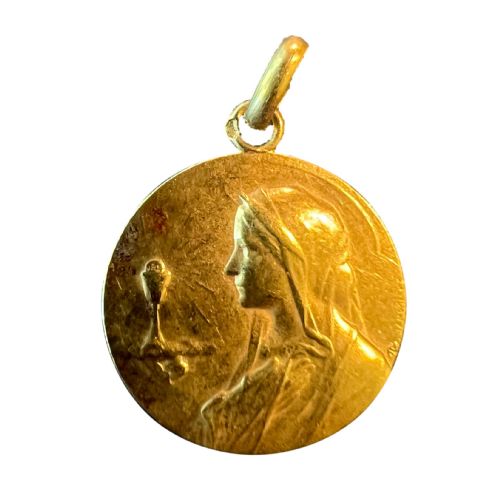
French religious medals are devotional pendants, often minted in 18k yellow gold, depicting figures such as the Virgin Mary, saints, or cherubs. They were frequently issued for significant life events like first communions or baptisms.
Many bear the signatures of notable medallists and incorporate decorative elements like enamel or mother of pearl surrounds.