




Vinegar Cruet Bottle
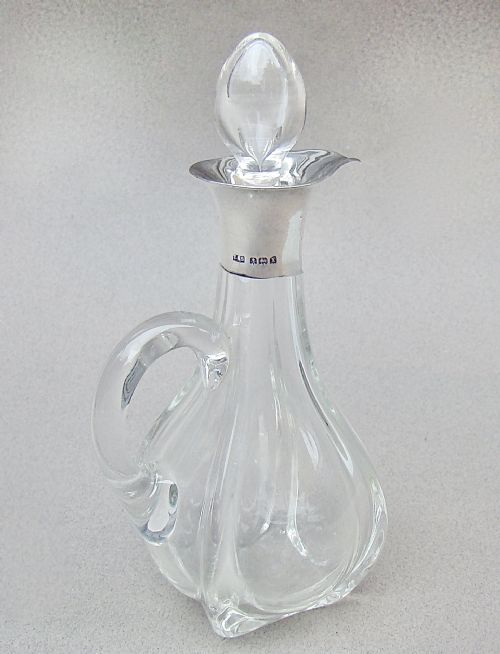
A vinegar cruet bottle holds seasoning at table, combining cut glass and silver mountings in forms that range from Georgian stands to Art Deco vessels.
Vinegar Cruet Bottle
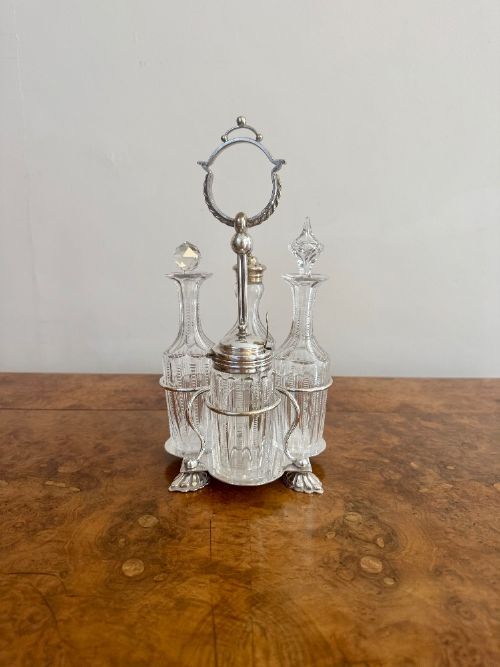
When you search for a vinegar cruet bottle, you find functional dining vessels designed to dispense condiments, frequently appearing either as individual mounted bottles or housed within larger multi-bottle cruet sets on stands.
The versions you meet most often on this page date from the Edwardian and Victorian eras, alongside Georgian pieces and Art Deco designs in glass, silver plate, and sterling silver.
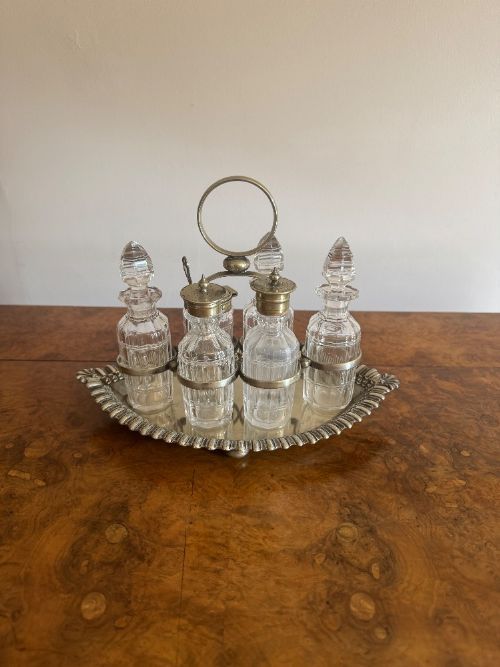
Makers produced these objects in various configurations, from single oil and vinegar vessels with silver mounts to comprehensive six-bottle and eight-bottle sets arranged on frames.
How they were made
Artisans combined heavy lead crystal and cut glass with sterling silver or silver plate, shaping bodies through glass-cutting techniques and forming mounts through metalwork and hallmarking.
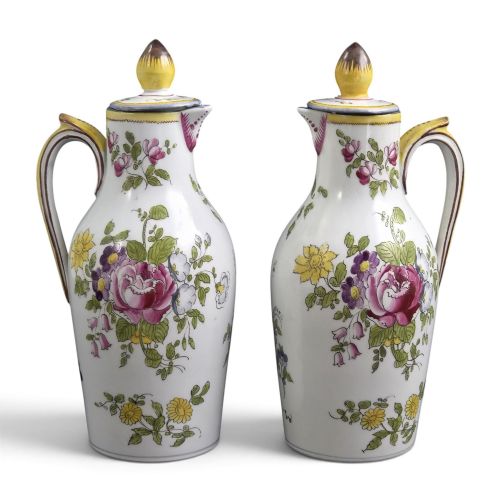
Faience and earthenware examples utilise tin glazing and polychrome painting, particularly on French vessels such as those from Marseille.
Stands and frames often incorporate ebonised wood or silver-plated metal, securing the bottles with fitted collars and hinged covers.
Vinegar Cruet Bottle Retail Price Guide 2026
Typical asking prices for vinegar cruet bottle among the pieces listed under this phrase on Sellingantiques today, from the lower quarter to the upper quarter. They describe what is for sale here now, not the wider market.
Listings feature pieces spanning the Georgian, Victorian, Edwardian, and Art Deco periods, utilising cut glass, sterling silver, silver plate, faience, and lead crystal.
What varies in quality
Quality rests in the weight and clarity of the glass, distinguishing heavy hand-cut lead crystal from standard moulded vessels.
The execution of the silver mounts, whether sterling silver or silver plate, determines the distinction of the piece through crisp hallmarks and refined chasing.
Completeness and maker attribution separate standard domestic sets from works bearing marks of noted silversmiths.
Levi & Salaman·Veuve Perrin·Walker & Hall·Charles Thomas Fox·Hester Bateman·Elkington & Co·Wade Wingfield Wilkins
The Vinegar Cruet Bottle Glossary
- Cruet stand
- A frame or stand designed to hold multiple condiment bottles securely on the dining table. These frames often feature a central carrying handle and supporting feet.
- Lead crystal
- A high-clarity glass containing lead oxide, known for its heavy weight and capacity for deep hand-cut facets. This material refracts light strongly.
- Silver plate
- A base metal coated with a layer of pure silver, widely utilised for Victorian and Edwardian cruet frames. It provided the appearance of solid silver at a lower cost.
- Faience
- Tin-glazed earthenware produced in European workshops, often featuring hand-painted polychrome decoration. Jugs and cruet pieces utilised this ceramic for colourful finishes.
- Hallmark
- An official stamp applied to precious metals indicating purity, origin year, and maker. English pieces typically bear city marks and maker initials.
Vinegar Cruet Bottle: Frequently Asked Questions
What is a vinegar cruet bottle?
A vinegar cruet bottle is a small vessel designed to hold and pour vinegar at the dining table. They frequently feature glass bodies paired with metal stoppers and mounts.
These bottles appear either singly or as part of larger cruet sets containing mustard pots, oil containers, and pepper shakers arranged on a central stand.
How were cruet sets used?
Cruet sets occupied the centre of the dining table during Georgian, Victorian, and Edwardian meals, allowing diners to season their food individually.
Servants or diners lifted the stand by its central handle to pass oils, vinegars, and sauces around the company during service.
How do I care for antique glass bottles?
Antique glass and silver-mounted bottles require gentle hand washing in lukewarm water with mild soap. Avoid soaking pieces with silver mounts or fitted cork stoppers to protect the materials.
Dry the glass thoroughly and polish silver components with a soft cloth to prevent tarnishing while preserving the original metal surface.
How can I tell the period of a cruet set?
The period of a cruet set is identified through hallmarks on the silver mounts, the cutting style of the glass, and the overall design of the frame. Georgian pieces often display restrained lines, while Victorian examples lean towards ornate decoration.
Art Deco sets from the twentieth century introduce modernist geometric forms and heavy lead crystal without traditional ornate mounts.