

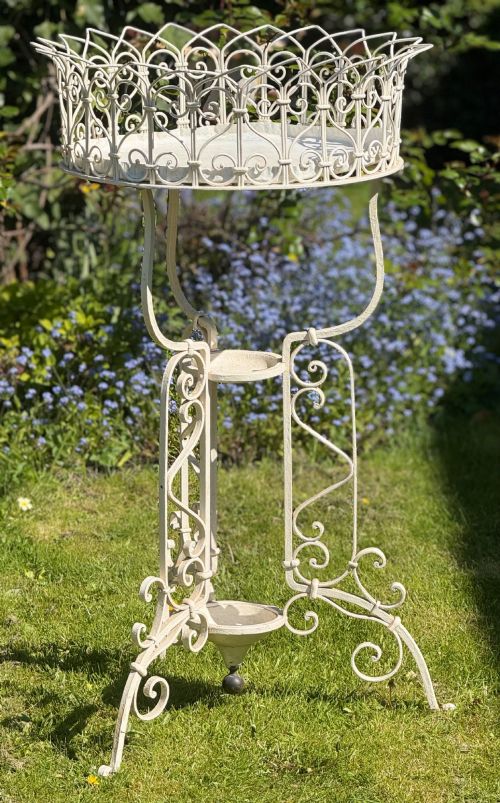


Victorian Wrought Iron Jardiniere
A victorian wrought iron jardiniere brings industrial strength and botanical elegance together, offering a sturdy yet graceful stage for indoor and outdoor flora.
Victorian Wrought Iron Jardiniere
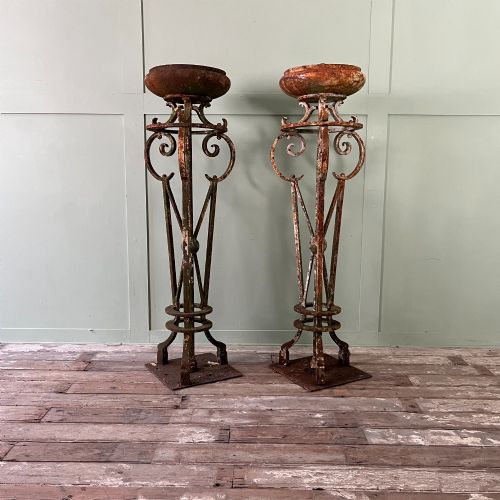
A victorian wrought iron jardiniere brings together heavy-duty metalwork and functional garden design, primarily taking the form of plant stands, plant holders, and garden planters. These pieces span the nineteenth century, including specific periods like the Victorian era, Georgian, Edwardian, and nineteenth-century styles such as Arts and Crafts, Gothic Revival, and French Country.
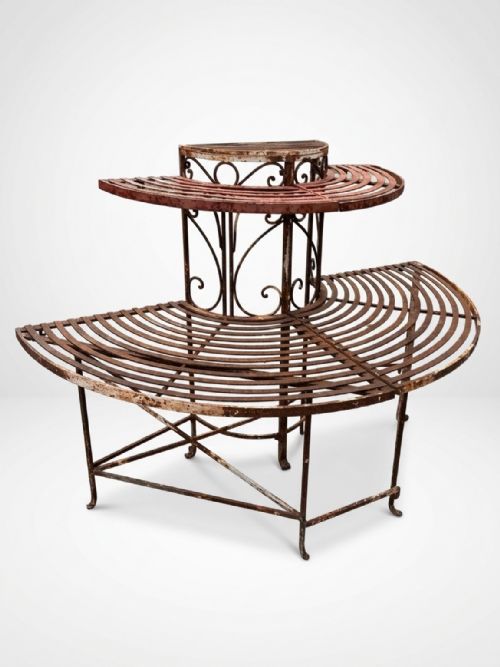
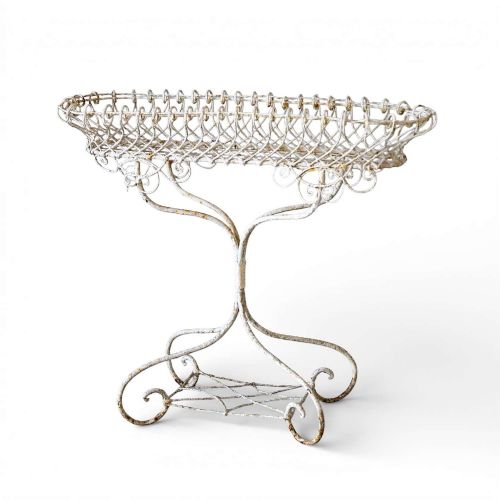
Buyers frequently encounter variations that incorporate wirework, wire, sheet metal, zinc, paint, cast iron, and stone alongside the primary metal. The forms range from tall plant stands and lattice basket tops to tiered planters, garden urns, and large Gothic planters.
Pieces on this page originate from English and French traditions, reflecting both domestic conservatory use and broader patio or garden decoration. The selection captures both utilitarian wirework creations and more decorative scrollwork designs.
Construction and materials
Makers shaped wrought iron and cast iron into robust structural frames, often integrating wirework and wire to form intricate lattice baskets and tiered surfaces. These metal structures were frequently painted to withstand the elements in gardens and conservatories.
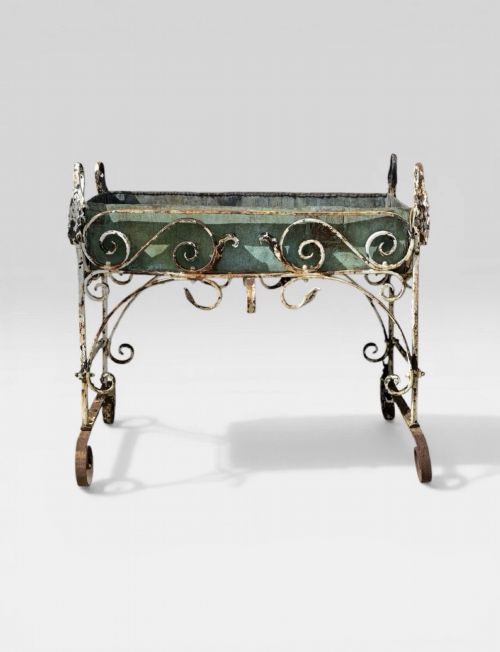
Additional components like sheet metal, zinc, and stone appear in combination with the iron frameworks to hold soil and plants securely. Artisans utilised scrollwork, lattice detailing, and Gothic motifs to elevate the functional ironwork into decorative furnishings.
French Country and Gothic Revival styles appear alongside English conservatory designs, showing diverse regional approaches to plant display stands.
Assessing craftsmanship and finish
The sophistication of the metalwork defines the upper tier of these pieces, particularly where hand-forged scrollwork, detailed lattice basket tops, and complex wirework meet structural integrity. Pairs and taller stands demonstrate greater ambition in design compared to simpler single planters.
Material combinations also influence the character of each piece, with integrated copper, cast iron elements, or stone sections adding weight and textural contrast to the primary wrought iron frame. The condition of the original paint and the integrity of the joins determine how well the piece has retained its intended form.
The Victorian Wrought Iron Jardiniere Glossary
- Wrought iron
- A tough, malleable form of iron that blacksmiths heat and hammer into decorative and structural shapes. This material allows for the creation of slender scrolls and strong plant stands.
- Jardiniere
- An ornamental pot or stand designed to hold plants or flowers. In this context, it refers to elevated garden planters and plant holders.
- Wirework
- Metal strands bent and joined to form open, lattice-like structures. It is commonly seen in tiered plant stands and conservatory display frames.
- Scrollwork
- Ornamental branching curves resembling scrolls used to embellish metal frames. This decorative technique defines many nineteenth-century plant stands.
- Conservatory
- A glass-roofed room used for growing delicate plants and relaxing. These spaces housed many of the wirework and iron stands found today.
Victorian Wrought Iron Jardiniere: Frequently Asked Questions
What is a jardiniere?
A jardiniere is a decorative container or stand designed to hold plants and flowers. In the context of nineteenth-century metalwork, these pieces often take the form of tall stands or urns.
They were placed in domestic rooms, conservatories, and gardens to display potted greenery at varying heights.
Were these used indoors?
Many of these metal plant holders were designed specifically for indoor conservatories and country house interiors. Their open wirework and scroll designs allowed light to pass through while keeping heavy pots off the floor.
They served as functional furniture that brought outdoor flora into living spaces.
How do I date a piece?
Dating relies on stylistic clues such as Gothic Revival motifs, Arts and Crafts combinations of copper and iron, or Regency and Georgian wirework forms. Construction methods, such as the transition from hand-wrought elements to cast components, also help establish the era.
Comparing the materials, including the presence of zinc linings or sheet metal trays, provides further context.
Can they stay outside?
Most iron and wirework plant stands tolerate outdoor settings, though their longevity depends on the protective paint layers and metal composition. Zinc and sheet metal liners handle moisture well, but weathering affects exposed iron over time.
Sheltered patios and garden spaces help preserve the painted surfaces and structural integrity.