
Victorian Writing Desk with Drawer
A victorian writing desk with drawer is a practical workspace shaped by nineteenth-century craftsmanship, offering fitted storage and a dedicated surface for correspondence.
Victorian Writing Desk with Drawer
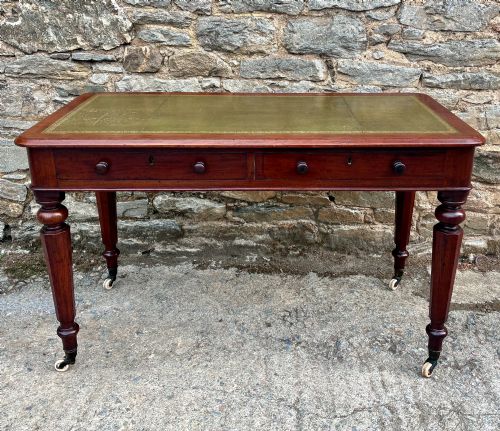
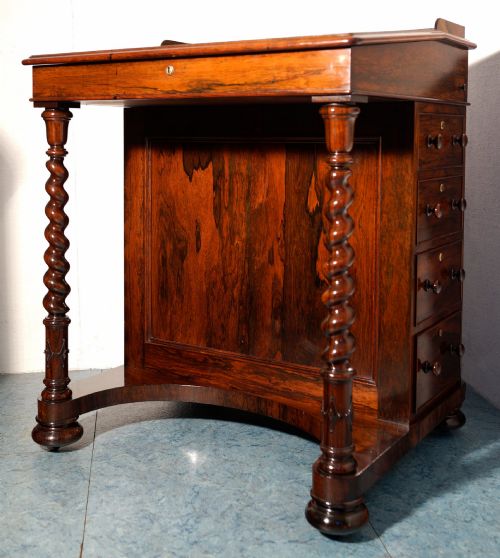
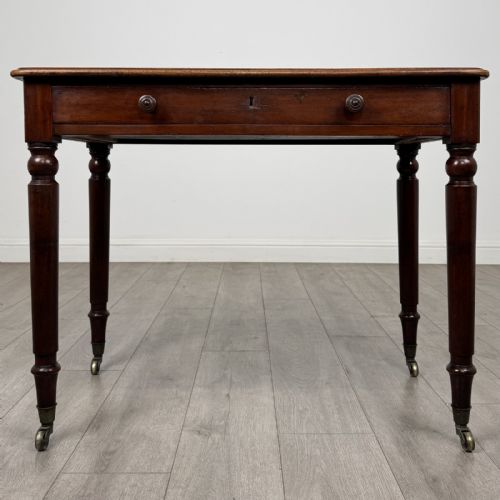
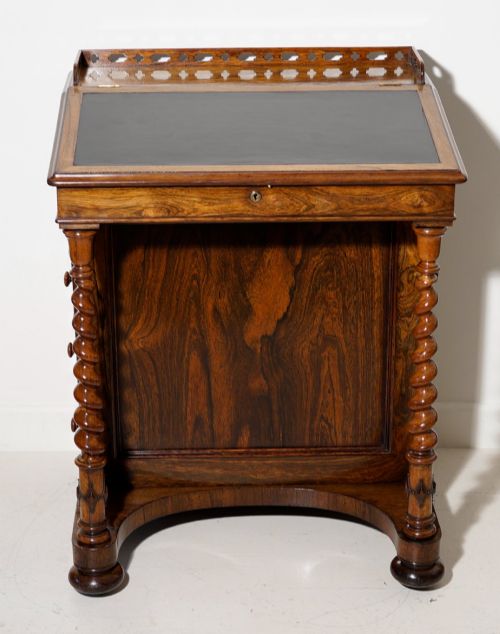
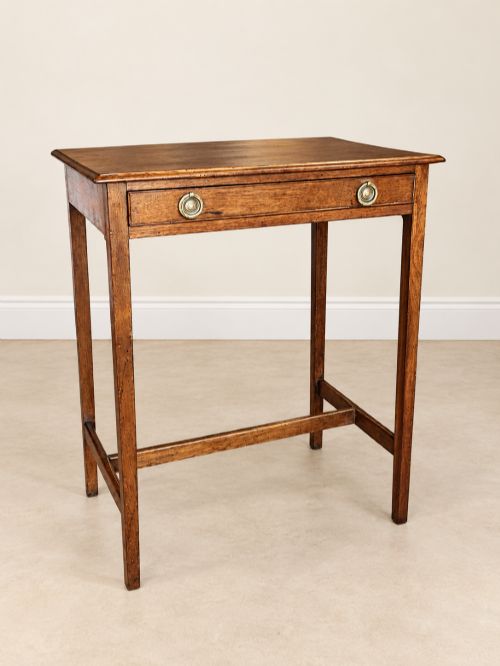
A victorian writing desk with drawer encompasses a wide range of nineteenth-century forms designed for correspondence and study, appearing in formats from single-drawer side tables to substantial pedestals. The items seen span the Victorian period alongside broader nineteenth-century designations, showing dates ranging from the middle decades through to nineteen hundred.
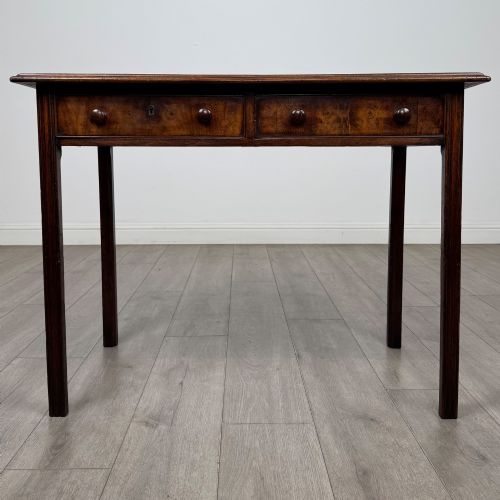
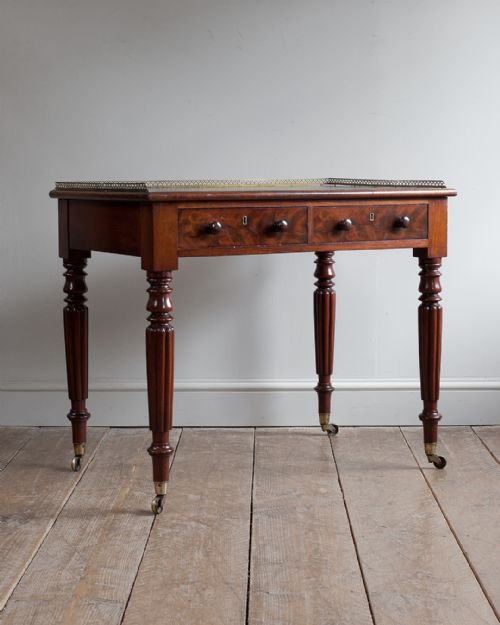
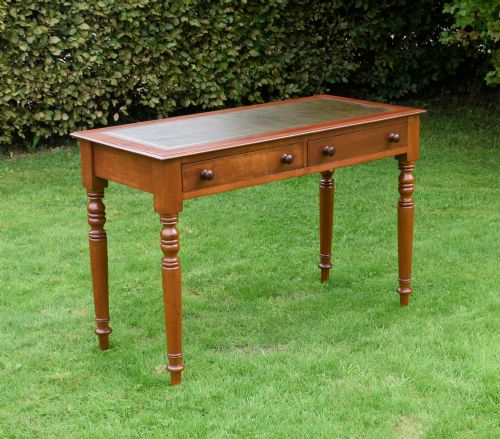
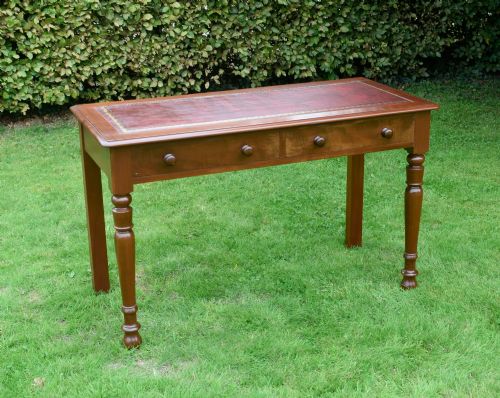
The most common examples on this page are mahogany and oak writing tables fitted with one or multiple drawers, alongside pedestals, kneeholes, and side tables adapted for writing. Makers utilised various timbers to suit domestic interiors, producing sturdy utility pieces as well as decorative examples with leather-inset tops and stationery fittings.
How They Were Made
These pieces rely heavily on solid and veneered hardwoods such as mahogany, oak, burr walnut, and rosewood, supported by secondary softwoods like pine in simpler or provincial models. Joinery traditions of the period governed drawer construction, often employing hand-cut dovetails and incorporating brass hardware or ceramic castors.
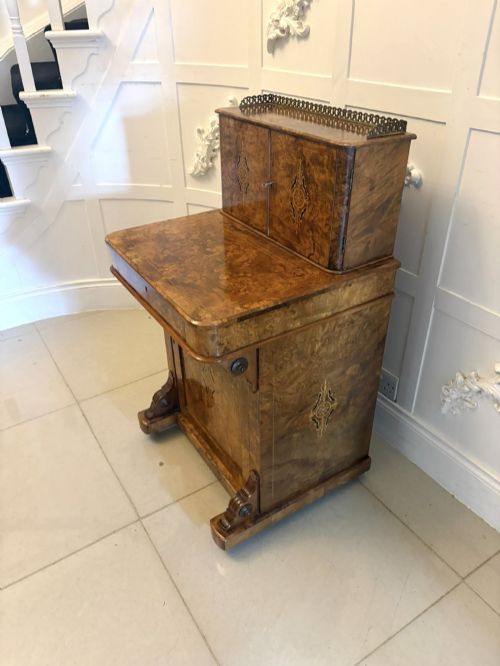
Surfaces frequently feature inset panels of tooled leather or decorative timber grains like flame mahogany and birds-eye maple. Structural framing ranges from turned and reeded tapering supports to substantial pedestals enclosing banks of stationery and side drawers.
Some nineteenth-century desks hide stationary compartments behind secret panels and locking mechanisms designed for private correspondence.
What Varies in Quality
The distinction between standard and finer examples rests upon timber selection and the ambition of the design, moving from utilitarian pine and oak tables to burr walnut and rosewood showpieces. Superior construction shows in figured wood veneers, original brass handles, and well-executed interior cabinetry such as fitted stationery drawers and writing slides.
Execution of carved detail, whether formal mouldings or specific motifs like green man carvings, separates routine workshop output from specialised cabinet work. The integrity of secondary elements, including original keys, working locks, and manufacturer stamps, elevates the standing of a desk within its period.
Edwards & Roberts·Hobbs & Co.·Gillow & Co·J A Mein·Blyth & Son
The Victorian Writing Desk with Drawer Glossary
- Pedestal desk
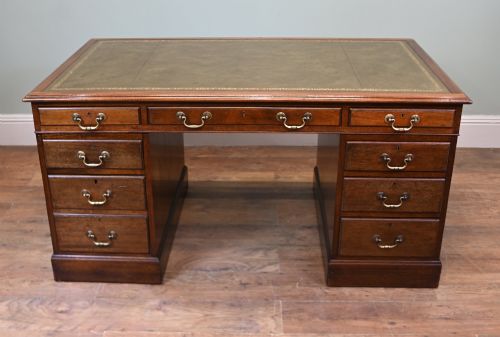
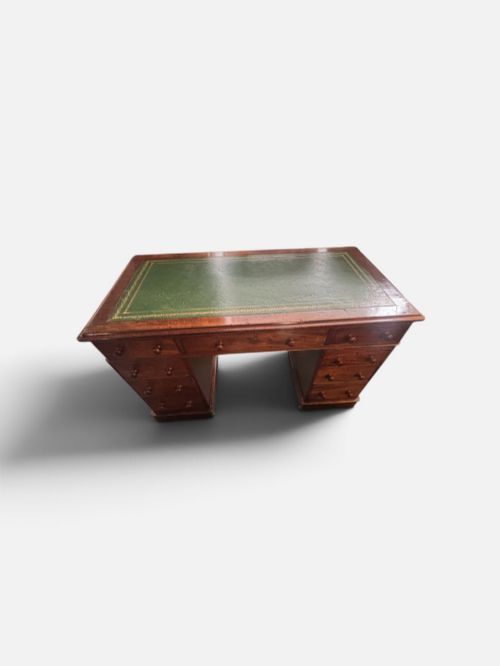
- A heavy freestanding desk comprising two banks of drawers supporting a shared writing surface. This format often includes nine drawers and a leather inset top.
- Kneehole desk
- A compact desk featuring a central recess for the user's legs, flanked by smaller drawers. It provides closed storage while maintaining a manageable footprint.
- Writing table
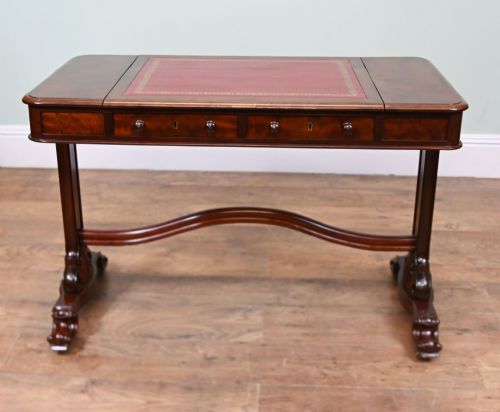
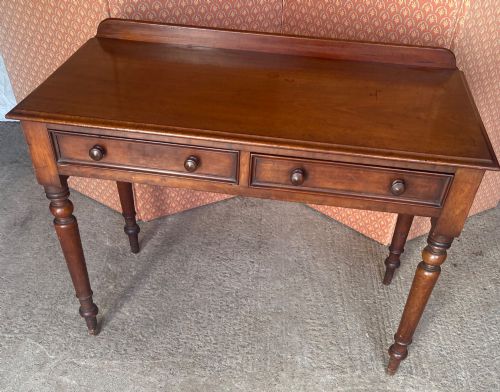
- A table designed primarily for correspondence, typically fitted with one to three frieze drawers. These pieces often function as freestanding library or side tables.
- Davenport
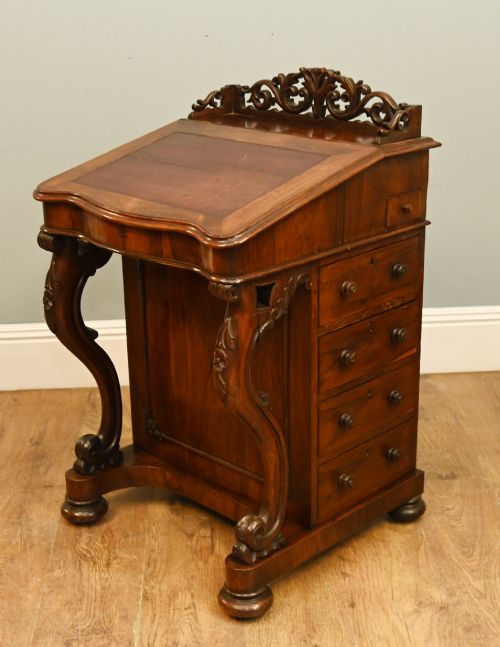
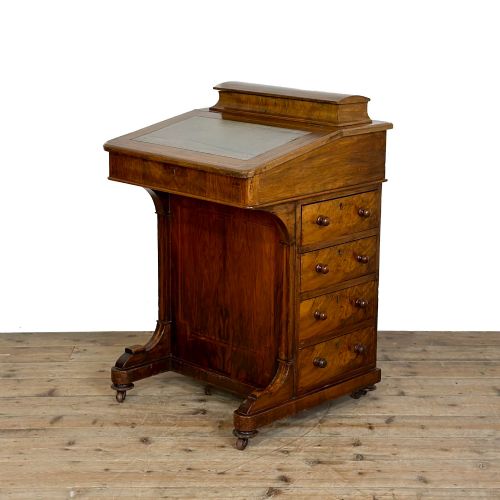
- A small compact writing desk with a sloping writing surface hinged above a bank of side drawers. Originating in the early nineteenth century, it often includes interior compartments.
- Frieze drawer
- A drawer located immediately beneath the tabletop, set into the structural rail of the piece. Single or multiple versions frequently define the front elevation of nineteenth-century tables.
Victorian Writing Desk with Drawer: Frequently Asked Questions
How do I identify a Victorian desk?
Look for period-specific timbers like mahogany, oak, and burr walnut combined with traditional hand-cut dovetail joinery in the drawer construction. Hardware such as brass handles and ceramic castors also point towards nineteenth-century manufacturing methods.
examine the overall proportions and secondary woods, as pine and oak were frequently used for internal drawer linings during this era.
What is a pedestal writing desk?
A pedestal desk is a large freestanding form featuring two columns of drawers that support the main writing surface. They often include nine drawers and a green leather top.
these pieces were built for studies and libraries, providing substantial storage for papers and stationery.
Are these desks suitable for daily work?
Many nineteenth-century writing desks provide sturdy surfaces and functional drawer space suitable for contemporary laptops and paperwork. Compact side tables and kneeholes fit easily into modern residential layouts.
verify the writing height and knee clearance of specific models to ensure comfortable daily use.
What is a Davenport desk?
A Davenport is a small sloping desk built over a bank of side drawers, designed for compact spaces. It usually incorporates a stationery compartment beneath the sloping lid.
these pieces date from the early to mid-nineteenth century and offer distinctive cabinet work with small footprints.