







Victorian Writing Box Accessory
These Victorian writing box accessory items are the fitted interior pieces and desktop additions that made nineteenth-century correspondence work.
Victorian Writing Box Accessory
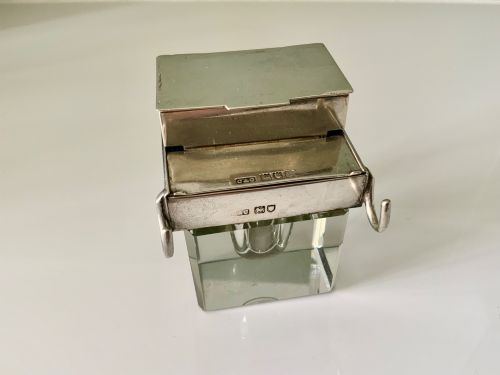
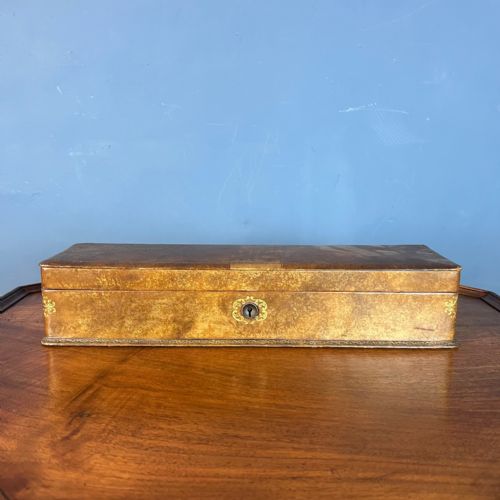
A Victorian writing box accessory covers the functional implements and small fitted containers used alongside nineteenth-century desks and writing slopes. Buyers encounter items ranging from silver stamp boxes and glass inkwells to wooden stationery cabinets and fitted slope interiors.
Most pieces date from the Victorian and Edwardian periods, constructed in standard nineteenth-century forms like inkstands, pen boxes, and stationery caskets. Walnut, coromandel, and oak provide the primary wooden structures, often enhanced with brass mounts or leather tooling.
The selection includes specialised items such as nib boxes, travel inkwells, and stamp cases alongside larger multi-piece desk sets. English and French workshops produced these items to organise correspondence materials efficiently on a desktop.
Materials and construction methods
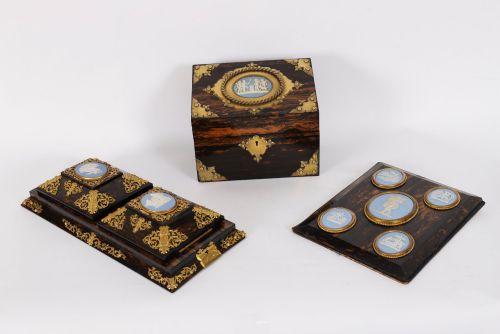
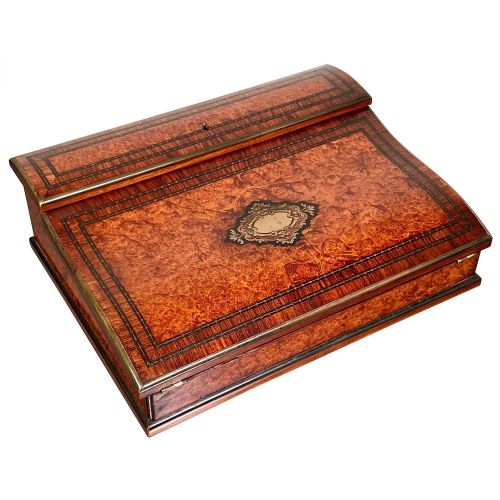
Cabinet makers utilised dense hardwoods such as walnut, burr walnut, coromandel, and pollard oak as foundational materials for stationery boxes and writing slopes. These timbers frequently received brass banding, Tunbridge ware inlay, or ormolu mounts to ornament the exterior surfaces.
Fitted metalwork and glass components formed essential parts of these accessories, including silver-plated stands, cut glass inkwells, and brass locks by makers like Bramah. Leather tooling, hand-painted porcelain panels, and agate cabochons added decorative detailing to desk sets and inkstands.
Victorian Writing Box Accessory Retail Price Guide 2026
Typical asking prices for victorian writing box accessory among the pieces listed under this phrase on Sellingantiques today, from the lower quarter to the upper quarter. They describe what is for sale here now, not the wider market.
Nineteenth-century writers required locked boxes to protect private correspondence from curious household staff.
Distinctions in quality and execution
Quality appears in the precision of the cabinet work, from tightly fitted brass stringing to the complexity of Tunbridge ware mosaic patterns. Finer pieces employ superior timbers like figured burr walnut and coromandel rather than plain oak or standard woods.
The sophistication of the internal mechanism and hardware defines the upper tier, seen in Bramah locks and solid silver stamp cases. Hand-painted porcelain, ormolu mounts, and integrated agate cabochons similarly elevate decorative desk accessories above standard utilitarian versions.
Edwards and Jones·Houghton and Gunn
The Victorian Writing Box Accessory Glossary
- Tunbridge ware
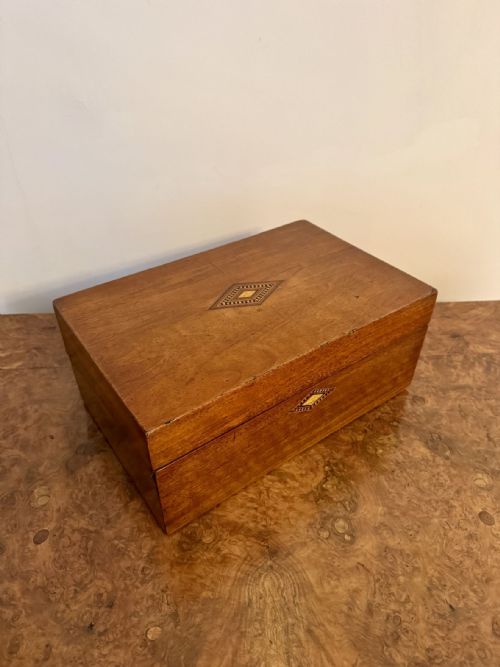
- A form of woodwork featuring minute mosaic tiles assembled from various natural coloured timbers to create pictorial or geometric designs. This technique decorates the surfaces of Victorian boxes and stationery cabinets.
- Stationery box
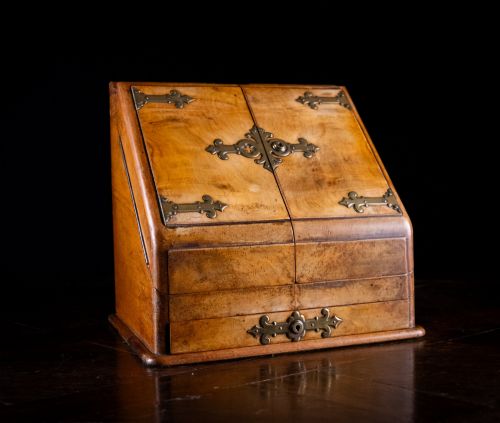
- An upright desk cabinet designed to hold writing paper, envelopes, and correspondence supplies in tiered compartments. These boxes often feature sloping lids or folding doors.
- Ormolu
- Gilded bronze or brass applied as decorative mounts, feet, or handles on nineteenth-century wooden boxes and desk sets. This finish adds bright metallic contrast to dark coromandel or walnut bodies.
- Writing slope
- A portable slant-topped desk opening to reveal a velvet-lined writing surface and compartments for pens and ink. These boxes house various internal accessories.
- Inkstand
- A tray or stand holding one or more inkwells along with pen rests and sometimes a sander or stamp box. These desk pieces protect the writing table from ink spills.
Victorian Writing Box Accessory: Frequently Asked Questions
What fits inside a writing box?
Writing boxes house specialised accessories including inkwells, stamp boxes, pen trays, and nib containers. These items fit securely into dedicated compartments within the slope.
Larger boxes provide space for stationery, blotting pads, and sealing wax equipment. Every component serves the practical needs of nineteenth-century letter writing.
How do I date a desk accessory?
Dating relies on material combinations, decorative styles, and manufacturing techniques characteristic of periods like the Victorian era or Edwardian years. Woods like coromandel and brass inlay styles often point to specific decades.
Maker marks, silver hallmarks, and lock stamps provide more precise chronological markers. Comparing the construction methods against known periods helps confirm the age.
Where were these pieces used?
These accessories sat upon library tables, Davenport desks, and writing slopes in domestic studies or offices. They kept correspondence materials organised and readily available for daily correspondence.
Travel versions accompanied owners on journeys, designed to withstand movement while keeping ink and nibs secure. Portable inkstands and folding slopes ensured writers could work away from home.
How do I care for wooden boxes?
Maintenance requires keeping wooden surfaces away from direct sunlight and extreme humidity changes to protect the veneer and brass inlay. Regular dusting with a soft, dry cloth preserves the finish.
Leather surfaces and metal mounts benefit from gentle cleaning without harsh chemical polishes. Proper environmental conditions prevent the wood from warping or cracking over time.