



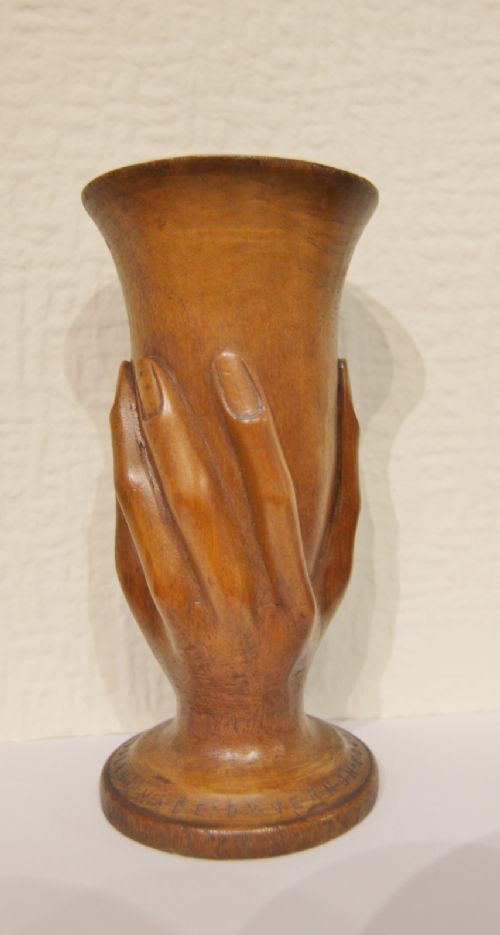
Victorian Wooden Souvenir
These Victorian wooden souvenir pieces offer tangible connections to past journeys, local history, and skilled nineteenth-century craftsmanship.
Victorian Wooden Souvenir
When searching for a victorian wooden souvenir, collectors encounter an eclectic array of objects designed to commemorate travels, sites of interest, or historical events during the nineteenth century. These items encompass decorative boxes, desk accessories, snuff boxes, corner shelves, napkin rings, and historical memorabilia.
The selection ranges widely in geographic origin and specific form, extending from Italian Sorrento ware and grand tour pieces to British regional specialities like Tunbridge ware, Mauchline ware, and Scottish snuff boxes. Material forms span from simple turned hardwood and sycamore to ebonised wood, olive wood, and bog oak.
Dating primarily from the nineteenth century, including specific periods around 1850, 1860, 1880, and the Edwardian era, these pieces reflect both personal tourism and local mementos. Buyers frequently discover specialised items such as book-shaped inlaid olive boxes, string holders, chalices, and novelty pocket pieces.
Materials and construction methods
The construction of these pieces relies heavily on native and exotic timbers such as sycamore, maple, olive wood, and oak, frequently enhanced by specialised surface techniques. Makers utilised precise turning, marquetry inlay, and paper elements to decorate everyday forms.
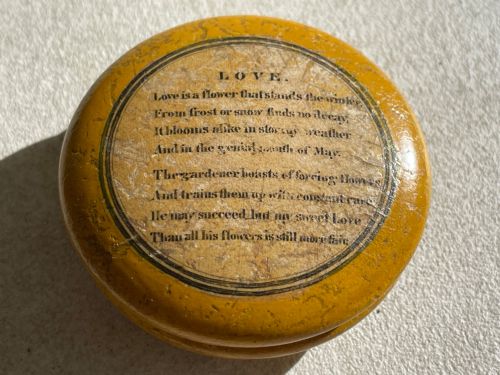
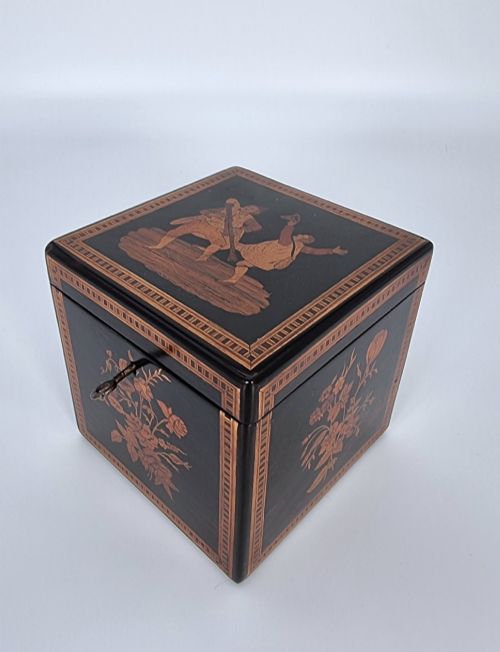
Specific regional traditions dictated the manufacturing process, seen in the micro-mosaic wooden tesserae of Tunbridge ware and the photographic or printed paper transfer applications typical of Mauchline ware. Other items integrate brass hardware, porcupine quill work, or pietra dura mounts set into ebonised wood surfaces.
Victorian Wooden Souvenir Retail Price Guide 2026
Typical asking prices for victorian wooden souvenir among the pieces listed under this phrase on Sellingantiques today, from the lower quarter to the upper quarter. They describe what is for sale here now, not the wider market.
Listings feature woods including sycamore, olive wood, maple, and ebonised wood alongside specialised paper and brass elements.
Judging quality in nineteenth-century mementos
Quality in a victorian wooden souvenir rests primarily on the precision of the woodwork and the integrity of any applied decoration, such as marquetry inlay or micro-mosaic patterns. Finer examples display meticulous alignment in geometric wood patterns and well-preserved surface finishes without crude repairs.
The historical significance and clarity of associated narratives, such as legible inscriptions, specific place names, or documented historical events, elevate certain pieces above standard tourist wares. Superior turning and clever mechanical design in functional items like desk accessories and boxes also distinguish higher-tier examples.
The Victorian Wooden Souvenir Glossary
- Tunbridge ware
- A form of nineteenth-century decorative woodworking originating from Tunbridge Wells, characterised by intricate mosaic patterns assembled from thousands of tiny tinted wood prisms to form pictorial or geometric designs.
- Mauchline ware
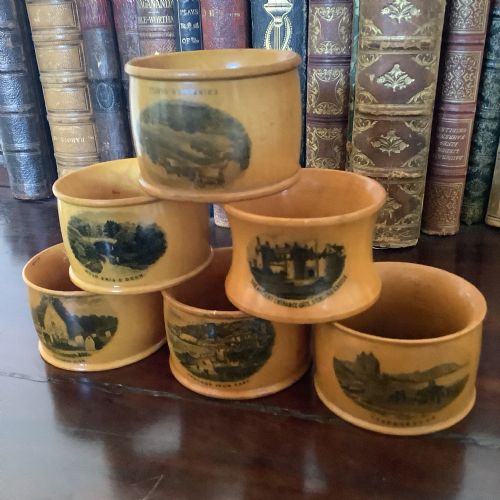
- Scottish wooden souvenirs, typically made from sycamore, featuring photographic transfers, tartan patterns, or historical views applied to the surface of everyday items like napkin rings and note books.
- Marquetry inlay
- The art of applying pieces of veneer to a wooden structure to form decorative patterns, frequently utilised on Sorrento boxes and decorative containers to depict architectural scenes or landscapes.
- Pietra dura
- An artistic technique of using cut and fitted polished coloured stones to create images, occasionally mounted onto wooden boxes and panels.
- Bog oak
- Dark, fossilised oak retrieved from peat bogs, carved in Ireland and elsewhere into commemorative brooches and small ornaments.
Victorian Wooden Souvenir: Frequently Asked Questions
How were Mauchline ware items decorated?
Mauchline ware typically utilised pale sycamore wood as a canvas for decorative surface treatments, most notably photographic transfers of tourist sites, landmarks, or intricate painted tartan designs. These were sealed to protect the surface during daily handling.
Makers produced practical household objects such as napkin rings, string holders, and notebooks using this distinct method.
What distinguishes Tunbridge ware?
Tunbridge ware is defined by its remarkable mosaic decoration, created by gluing together tiny blocks of naturally coloured woods in precise geometric or pictorial arrangements. When sliced crosswise, these assemblies formed identical picture tiles for box lids and panels.
This labor-intensive technique allowed artisans to render complex architectural motifs and floral designs entirely in wood.
How can I tell a grand tour souvenir apart?
Grand tour souvenirs, particularly those from mid-nineteenth-century Italy, often incorporate local materials like olive wood, marquetry scenes of ruins, or imported pietra dura stone plaques. These items were purchased by travellers journeying through continental Europe.
Their distinct aesthetic reflects classical motifs and foreign craftsmanship tailored specifically for the nineteenth-century tourist market.