


Victorian Wooden Slope
A victorian wooden slope is a portable desk built for travel, opening to reveal a fitted writing surface and storage compartments.
Victorian Wooden Slope
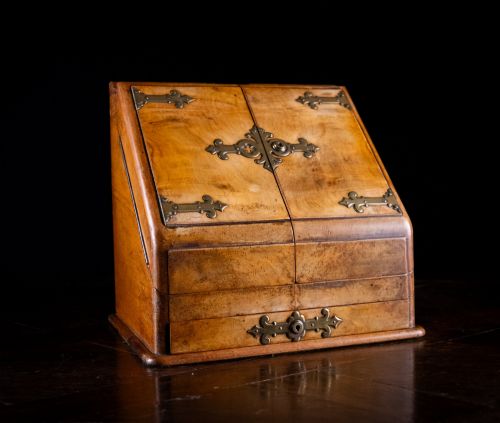
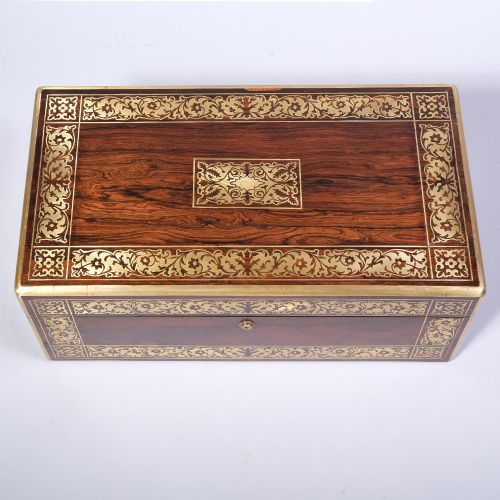
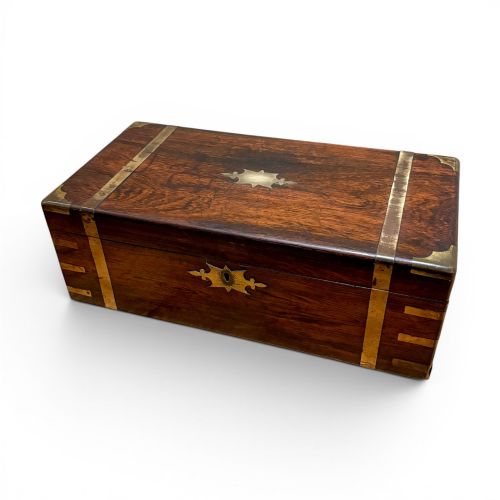
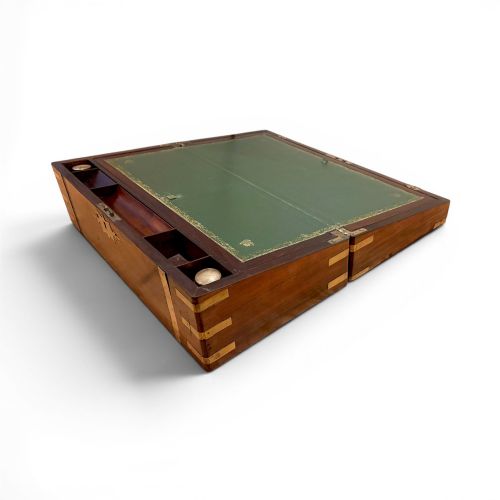
When you search for a victorian wooden slope, you encounter portable writing boxes designed during the nineteenth century. These objects fold shut to form a compact chest and open to create a sloping writing surface lined with leather or velvet.
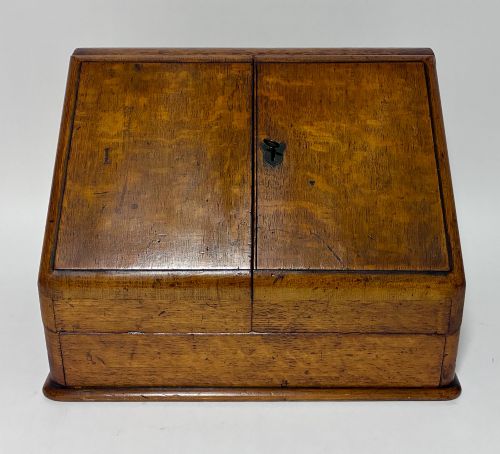
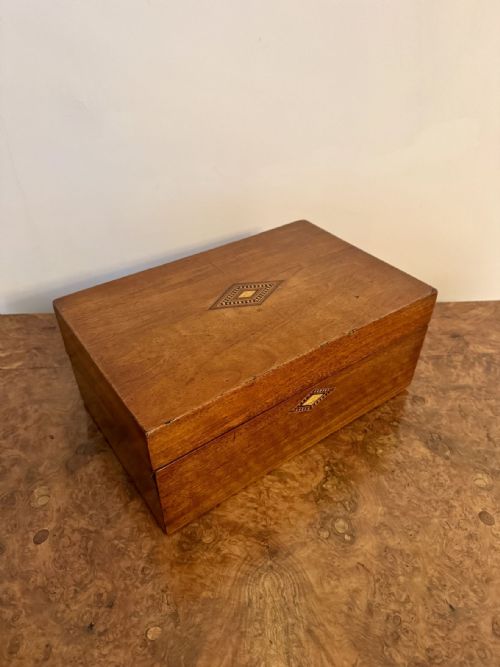
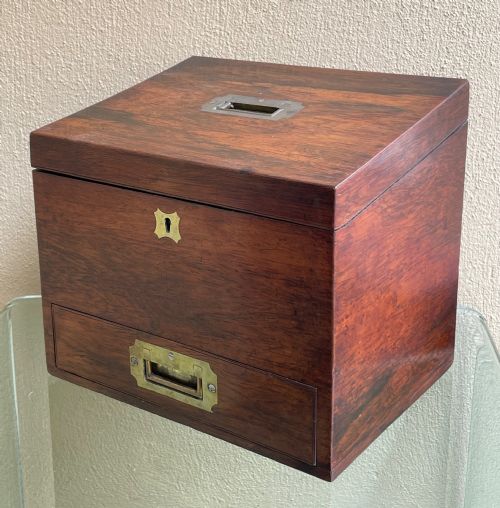
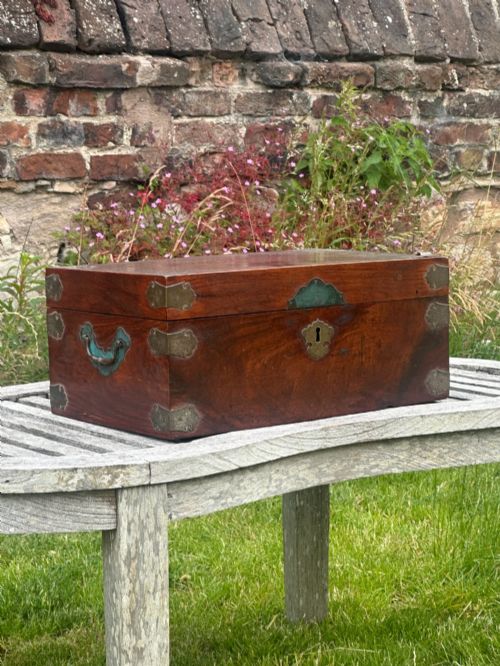
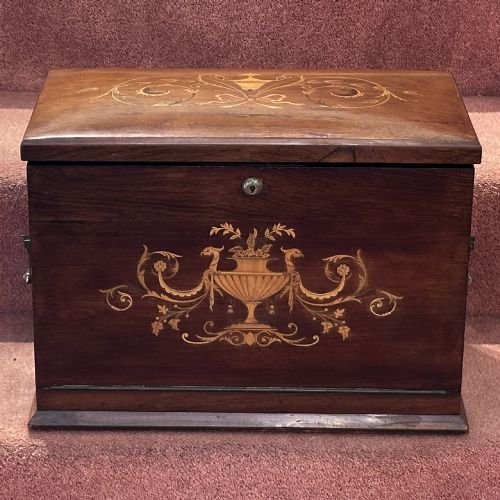
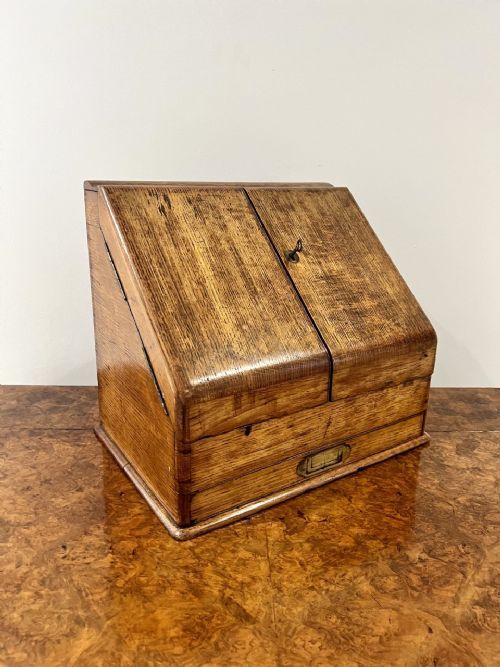
The pieces on this page appear in various timber forms, including mahogany, walnut, rosewood, oak, and camphor wood. Many examples incorporate brass banding and corners intended to withstand travel.
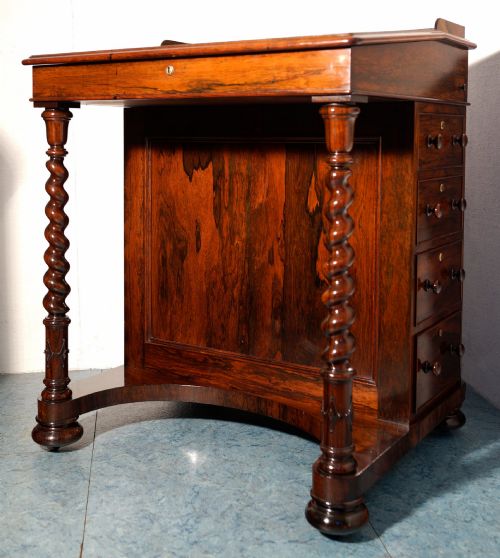
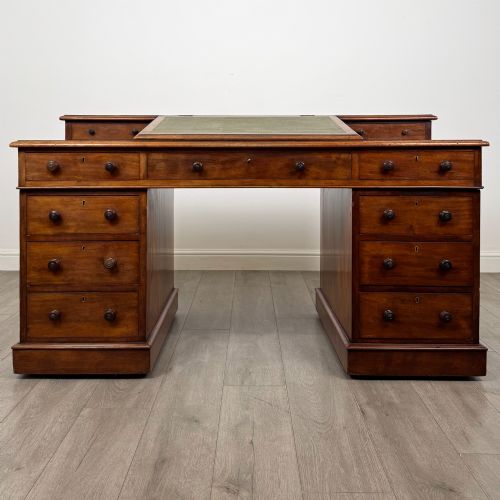
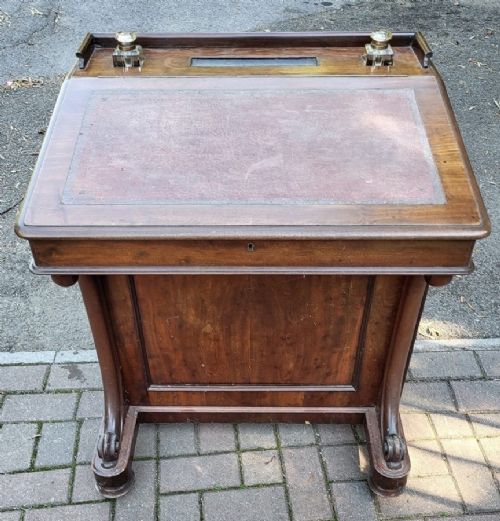
Alongside standard folding boxes, the selection includes related desk forms such as Davenports, stationery boxes, and correspondence chests. These items date primarily from the Victorian period, with occasional examples spanning the nineteenth century from eighteen hundred to nineteen hundred.
Materials and construction
Cabinet makers utilised dense hardwoods such as mahogany, walnut, and rosewood for structural durability. Decorative veneers like burr walnut and figured walnut appear frequently on the exterior surfaces.
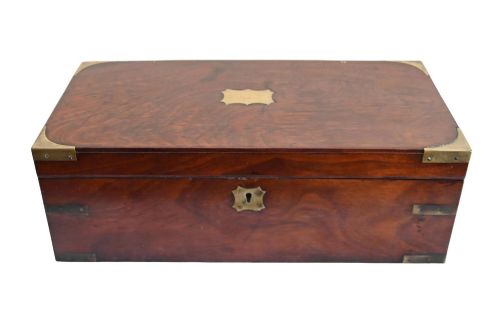
Brass corners, straps, and inlaid escutcheons reinforce the timber joints and provide structural protection for travel. Internal fittings often incorporate secondary timbers, satinwood details, and carved bone components.
Listings feature mahogany, walnut, rosewood, oak, camphor wood, and brass.
Quality variations in wooden slopes
The standard of a victorian wooden slope depends upon the selection of timber veneers and the precision of the brass inlay work. Superior pieces display book-matched grain patterns and tight joinery around corners and edges.
Internal complexity separates standard boxes from finer examples. Higher grade pieces feature secret drawers, fitted inkwell compartments, and operable locking mechanisms with working keys.
Maple & Co·Pairs MFG Co
The Victorian Wooden Slope Glossary
- Campaign slope
- A portable writing box fitted with brass mounts designed for military travel.
- Davenport
- A small pedestal desk featuring a sloping top and side drawers.
- Escutcheon
- A protective brass plate surrounding a keyhole.
- Secret drawers
- Hidden compartments accessed by removing secondary panels within the interior.
Victorian Wooden Slope: Frequently Asked Questions
How were these boxes used?
Owners used these slopes to store stationery, ink, and correspondence while travelling or writing at home. The hinged lid folded flat to provide a stable writing surface.
Many boxes included dedicated slots for pens and compartments for important documents and letters.
How do I maintain the wood?
Keep wooden slopes away from direct heat sources and fluctuating humidity to prevent timber splitting and veneer lifting. Apply appropriate furniture wax sparingly to maintain the polish.
Handle brass fittings with care and avoid using abrasive cleaners on the metal surfaces.
How are periods identified?
Dating relies on timber choices, construction techniques, and brass hardware styles typical of the nineteenth century. Solid mahogany and brass binding often point to mid-Victorian production.
Burr walnut veneers and specific interior layouts help narrow the decade of manufacture within the Victorian era.
What is a Davenport desk?
A Davenport is a compact writing desk featuring a sloped, hinged writing surface above a pedestal of drawers. The design originated in the early nineteenth century for domestic study use.
Victorian versions frequently incorporated side drawers and internal satinwood stationery compartments.