





Victorian Wooden Settee
A victorian wooden settee brings rich timber frames and period upholstery into a room, offering both substantial seating and a strong architectural anchor.
Victorian Wooden Settee
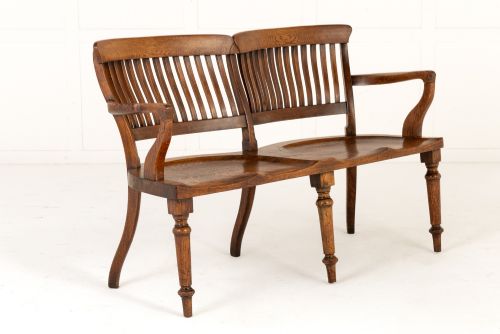
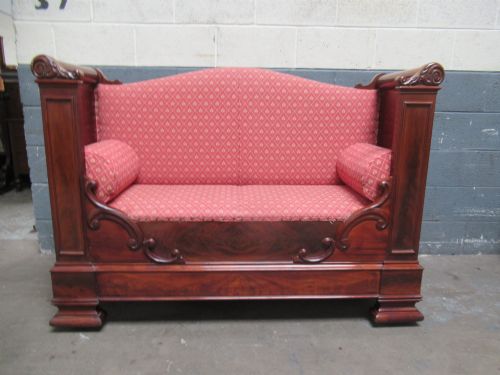
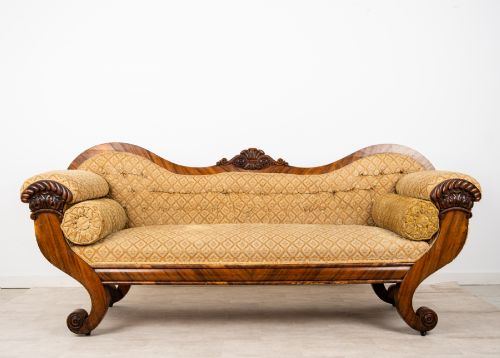
When buyers search for a victorian wooden settee, they encounter seating spanning the nineteenth century, including oak, mahogany, walnut, and rosewood frames. These pieces take many forms, from carved salon sofas and inlaid couches to heavy oak hall settles and country house benches.
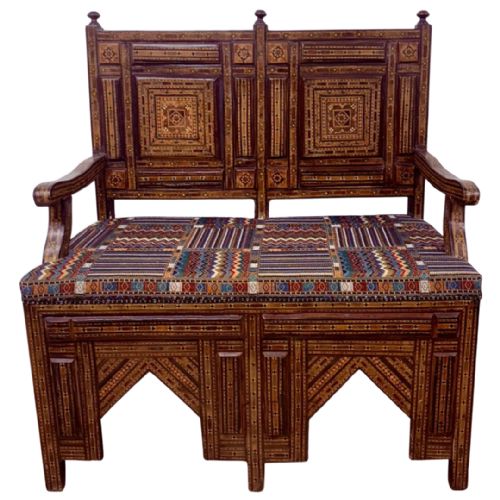
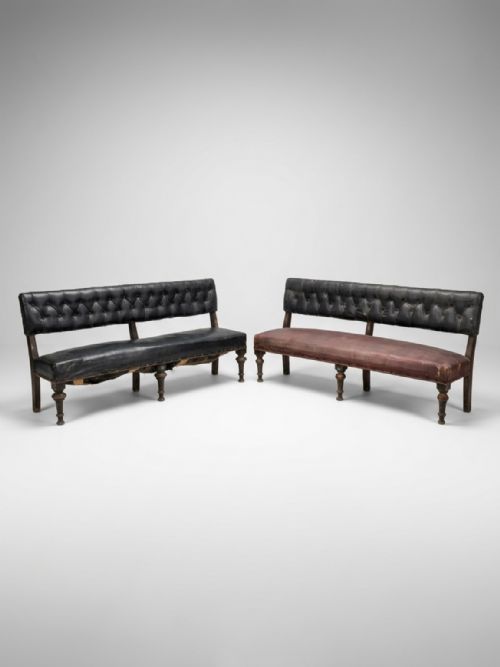
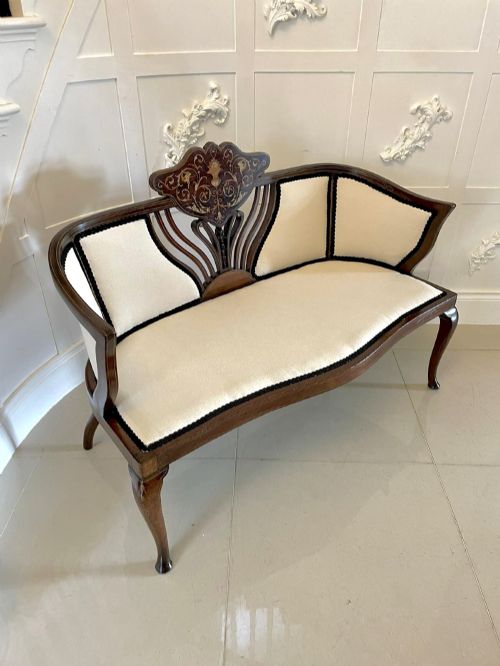
The most common examples on this page are mahogany and walnut settees decorated with carved scroll ends, show frames, or delicate marquetry inlay. Many integrate upholstered seats and backs covered in velvet, leather, or woven fabric, reflecting diverse nineteenth-century tastes.
Origin variations range from English country house seating and Irish benches to imported Anglo-Indian, Syrian, and Moorish styles. This broad selection demonstrates the heavy trade influences and eclectic design movements active throughout the Victorian era.
How they were made
Makers utilised dense timbers such as mahogany, walnut, oak, and rosewood to build rigid structural frames capable of supporting heavy carving and turned supports. Timber selection often dictated the decorative potential, allowing artisans to execute deep relief work or precise satinwood inlay.
Upholstered components relied on traditional stuffing methods and sturdy webbing, secured within open or closed wooden frameworks. Decorative detailing frequently combined hand carving, brass fittings, ebonising, and intricate geometric wood inlays.
Regional workshops and specialised furniture makers applied varied finishing techniques, from French polishing on fine salon pieces to waxed treatments on utilitarian oak hall benches.
Victorian Wooden Settee Retail Price Guide 2026
Typical asking prices for victorian wooden settee among the pieces listed under this phrase on Sellingantiques today, from the lower quarter to the upper quarter. They describe what is for sale here now, not the wider market.
Listings feature timbers including mahogany, walnut, oak, rosewood, teak, satinwood, and hardwood, alongside brass fittings and varied upholstery fabrics.
What varies in quality
The distinction between standard commercial production and finer output lies in the crispness of the timber carving and the precision of any inlay work. Superior examples display deeply moulded show frames, balanced proportions, and carefully selected wood grain.
Structural integrity depends on the original joinery within the frame and the quality of the underlying timber rather than the surface finish alone. Pieces retaining their original configuration and dense hardwood frames represent higher manufacturing standards.
The Victorian Wooden Settee Glossary
- Settee
- A long upholstered seat with a back and arms, designed to accommodate multiple people. This form serves as a primary seating option in nineteenth-century parlours and drawing rooms.
- Show frame
- A wooden structural framework left exposed around the upholstered portions of a sofa or chair. It highlights the timber grain and carved details of the piece.
- Marquetry
- Decorative veneer patterns applied to furniture surfaces using contrasting pieces of wood. This technique creates complex geometric or floral motifs on satinwood and mahogany panels.
- Settle
- A wooden bench with a high back, solid arms, and often a storage compartment beneath the seat. These pieces frequently appear in oak within hallways and country interiors.
- Scroll end
- A rolled or curving terminal on the arms or back of a sofa. This stylistic element derives from classical furniture influences popular during the nineteenth century.
Victorian Wooden Settee: Frequently Asked Questions
What rooms suit a wooden settee?
These settees fit well in entrance halls, living rooms, and large bedrooms where their timber frames provide a strong visual anchor.
Their varied lengths and upholstery types allow them to function as window seats, conversation furniture, or primary hallway seating.
How do I identify a Victorian style?
Victorian furniture styles encompass revival movements like Gothic, Rococo, and Sheraton, alongside Aesthetic and Anglo-Indian designs.
Examining the wood species, carving depth, and inlay patterns helps place a piece within the nineteenth-century timeline.
Are these settees comfortable for daily use?
Many Victorian pieces feature sprung bases and padded backs designed for sitting, though comfort depends on the specific style.
Deeply upholstered couches and parlour sofas offer softer seating, while wooden settles and hall benches provide firmer, upright support.
What woods were commonly used?
Cabinetmakers utilised a range of domestic and exotic timbers, including mahogany, walnut, oak, rosewood, and satinwood.
Hardwoods were selected for their strength and grain pattern, supporting both heavy carved decoration and delicate inlaid veneers.