


Victorian Wooden Instrument Case
These Victorian wooden instrument cases house everything from pocket compasses and barometers to telescopes and musical instruments, prized for protecting precision engineering inside mahogany, oak or ebony shells.
Victorian Wooden Instrument Case
A Victorian wooden instrument case serves to house scientific apparatus, navigational tools and musical gear safely during transit or storage. When searching for a victorian wooden instrument case, buyers encounter utilitarian scientific boxes alongside fitted musical housings made from mahogany and oak.
Forms vary from fitted cello and violin cases lined in velvet or alligator skin to desk tidies, hydrometer boxes and octants in ebony. Each container reflects the specific dimensions and delicate nature of the scientific or musical equipment it was built to protect.
Materials and construction methods
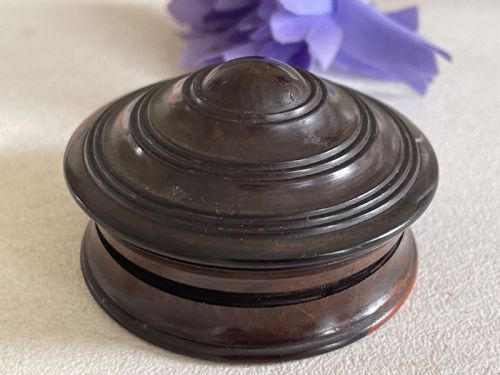
Maker construction relies heavily on dense timbers such as mahogany, oak and ebony, shaped into sturdy rectangular or circular protective shells. Cabinetmakers built these boxes to withstand rigorous daily use by surveyors, mariners and musicians.
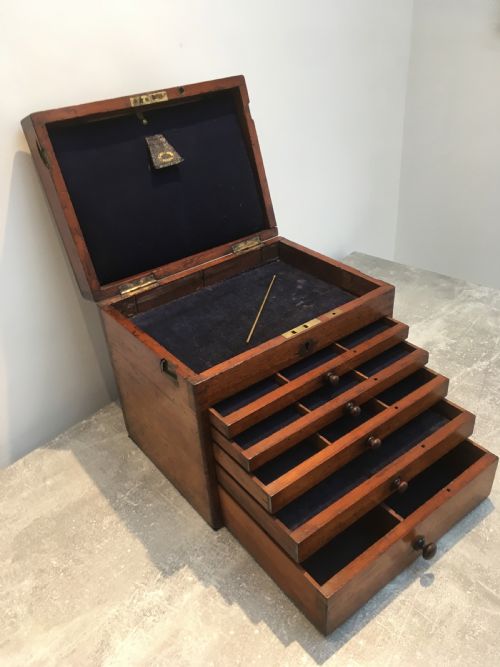
Internal fitting involves plush velvet linings, turned wood components and brass hinges, clasps or carrying handles. Specialised interiors cushion fragile glass components, brass compasses and delicate measuring instruments against shock.
An alligator skin violin case survives among the scientific boxes, proving Victorian musicians travelled with as much bite as their marine colleagues.
Factors determining quality
Quality rests upon the precision of the internal compartments and the choice of cabinet timber, with figured mahogany and solid oak commanding attention. Finer examples feature bespoke fitted interiors designed specifically for named makers and precision instruments.
The integration of original brass hardware, bone markers and surviving interior linings separates standard utilitarian storage from exceptional workshop output. Makers marked their best containers with inscribed brass plaques or paper trade labels inside the lid.
G. Davis of Leeds·W.E Hill·Stanley London·Chadburn Brothers of Sheffield
The Victorian Wooden Instrument Case Glossary
- Hydrometer
- An instrument used for measuring the specific gravity of liquids. Sikes hydrometer sets were standard tools for excise officers during the nineteenth century.
- Octant
- A navigational instrument used for measuring angles, precursor to the sextant. These are typically housed in fitted wooden boxes with bone or brass fittings.
- Desk tidy
- An organised desktop container for writing equipment and accessories. Naval architects utilised specialised wooden desk organizers during the Victorian period.
- Imperial standard yard
- A precise physical measure of length used for official verification. The County of Essex example is housed in a substantial fitted wooden case.
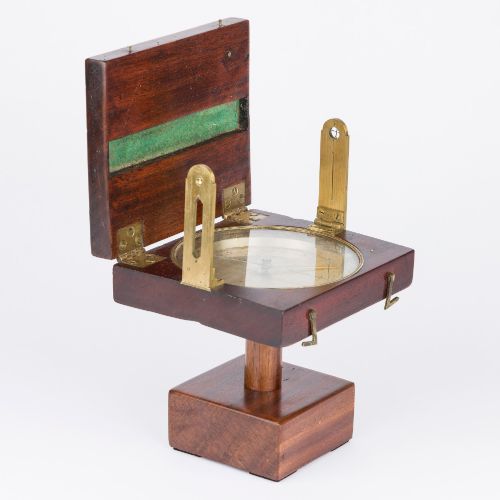
- Surveyor compass
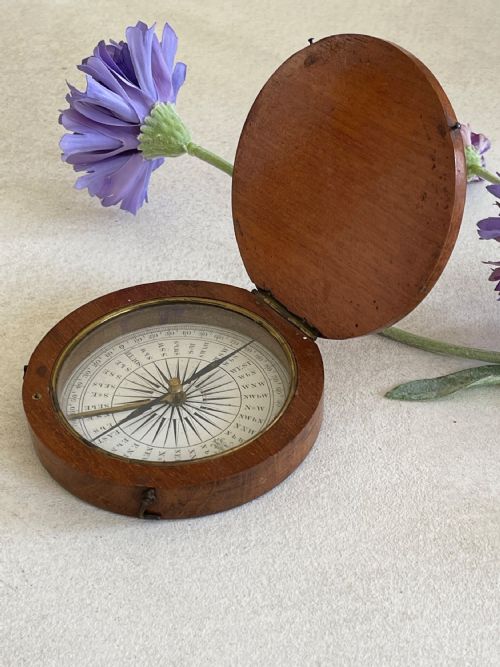
- A directional measuring tool used in land mapping. These instruments frequently sit inside circular or rectangular mahogany carrying boxes.
Victorian Wooden Instrument Case: Frequently Asked Questions
What instruments do these cases contain?
These wooden containers house scientific apparatus, surveying tools, navigational instruments and musical gear. Examples include compasses, barometers, hydrometer sets and telescopes.
Many boxes retain their original contents, from pocket compasses to full hydrometer sets and musical instruments with bows.
How do I identify a Victorian case?
Dating relies on timber choice, construction techniques and maker signatures recorded on brass plates or paper labels. Mahogany and oak dominate nineteenth-century production.
Specific dates appear on instruments and containers, ranging from the eighteen-forties through to eighteen-ninety alongside Georgian survivals.
What woods were used for these boxes?
Cabinetmakers utilised dense hardwoods capable of enduring field use and protecting fragile mechanisms inside. Mahogany and oak form the primary structural materials.
Exotic timbers such as ebony also appear on specialised navigational instrument cases alongside turned wooden components and brass hardware.
How were the interiors lined?
Interiors feature fitted compartments lined with plush velvet or leather to cushion delicate glass and brass components. Custom routing matches the exact profile of the instrument.
Some musical cases utilise exotic coverings such as alligator skin alongside traditional velvet to secure cellos, violins and bows during travel.