

Victorian Wooden Horse
A victorian wooden horse brings tangible movement and history indoors, offering character that modern reproductions simply lack.
Victorian Wooden Horse
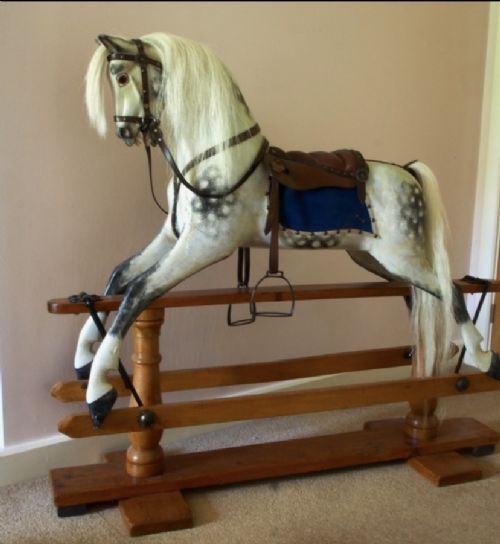
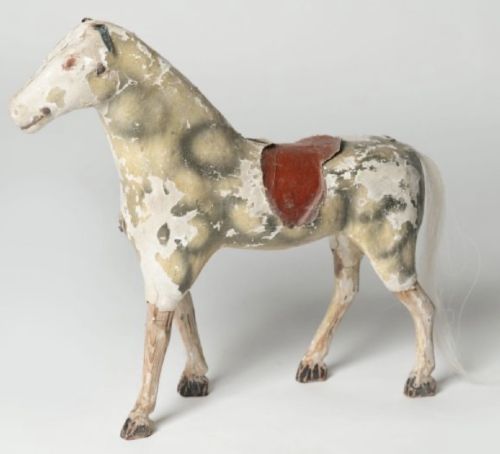
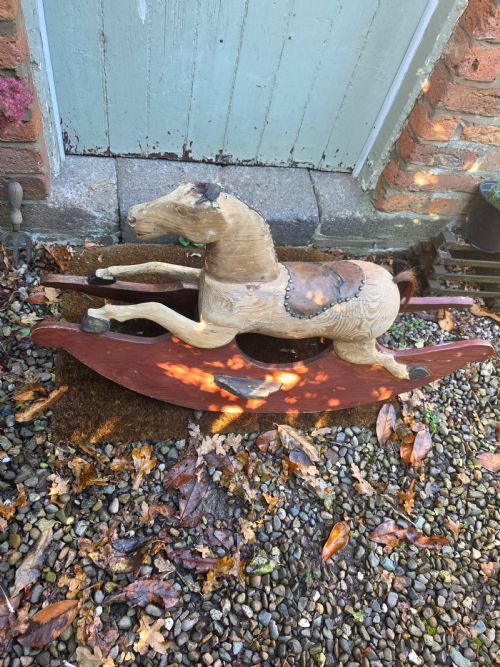
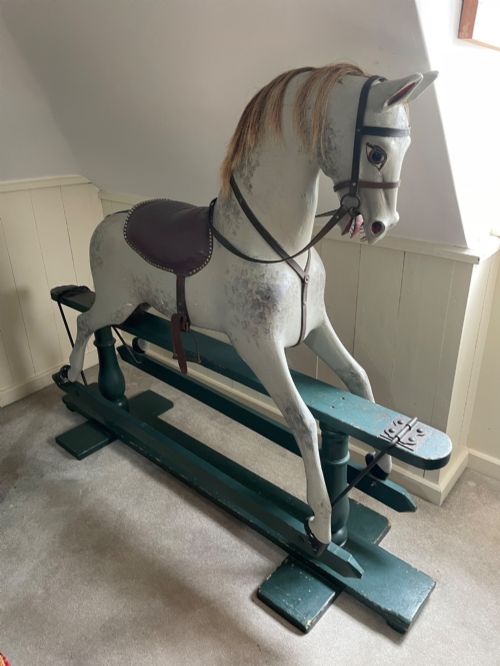
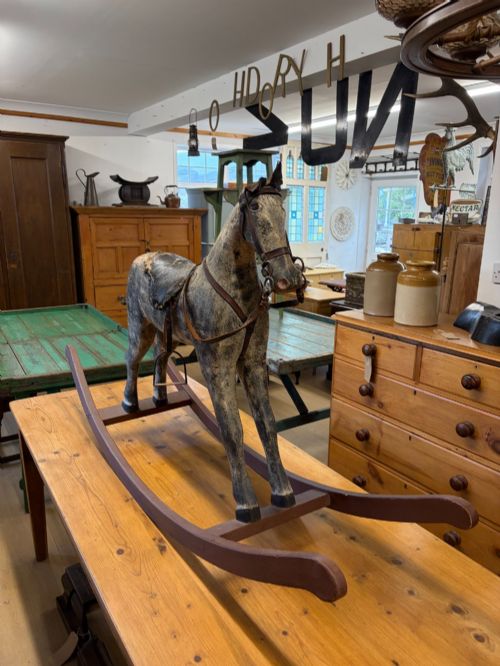
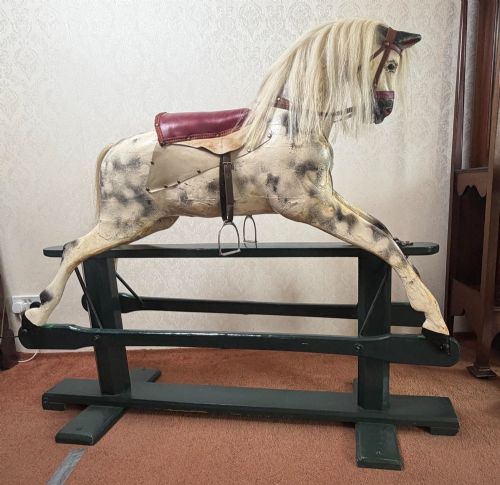
The most common forms found in this category include carved rocking horses mounted on original bow rockers or safety stands, alongside smaller pull-along toys and primitive models. Their origins trace back through the nineteenth century, reflecting both commercial toy production and individual country craftsmanship.
Examples often display the marks of active childhood use, from worn saddle leather to layers of early paint. This heritage defines their appeal for collectors who value authentic period patina over pristine restoration.
Construction and materials
Carvers shaped these figures predominantly from solid woods such as pine, mahogany, and walnut, often utilising metal brackets and iron fittings to secure the joints. Selected models incorporate genuine horsehair manes and tails, fastened alongside stitched leather saddles and tack.
Makers finished the wooden surfaces using oil paints, gesso, or ebonisation, sealing the grain while creating the characteristic dappled or solid coats. Original rockers and safety stands were constructed to bear substantial weight, employing robust joinery suited to decades of vigorous motion.
Victorian Wooden Horse Retail Price Guide 2026
Typical asking prices for victorian wooden horse among the pieces listed under this phrase on Sellingantiques today, from the lower quarter to the upper quarter. They describe what is for sale here now, not the wider market.
Markers of distinction
Superior examples distinguish themselves through anatomical proportion, expressive carving in the head and shoulders, and the retention of original surface paint or tack. The presence of maker markings adds a layer of documentary value that separates standard workshop output from premier manufacturer pieces.
Construction integrity also dictates standard, with firmly braced stands and stable body joints commanding greater regard among collectors. Pieces that preserve their initial glass eyes, leather reins, and horsehair mane show a higher degree of original survival.
G & J Lines·F.H.Ayres·Collinson
The Victorian Wooden Horse Glossary
- Bow rocker
- The curved wooden arc upon which early rocking horses balance and sway. These timbers allow the horse to travel forward across the floor during use.
- Safety stand
- A rigid wooden frame holding the horse above the ground on swinging iron irons. This design prevents the toy from tipping over during energetic motion.
- Gesso
- A plaster-like mixture applied to the carved wooden body to create a smooth surface for painting. It forms the base layer for dapple-grey finishes.
- Pine
- A softwood commonly utilised for the bulky bodies of large rocking horses due to its carvability and relative lightness. It frequently carries layers of early paint.
- Mahogany
- A dense hardwood selected for high-end furniture and occasionally utilised in structural components or associated accessories. Its deep grain takes a fine polish.
Victorian Wooden Horse: Frequently Asked Questions
How do I date a wooden horse?
Dating relies on examining the construction methods, nail types, and underlying paint layers. Carving styles and tack details also shift across decades.
Comparison with documented workshop characteristics helps narrow the decade of origin.
Are rocking horses structurally stable?
Most retain solid joinery, though the swinging irons and wooden pins experience wear over time. Careful inspection of the internal frame ensures safe movement.
Weight distribution remains balanced when the original rockers or stands are intact.
What wood was used?
Makers selected pine for its ease of carving and lightweight properties on large bodies. Hardwoods like mahogany and walnut appear in structural elements and associated furnishings.
Surfaces were then painted or polished depending on the intended finish.
How should I clean the surface?
Maintenance involves gentle dusting with a dry cloth to protect fragile paint and original horsehair. Moisture and modern detergents can damage historic gesso and varnishes.
Preserving the existing patina maintains the historical integrity of the piece.